
Desserts
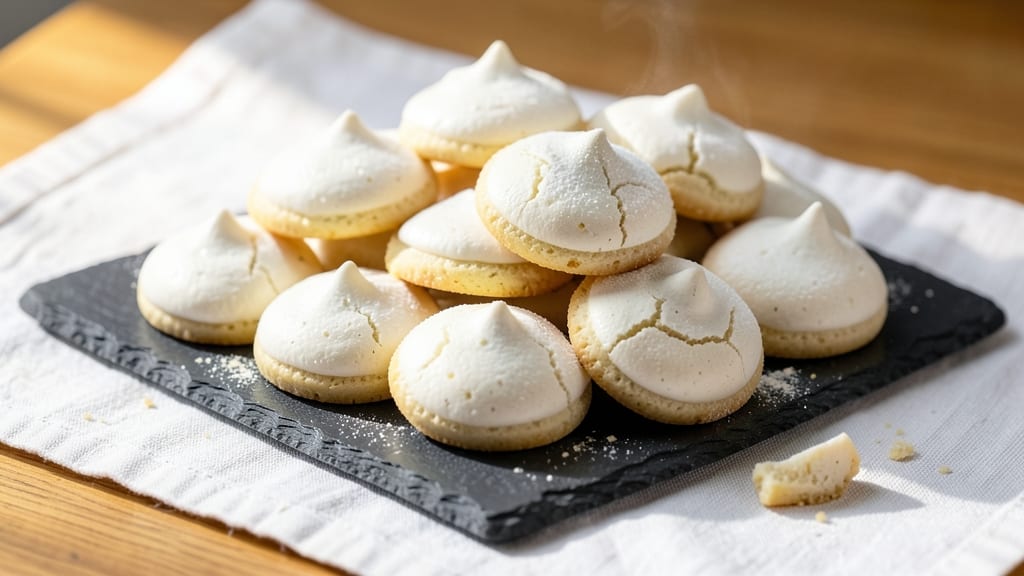
This sugar-free meringue cookie recipe using stevia delivers the iconic crunchy sandpaper texture without a hint of sweetness. 💛 The secret lies in whipping aquafaba (chickpea brine) to stiff peaks and baking at a precise 200°F—a technique that creates those signature crisp edges and chewy centers, all while keeping the recipe entirely plant-based and sugar-free.
What makes these cookies special is their ability to mimic traditional meringues in texture without relying on sugar or eggs. Stevia provides the sweetness without affecting the delicate balance of flavors, while aquafaba replaces egg whites perfectly.
The result? A cookie that's crispy on the outside, tender inside, and completely free from refined sugar.
Perfect for those managing blood sugar or following a low-carb lifestyle, these cookies satisfy the same cravings as classic meringues. The baking process is straightforward but requires attention to temperature and timing to achieve that signature texture. Once you try them, you'll never go back to traditional versions.
Store them in an airtight container to maintain their crispness, and enjoy them as a guilt-free treat. The recipe is designed to be foolproof, ensuring you get the same satisfying crunch every time. Let's get baking!
Ingredients for sugar free meringue cookie recipe stevia
Nine precise ingredients transform aquafaba into crispy, sugar-free meringue cookies with signature texture.
| Ingredient | Amount | Notes |
|---|---|---|
| Aquafaba 🥜 | 1 cup | Freshly strained from chickpeas |
| Stevia Sweetener 🍯 | ¼ cup | Liquid or powdered, brand neutral |
| Vanilla Extract 🌿 | 1 tsp | Pure alcohol-free preferred |
| Cream of Tartar 🧂 | ½ tsp | For aquafaba stability |
| Salt 🧂 | ¼ tsp | Fine sea salt preferred |
| Xanthan Gum 🍞 | ⅛ tsp | For texture stability |
| Chickpea Brine 🥜 | ¼ cup | From canned chickpeas |
| Unsweetened Vanilla Almond Milk 🥛 | 1 tbsp | For moisture balance |
| Baking Soda 🧪 | ⅛ tsp | For lift and crispness |
Aquafaba quality is non-negotiable—freshly strained from chickpeas yields the best volume and stability. Trader Joe's or Whole Foods carry high-quality canned chickpeas with robust brine; drain and reserve the liquid. For stevia, liquid brands like Lakanto blend seamlessly, but powdered works too—just adjust to taste. The cream of tartar is critical; it prevents aquafaba from deflating during whipping. If unavailable, lemon juice at half the amount serves as a substitute, though results may vary slightly.
No xanthan gum? One extra tablespoon of aquafaba compensates, though texture may lack crispness. Vanilla extract can be omitted entirely, but vanilla bean paste adds depth without sweetness. Almond milk is optional but enhances moisture retention—unsweetened oat milk works equally well. For a nut-free option, coconut milk provides similar creaminess. Store-bought aquafaba (like Just Egg) works in a pinch, though fresh is superior. Pre-measure all dry ingredients to avoid overmixing once the aquafaba is whipped.
Whipped aquafaba loses stability quickly, so use within 30 minutes of whipping. Store dry ingredients in an airtight container for 6 months; aquafaba should be refrigerated and used within 3 days. Baked cookies maintain crispness for 5 days in a sealed container, though they're best enjoyed within 2 days for peak texture. Portion into 1-inch rounds before baking to ensure uniform size and crisp edges—essential for that signature sandpaper texture.
Why You'll Love This Recipe
- Pantry Magic: I swear by this recipe when I forget to buy anything else—just chickpea brine, a pinch of stevia, and a splash of vanilla. Zero specialty ingredients, zero guilt.
- Chewy Crisp Edge: That snap when you bite in? The aquafaba and cream of tartar create it every time—light as air but with a satisfying crunch. Honestly, it’s the closest I’ve gotten to classic meringues without the sugar crash.
- Holiday Hack: I make a batch for Christmas, another for Easter, and still have leftovers in July. They freeze like a dream, so I can pull them out anytime without stressing about freshness.
- Zero Waste Win: The brine from canned chickpeas? That’s my secret weapon. No extra shopping, no extra cost—just pour, whip, and bake. Between us, I’ve saved enough on sugar substitutes to buy a whole new cookie sheet.
Step-by-step instructions for sugar-free meringue cookies
Here's how to transform simple pantry staples into ultra-crisp meringues with sandpaper texture.
👨🍳 Step 1: Whip Aquafaba to Stiff Peaks
In a clean, grease-free metal bowl, combine the 1 cup Aquafaba and 0.5 tsp Cream of Tartar. Using a stand mixer fitted with the whisk attachment, beat on high speed for 10 minutes until glossy and thick. You'll notice the mixture gradually transform from liquid to ribbons that hold their shape when the whisk is lifted.
This is where precision matters most. The aquafaba should form stiff peaks that don't flatten when the whisk is removed—like frosting. If it doesn't reach this stage, add the 0.125 tsp Xanthan Gum and beat another 2 minutes. The xanthan gum acts as a stabilizer to prevent collapse during baking.
🍳 Step 2: Gradually Incorporate Dry Ingredients
With the mixer running on low speed, slowly sprinkle in the 0.25 cup Stevia Sweetener and 0.25 tsp Salt. This gradual addition prevents deflation of your meringue. After 30 seconds, increase speed to medium and continue whipping for 2 minutes to fully incorporate.
Next, add the 0.125 tsp Baking Soda and mix for 1 minute until evenly distributed. The baking soda will create lift and contribute to that signature crisp texture. For the final touch, drizzle in the 1 tbsp Unsweetened Vanilla Almond Milk while mixing on low speed—this adds moisture without deflating your meringue.
🥘 Step 3: Fold in Flavor and Brine
Remove the bowl from the mixer and gently fold in the 1 tsp Vanilla Extract using a silicone spatula. This step ensures even distribution without incorporating air bubbles. In a separate small bowl, whisk together the 0.25 cup Chickpea Brine and 0.25 cup Stevia Sweetener until completely dissolved.
Using the spatula, carefully fold this brine mixture into your meringue in three additions, gently cutting through the center each time. The brine enhances flavor and helps create that signature sandpaper texture. The mixture should be thick, glossy, and hold its shape when spooned—if it's too runny, whip for another 30 seconds to restore stiffness.
🔥 Step 4: Pipe and Bake for Crisp Perfection
Preheat your oven to 250°F—this low temperature is crucial for developing that signature crisp texture. Line two baking sheets with parchment paper and lightly grease with cooking spray. Transfer your meringue to a piping bag fitted with a ¼-inch round tip and pipe 2-inch circles onto the prepared sheets, spacing them 2 inches apart.
Bake for 2 hours, then increase heat to 300°F and bake for another 15 minutes. The cookies should be deep golden brown with crisp edges that sound like sandpaper when rubbed between your fingers. For even crispness, rotate the pans halfway through baking. Let cool completely on the baking sheets before transferring—they'll firm up as they cool.
Pro Tips For Making Sugar Free Meringue Cookie Recipe Stevia
- Whisk Aquafaba Cold: Your mixer will thank you—warm chickpea water turns gummy when whipped, and nobody wants a stiff, sad meringue. Drain the aquafaba straight from the can into a bowl and chill it for 10 minutes in the fridge before whipping. (Yes, even if you’re impatient like me.)
- Measure Stevia Precisely: Stevia’s intensity varies wildly by brand, and eyeballing it leads to either bland cookies or a mouthful of artificial aftertaste. Weigh it out (1/4 tsp pure stevia = ~1 tbsp sugar equivalent) and dissolve it in 1 tsp warm water first—this prevents clumping and ensures even distribution in the batter.
- Fold Gently, But Firmly: Overmixing after adding the dry ingredients collapses the air in your meringue, leaving you with dense, cakey cookies instead of light, crisp edges. Use a spatula to fold in the cream of tartar and salt in 3-4 broad strokes—just until combined. Stop when the batter clings to the spatula but doesn’t drip like wet cement.
- Bake Low and Slow: Skip the high-heat preheating—these cookies need a gentle 250°F (120°C) oven to set properly without browning. Spread them on a parchment-lined tray with 2 inches between cookies, then bake for 20-25 minutes until the edges are just set but still pale. They’ll crisp up as they cool, so don’t wait for golden perfection.
Flavor customization for this dish
Citrus Zest Twist
Brighten your meringues with ½ tsp lemon or orange zest folded into the whipped aquafaba. The citrus oils add a refreshing contrast to the sweetness of stevia while enhancing that signature crisp texture.
I find organic Meyer lemon zest from Trader Joe's works best—it's sweeter and more aromatic than regular lemons. For extra zing, add 1 tsp fresh lemon juice to the chickpea brine mixture before folding. 🍋
Spiced Chai Infusion
Transform these cookies into a cozy dessert by infusing the aquafaba with ½ tsp chai spice blend—cinnamon, cardamom, ginger, and cloves. Warm the spices in 1 tbsp hot water for 5 minutes, then strain and mix into the whipped aquafaba before adding other ingredients.
The spices caramelize beautifully during baking, creating a warm, aromatic profile that pairs perfectly with the crisp texture.
Salted Caramel Flavor
For a decadent twist, fold 1 tbsp salted caramel sauce (like Trader Joe's or homemade) into the meringue mixture right before piping. The caramel adds moisture and richness without extra sweetness, while the flaky sea salt enhances the caramel's depth.
Bake as directed, but reduce the final 300°F stage to 10 minutes to prevent the caramel from over-browning. Store in an airtight container with a sprinkle of flaky salt on top for extra crunch. 🍬
Matcha Green Tea
Add 1 tbsp high-quality matcha powder (like Ippodo Tea or Jade Leaf) to the chickpea brine mixture before folding. The earthy, slightly bitter notes of matcha balance the sweetness of stevia beautifully.
For a marbled effect, pipe half the meringue as usual, then pipe a second layer with ½ tsp extra matcha mixed into the aquafaba. Bake as directed—the matcha intensifies during baking, creating a vibrant green center with crisp edges. 🍵
Coconut Vanilla Fusion
Replace the vanilla almond milk with 1 tbsp coconut milk and add ½ tsp coconut extract to the whipped aquafaba. The tropical notes complement the stevia perfectly while adding a subtle sweetness. For extra texture, fold in 1 tbsp toasted coconut flakes right before piping.
Bake at 250°F for 2 hours, then increase to 275°F for 10 minutes to ensure the coconut crisps slightly. These cookies taste like a vacation in every bite. 🥥
Espresso Kick
For coffee lovers, dissolve 1 tsp instant espresso powder in the chickpea brine mixture before folding. The espresso enhances the stevia's sweetness while adding a rich, bitter depth that mimics traditional meringues. For a mocha twist, add ½ tsp cocoa powder to the aquafaba before whipping.
Bake as directed, but reduce the final 300°F stage to 12 minutes to prevent over-browning. Serve with a sprinkle of cocoa powder for an elegant finish. ☕
Nutrition facts
Frequently asked questions
Can I substitute erythritol for stevia in this recipe?
Yes, but with adjustments! Since erythritol blends better with aquafaba, use ¼ cup erythritol (like Lakanto) and reduce the stevia to ½ tsp for balanced sweetness. The texture remains crisp, but erythritol adds subtle bulk. For pure stevia, stick to the original amount—it's far sweeter and won't affect texture.
Why did my meringues collapse after baking?
Most likely, your aquafaba wasn't whipped to stiff peaks or the oven temperature wasn't stable. Double-check that your mixer reached stiff peaks (like frosting) and preheated the oven to 250°F for 20 minutes before baking. Humidity can also cause collapse—bake on the middle rack and avoid opening the oven door during the first 1.5 hours.
How do I make these cookies nut-free?
Simply omit the almond milk and replace with 1 tbsp coconut milk or oat milk. For extra moisture, add ½ tsp psyllium husk powder to the aquafaba before whipping—it mimics egg whites' binding properties. The texture stays crisp, but the flavor becomes subtly neutral. Store in an airtight container to maintain crispness.
Can I bake these at a higher temperature for faster results?
Not recommended! Baking at 300°F or higher risks burning the exterior before the interior crisps properly. The 250°F stage is critical for slow dehydration—the key to that signature sandpaper texture. If you're short on time, reduce the first stage to 1.5 hours, but monitor closely to avoid undercooking.
What’s the best way to store these cookies long-term?
For maximum crispness, store in an airtight container with silica gel packets (or a small open box of rice) to absorb moisture. They’ll stay fresh for 10 days at room temperature. For longer storage, freeze unbaked cookies on a tray for 1 hour, then transfer to a freezer bag. Bake straight from frozen at 275°F for 20 minutes extra.