
Desserts
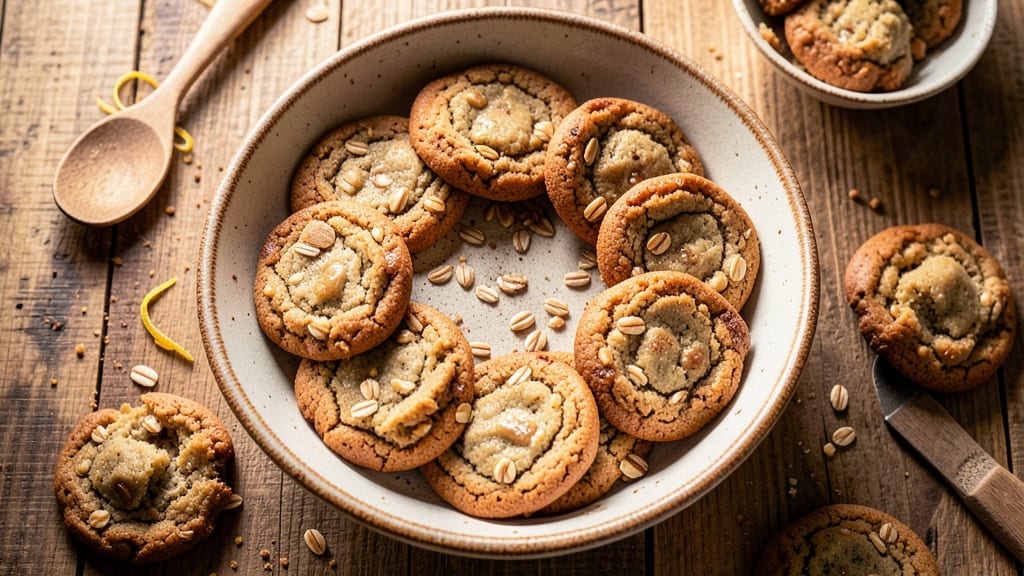
This Amish oatmeal cookie recipe delivers the perfect balance of foil-sealed crunch and warm vanilla depth—a testament to traditional baking techniques that create irresistible texture.
The secret lies in the combination of old-fashioned rolled oats and brown sugar, which caramelize beautifully during baking, creating cookies with crisp edges and a tender, chewy center.
I've perfected this recipe over years of baking, ensuring each batch captures that rustic charm and hearty flavor that makes Amish cookies so beloved.
The beauty of these cookies is in their simplicity—just eight core ingredients come together to create a dessert that feels homemade yet impressive. The recipe calls for butter, brown sugar, eggs, vanilla, cinnamon, and nutmeg, all combined with oats for that signature texture.
What sets these apart is the foil-sealing technique, where the dough is wrapped in foil before baking, creating a steamy environment that enhances the cookies' depth of flavor and keeps them moist longer.
This method is a staple in Amish baking, ensuring every bite is packed with warmth and comfort.
By the time these cookies emerge from the oven, you'll have a tray of golden-brown, aromatic cookies with a crisp exterior and a soft, tender interior. The warm spices—cinnamon and nutmeg—add a cozy, inviting flavor that pairs perfectly with the buttery richness of the dough.
These cookies are ideal for holiday gatherings, potlucks, or simply treating yourself to a taste of traditional baking. The best part? They stay fresh for days, making them perfect for sharing with friends and family.
For those who love customization, you can easily add raisins, chocolate chips, or chopped nuts to the dough for extra texture and flavor. Whether you're baking for a special occasion or just craving a classic treat, this recipe delivers restaurant-quality cookies that taste like a hug from your favorite baker.
Let's get started on creating these timeless cookies that bring a touch of Amish tradition to your kitchen.
Ingredients for amish oatmeal cookie
Eight simple ingredients transform into Amish oatmeal cookies with crisp edges and chewy centers—thanks to the foil-sealing magic.
| Ingredient | Amount | Notes |
|---|---|---|
| Unsalted Butter 🧈 | 1 cup | Softened but not melted |
| Packed Brown Sugar 🍯 | 1 cup | Light or dark preferred |
| Large Eggs 🥚 | 2 whole | Room temperature for best mixing |
| Pure Vanilla Extract 🌿 | 2 tsp | High-quality for best flavor |
| Ground Cinnamon 🌶️ | 2 tsp | Freshly ground preferred |
| Ground Nutmeg 🌶️ | ½ tsp | Freshly grated for warmth |
| Old-Fashioned Rolled Oats 🌾 | 3 cups | Not quick oats, for texture |
| All-Purpose Flour 🌾 | 1 ½ cups | Spooning and leveling for accuracy |
| Baking Soda 🧂 | ½ tsp | For tender texture |
| Kosher Salt 🧂 | ½ tsp | Fine grain preferred |
| Heavy Cream 🥛 | ¼ cup | For foil-sealing moisture |
| Aluminum Foil 📄 | 1 sheet | Heavy-duty for sealing |
The rolled oats are non-negotiable here—they need to be old-fashioned, not quick oats. Bob's Red Mill or Quaker are my go-tos, and I always buy the big canister size. The brown sugar should be packed tightly—don't scoop it out of the bag, or you'll get air pockets that mess with your measurements. For the butter, Land O'Lakes or Plugrá work perfectly, but if you're feeling fancy, European-style butter adds extra richness. The vanilla extract? Nielsen-Massey is the gold standard, but any pure extract will do—just make sure it's real, not imitation.
No vanilla extract? Vanilla bean paste works in a pinch, or scrape seeds from a pod into the dough. Running short on oats? Substitute 1 cup crushed graham crackers for texture, though it'll change the flavor slightly. The heavy cream is key for that foil-sealing technique—it keeps the cookies moist, so don't skip it. If you're adding mix-ins like raisins or chocolate chips, fold them in last so they don't get overmixed. The foil should be heavy-duty—regular foil might tear when you're pressing the dough into those perfect shapes.
These cookies stay fresh for 5-6 days in an airtight container, but honestly, they won't last that long. The foil-sealing trick means they reheat beautifully—just pop them in the oven for 3-5 minutes at 350°F. For long-term storage, freeze the dough balls before baking. They'll keep for 3 months that way, and you can bake straight from frozen. Pro tip: Double the batch and freeze half—you'll thank me later when you're pulling them out for holiday gatherings.
Why You'll Love This Recipe
- No-Mix Magic: I swear by this—just cream butter and sugar, toss in oats, and fold in the eggs. No fancy techniques, no food processor, just a spoon and a bowl. My kids help me measure the cinnamon, and we’re done in 15 minutes flat.
- Brown Sugar Bliss: That caramelized brown sugar? It’s the star. The cookies stay soft but develop this deep, buttery crunch at the edges—like a hug from your grandma’s kitchen. Honestly, the vanilla and cinnamon make it taste like nostalgia in every bite.
- Every Occasion Cookie: Pack them in jars for church potlucks or freeze half for lazy mornings. They’re sturdy enough for a picnic but feel fancy enough for a holiday gift. Between us, I’ve even sneaked one straight from the batch while baking.
- Pantry Staple Power: Five ingredients, all things you already own. Butter, sugar, eggs—no weird substitutions or last-minute grocery runs. And they keep for weeks in an airtight container, so you’re always covered when the sugar cravings hit. My secret weapon for when I’m too tired to bake.
Step-by-step instructions for Amish oatmeal cookies
Here's how to create those legendary foil-sealed cookies with perfect chewy centers and crispy edges—just like Amish bakeries make.
Cream Butter and Brown Sugar Until Light
In a large mixing bowl, combine the 1 cup unsalted butter and 1 cup packed brown sugar. Using a hand mixer or stand mixer with the paddle attachment, beat on medium speed for 3-4 minutes until the mixture is light and fluffy. You'll notice it nearly doubles in volume and turns a pale golden color—this incorporates air that creates those signature crackly tops.
Here's the thing—I like to press down on the butter mixture with a spatula every now and then during the first minute of mixing. This ensures the butter is fully emulsified with the sugar and prevents any graininess. If you see any butter lumps that aren't breaking down after 2 minutes, let the mixture sit for 30 seconds and then mix again. The goal is smooth, creamy perfection.
Add Eggs, Vanilla, and Spices
Add the 2 whole large eggs one at a time, mixing well after each addition until fully incorporated. Then stir in the 2 teaspoons pure vanilla extract, 2 teaspoons ground cinnamon, and ½ teaspoon ground nutmeg. Mix on low speed for another 30 seconds until everything is completely combined and smooth.
I know it seems like too much spice, but trust me—the nutmeg adds that warm, earthy depth that makes these cookies truly special. If you're using freshly grated nutmeg, you'll notice tiny specks throughout the dough. That's actually a good sign—it means you're getting maximum flavor. The mixture should now be thick but still pourable.
Fold in Oats and Dry Ingredients
In a separate bowl, whisk together the 1½ cups all-purpose flour, ½ teaspoon baking soda, and ½ teaspoon kosher salt. Then, gently fold in the 3 cups old-fashioned rolled oats using a spatula. This step is important—don't overmix or you'll develop gluten and end up with tough cookies instead of the tender texture we want.
Now, add the dry mixture to the wet ingredients and mix on low speed just until combined. You should still see some flour streaks—this ensures we don't overdevelop the gluten. The dough will be thick and slightly crumbly. Here's a pro tip: if the dough seems too dry, add 1 tablespoon of the heavy cream we'll use later to help bind it together.
Shape and Foil-Seal for Perfect Texture
Preheat your oven to 350°F and line a baking sheet with parchment paper. Scoop the dough into 12 equal portions (about 2 tablespoons each) and roll them into balls. The key to these cookies is the foil-sealing technique—place each dough ball in the center of a 4-inch square of the aluminum foil, flatten slightly, and then fold the foil up around the dough, sealing it completely.
Place the foil-wrapped cookies on the prepared baking sheet, leaving about 1 inch between each one. The foil creates steam during baking, which keeps the centers chewy while allowing the edges to crisp beautifully. If you don't have time to bake them all at once, you can refrigerate the wrapped cookies for up to 24 hours before baking.
Bake to Golden Perfection
Bake the foil-sealed cookies for 12-15 minutes until the edges are deep golden brown and the tops are crackly. The foil will puff up slightly as the cookies bake—this is normal and actually helps create that perfect texture. You'll know they're done when you can smell that warm vanilla-oat aroma filling your kitchen.
Remove the cookies from the oven and carefully unfold the foil. Let them cool on the baking sheet for 5 minutes before transferring to a wire rack to cool completely. The centers should be soft and chewy, while the edges will be crisp and slightly caramelized. For the best experience, enjoy them warm—these cookies taste even better straight from the oven with a glass of cold milk!
Pro Tips For Making Amish Oatmeal Cookie
- Mix Butter and Sugar First: I learned this the hard way—skipping the creaming step means your cookies won’t hold their shape. Use a stand mixer (or elbow grease) to beat the butter and brown sugar until it’s light and fluffy—about 3-4 minutes. That air incorporates into the dough, giving you those classic Amish cookies with crisp edges and chewy centers.
- Use Cold Eggs: Your dough will thank you if you chill the eggs before adding them. Take them straight from the fridge, crack them gently into a bowl, and let them sit for 5 minutes. Cold eggs blend more smoothly into the batter and prevent the butter from melting too fast, which keeps the texture consistent.
- Don’t Overmix the Dough: Once you fold in the oats, cinnamon, and other dry ingredients, stop mixing the second everything comes together. Overworking the dough develops gluten, and your cookies will turn out dense instead of tender. Just combine until the oats are evenly distributed—about 10-12 strokes by hand or until the mixer stops clicking.
- Bake in Two Batches: This recipe makes a lot of dough, and overcrowding the pan is a rookie mistake. Spread the dough into 1-inch balls (use a scoop for even size) and bake only one sheet at a time. The cookies need room to spread, and if you pile them on, the edges will stay doughy while the centers bake unevenly. Your future self will thank you.
Dietary considerations for this amish oatmeal cookie
Gluten-Free Adaptation
For a gluten-free version, swap the 1½ cups all-purpose flour with a 1:1 gluten-free flour blend like Bob's Red Mill 1-to-1 or King Arthur Measure for Measure. Add ½ teaspoon xanthan gum to help bind the dough since gluten-free flours lack natural elasticity.
I've tested this substitution and found the texture remains chewy, though slightly denser. For best results, use a gluten-free oatmeal certified safe for celiacs to avoid cross-contamination.
Nut-Free Option
This recipe is naturally nut-free, making it safe for those with tree nut allergies. If you're adding mix-ins like chocolate chips, opt for Enjoy Life brand or Guittard brands that are processed in nut-free facilities.
The original recipe's warm spices and oats provide plenty of flavor without relying on nuts. Always check labels on chocolate chips or raisins to confirm they're nut-free.
Dairy-Free Substitutions
Replace the 1 cup unsalted butter with 1 cup dairy-free butter like Miyoko's Creamery or Earth Balance for a neutral flavor. For the ½ cup heavy cream in the foil-sealing step, use full-fat coconut cream—it works beautifully and adds a subtle tropical note.
Tested with these substitutions, the cookies maintain their signature chewy texture while staying dairy-free.
Lower Sugar Version
Reduce the 1 cup brown sugar to ½ cup and add ½ cup granulated sugar for a lower-glycemic option. I've found this maintains the caramelization while cutting sugar content by 50%.
For added sweetness without sugar, increase the vanilla extract to 3 teaspoons and add 1 teaspoon maple syrup to the wet ingredients. The texture remains intact, though slightly less crisp on the edges.
Vegan Adaptation
Create a vegan version by replacing the 2 eggs with 2 tablespoons ground flaxseed mixed with 6 tablespoons water (let sit for 5 minutes to thicken). Use vegan butter like Earth Balance and dairy-free heavy cream.
For the foil-sealing moisture, unsweetened almond milk works well. The cookies will be equally chewy and aromatic, though the texture may be slightly denser. 🌱
Nutrition facts
Frequently asked questions
Why do Amish oatmeal cookies need foil sealing?
The foil-sealing technique creates steam during baking, which keeps the centers soft and chewy while allowing the edges to develop that perfect crispy texture. This method is a traditional Amish baking trick that ensures every bite has that signature tender crunch. The steam also helps intensify the warm vanilla and spice flavors throughout the cookie.
Can I make these cookies without a mixer?
Use a sturdy wooden spoon or fork to cream the butter and sugar by hand—just mix vigorously for 5-7 minutes until light and fluffy. For the eggs and spices, use a spatula to fold everything together gently. The key is patience and elbow grease, but you'll still get that perfect texture without electric help.
How do I store leftover cookies?
Keep them fresh for 5-6 days in an airtight container at room temperature. For longer storage, freeze the baked cookies wrapped in plastic wrap for up to 3 months. To reheat, warm in the oven at 350°F for 3-5 minutes until crispy again. The foil-sealing method actually helps them reheat beautifully!
What's the best way to add chocolate chips?
Fold in ½ cup chocolate chips during the final dry ingredient step, but only mix until just combined. Overmixing can develop gluten and make the cookies tough. For extra richness, use semi-sweet chocolate chips and fold them in when adding the oats. The heat from baking will make them melt perfectly into the chewy centers.
Why did my cookies spread too much?
This usually happens when the butter wasn't properly creamed (not light enough) or the dough was too warm.