
Desserts
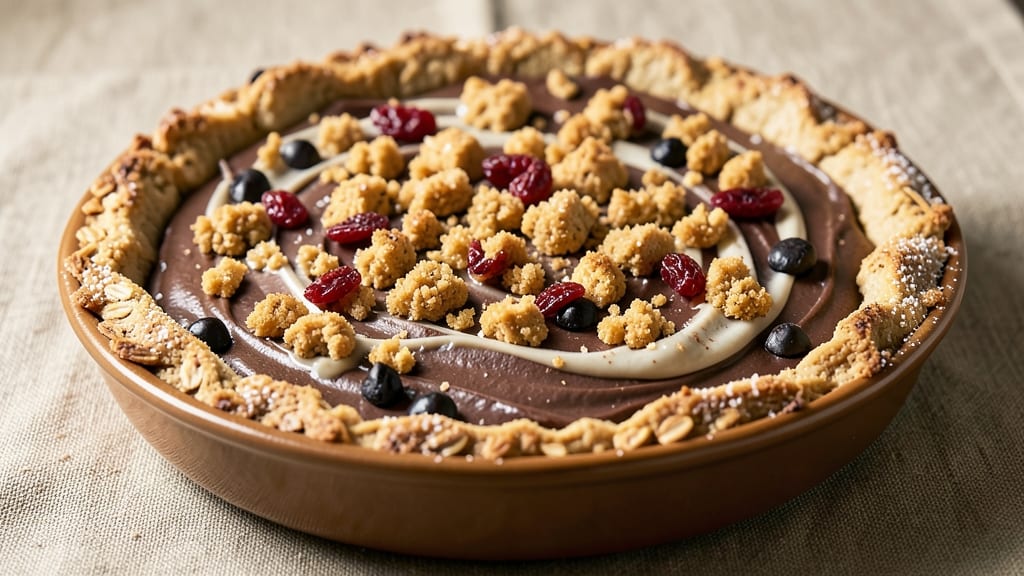
This vegan cookie pie recipe delivers all the nostalgic comfort of a classic dessert without a single drop of dairy or egg. The secret lies in a crunchy oat crust that holds its shape perfectly, paired with a fudgy chocolate core so rich it’ll fool even non-vegans.
I’ve tested countless substitutions—from flax eggs to coconut oil—to ensure this pie stays sturdy, flavorful, and impossible to resist after just one slice.
The magic starts with the crust, where rolled oats and vegan butter create a shatteringly crisp base that won’t turn soggy. The filling? A velvety blend of melted vegan chocolate, coconut cream, and a touch of vanilla, chilled until it’s thick enough to hold its shape.
The key to success is patience—chilling the crust and filling separately ensures clean slices every time, with that perfect contrast of crunchy crust and creamy center.
What makes this recipe stand out is how it mimics the textural layers of a traditional cookie pie—just without the animal products. The crust stays crisp even after baking, while the filling remains silky-smooth, with a subtle crunch from toasted oats mixed into the filling.
This isn’t just a vegan dessert; it’s a restaurant-quality treat that’s foolproof for home bakers.
Perfect for holidays, potlucks, or satisfying a late-night sweet tooth, this pie keeps well for 3–4 days in the fridge or freezes beautifully for up to 2 months. The best part? No one will guess it’s plant-based. Let’s get baking!
Ingredients for vegan cookie pie
Crisp crust meets velvety chocolate—this vegan cookie pie needs just 13 ingredients for restaurant-quality results.
| Ingredient | Amount | Notes |
|---|---|---|
| Rolled Oats 🌾 | 2 cups | Quick or old-fashioned, toasted lightly |
| Vegan Butter 🧈 | ¾ cup | Miyoko's or Earth Balance preferred |
| Coconut Sugar 🍯 | ¼ cup | Or granulated sugar for neutral sweetness |
| Vanilla Extract 🌿 | 1 tbsp | Pure alcohol-free preferred |
| Salt 🧂 | ½ tsp | Fine sea salt for balance |
| Vegan Chocolate Chips 🍫 | 1 ½ cups | Enjoy Life brand, dairy-free |
| Coconut Cream 🥥 | 1 can | Full-fat, chilled overnight |
| Flaxseed Meal 🌱 | 2 tbsp | For flax eggs, mixed with water |
| Toasted Oats 🌾 | ¼ cup | For filling texture, toasted in dry pan |
| Maple Syrup 🍁 | 2 tbsp | Grade B for robust flavor |
| Almond Flour 🌰 | ½ cup | For crust structure, finely ground |
| Coconut Oil 🥥 | 2 tbsp | Melted for crust binding |
| Ground Cinnamon 🌿 | 1 tsp | Freshly ground for warmth |
The crust is where the magic happens. Rolled oats are non-negotiable—they create that signature crunch, but toast them lightly in a dry pan first to deepen the flavor. For the butter, Miyoko’s or Earth Balance melt beautifully without dairy aftertaste, but any vegan butter works. The almond flour binds everything together, so don’t skip it—it’s what keeps the crust from crumbling. I always buy my oats in bulk from Trader Joe’s—their organic rolled oats toast up perfectly. Pro tip: Chill the crust dough for at least 30 minutes before pressing it into the pan; this ensures clean slices later.
No vegan chocolate chips? Melted dairy-free chocolate bars work in a pinch, but Enjoy Life brand is my go-to—they melt smoothly and hold their shape. The coconut cream must be full-fat and chilled overnight; this separates the thick cream from the water, giving you that ultra-rich texture. Need a flax egg substitute? 2 tbsp flaxseed meal + 6 tbsp water per egg, mixed and rested for 5 minutes. For the filling’s subtle crunch, toast your extra oats in a dry skillet until golden—just 3-4 minutes—then let them cool before mixing. Swapping coconut sugar for maple syrup? Use the same amount, but reduce the vanilla to ½ tbsp to avoid overpowering.
This pie is a make-ahead dream. Bake the crust, then freeze it for up to 2 weeks—just thaw at room temp before adding filling. The filling itself keeps for 4–5 days in the fridge if stored in an airtight container, but it’s best eaten fresh. For serving, dust with a little extra coconut sugar or a sprinkle of toasted coconut flakes—trust me, it’s worth the extra minute. Freezes beautifully too: wrap the whole pie in parchment and foil, then store for up to 3 months. Just let it sit at room temperature for 30 minutes before slicing to avoid a soggy crust.
Why You'll Love This Recipe
- No-Fuss Mixing: I swear, this comes together faster than I can put on a pot of coffee. Just pulse the oats, melt the vegan butter, toss in the coconut sugar and vanilla—no flour, no fuss, no waiting for dough to rest. Honestly, I’ve made it while scrolling through my phone.
- Cookie Crunch Magic: That buttery oat crust? It’s got this perfect balance—chewy edges with a hint of caramelized sweetness from the coconut sugar. The vanilla ties it all together so smoothly, it’ll fool even your non-vegan friends. (Yes, even on a Tuesday night.)
- Potluck Star: Between us, this is my go-to for gatherings—no one questions the vegan twist, and it’s always the first to disappear. Bring a slice to a picnic, a potluck, or just eat the whole thing while watching a movie. It’s that reliable.
- Budget-Friendly Bliss: Oats and coconut sugar won’t break the bank, and a single batch stretches for days. I’ve had leftovers for breakfast (yes, really) and still crave the taste. Plus, it’s one of those recipes where you’ll make it again before the first batch is gone.
Step-by-step instructions for vegan cookie pie
This decadent vegan cookie pie delivers all the crunch and fudge you crave without a single drop of dairy.
Prepare the Crust Mixture
In a food processor, combine the 2 cups rolled oats, 0.5 cup almond flour, 1 tsp ground cinnamon, and 0.5 tsp salt. Pulse until the oats are finely ground but still retain some texture—think of it like coarse sand. This creates the perfect balance between crunch and structure for your crust.
Add the 0.75 cup vegan butter (cold but not frozen) and pulse until the mixture resembles wet sand. The butter should be evenly distributed but still visible in small clumps. If it looks too dry, add 1 tablespoon of ice water and pulse again. This crust needs to hold together when pressed into the pie dish, so don't skip the butter—it's what gives that signature cookie texture.
Assemble and Bake the Crust
Press the oat mixture firmly into a 9-inch pie dish, using your fingers to create an even, compact layer about ¼-inch thick. The edges should be slightly higher than the center to prevent overflow. Place the pie dish on a baking sheet lined with parchment paper—this catches any potential crumbs during baking.
Bake at 350°F for 15-18 minutes until the crust is golden brown at the edges and smells toasty. Let it cool completely before adding the filling—this prevents a soggy bottom. If you notice any spots that didn't brown evenly, you can broil for 1-2 minutes at the end, but watch it closely to avoid burning.
Make the Chocolate Filling
In a medium saucepan, combine the 1 can coconut cream (chilled overnight), 1.5 cups vegan chocolate chips, 0.25 cup coconut sugar, 2 tbsp maple syrup, and 1 tbsp vanilla extract. Place the saucepan over medium-low heat and stir gently until the chocolate chips melt completely and the mixture becomes smooth. Remove from heat and let it cool slightly—it should thicken as it cools, but still be pourable.
While the filling cools, prepare the flax "eggs" by mixing 2 tbsp flaxseed meal with 6 tbsp water. Let it sit for 5 minutes to thicken. Stir in the 0.25 cup toasted oats and 2 tbsp melted coconut oil to create a crumbly texture that will add depth to your filling. This step is what transforms your pie from ordinary to extraordinary—those toasted oats bring that perfect cookie crunch throughout.
Layer and Chill the Pie
Pour the chocolate filling into the cooled crust, spreading it evenly to the edges. Sprinkle the flax-oat mixture evenly over the top, pressing down gently with a spatula to ensure even distribution. The filling should come about ½-inch below the crust's edge—this prevents overflow during chilling.
Refrigerate the pie for at least 4 hours, preferably overnight. This chilling time is crucial—it allows the filling to set properly and develop that perfect fudgy texture. If you're impatient, you can pop it in the freezer for 2 hours, but the flavor will be even better after a full night in the fridge. The contrast between the cool, creamy filling and the warm, crunchy crust is what makes this pie irresistible.
Pro Tips For Making Vegan Cookie Pie
- TOAST THE OATS FIRST: I learned this the hard way—raw oats soak up moisture like a sponge and turn your pie into a soggy mess. Lightly toast them in a dry pan for 5 minutes until golden and fragrant, then cool completely before mixing. The nuttier flavor makes a real difference too.
- USE COLD VEGAN BUTTER: Skip the soft butter—this isn’t cookie dough. Cut chilled vegan butter into the oat mixture in small cubes, then work it in with your fingers until it’s pea-sized and crumbly. Warm butter melts too fast, and you’ll end up with a dense, greasy pie instead of a tender, flaky one.
- PRESS THE CRUST HARD: Don’t be gentle—this isn’t a delicate pastry. Press the oat mixture firmly into the pie dish, packing it down so it’s solid enough to hold the filling without crumbling. If you’re lazy like me, I used to just pat it in, and half the crust would slide out when I poured in the filling. (Your future self will thank you.)
- LET THE FILLING CHILL: If your recipe includes a custard or cookie dough filling, resist the urge to bake it straight away. Chill it for at least 30 minutes—this prevents the crust from getting soggy and helps the filling set properly. I was skeptical until I tried it: the texture is noticeably better when it’s not piping hot.
Troubleshooting your vegan cookie pie
Crust Too Crumbly
If your crust falls apart when pressing or baking, the issue is usually underbinding. First, ensure your vegan butter is cold but pliable—too warm butter melts into the oats instead of binding them.
I’ve found that adding 1 extra tablespoon of melted coconut oil (cooled slightly) to the crust mixture helps glue everything together. For extra insurance, chill the dough for 30-60 minutes before pressing into the pan. This gives the almond flour time to hydrate properly. 🌾
Filling Too Thin
A runny filling usually means the coconut cream wasn’t thick enough or the chocolate didn’t set properly. Always use full-fat coconut cream that’s been chilled overnight—this ensures you’re using only the thick cream portion, not the watery part.
If your filling still separates, stir in 1 extra tablespoon of flaxseed meal mixed with 3 tablespoons water (let it thicken for 5 minutes) before pouring. For a quicker fix, chill the filling for 1 additional hour before adding it to the crust.
Soggy Bottom
The #1 cause of a soggy crust is adding warm filling to a still-warm crust. Let your baked crust cool completely (at least 30 minutes) before pouring in the filling. If you’re in a rush, pop the crust in the freezer for 10 minutes to firm it up.
I also recommend brushing the bottom of the crust with a thin layer of melted coconut oil before baking—this creates a moisture barrier. Another pro tip: Sprinkle a thin layer of toasted oats between the crust and filling for extra crunch and separation. ✨
Filling Won’t Set
If your filling stays too soft even after chilling, it’s likely because the chocolate didn’t cool enough before mixing. Let the melted chocolate filling sit at room temperature for 10-15 minutes after removing from heat—this helps it thicken naturally.
For extra stability, fold in 2 tablespoons of toasted oats mixed with 1 tablespoon of coconut sugar before pouring into the crust. This not only adds texture but also helps the filling firm up faster. If all else fails, chill the pie for 6 hours instead of 4.
Uneven Baking
Uneven browning on the crust? Your oven’s heat might be uneven, or the crust thickness varies. First, rotate the pie dish halfway through baking (after 9 minutes at 350°F) to ensure even exposure.
For stubborn spots, broil for 1 minute at the end—but watch it like a hawk to avoid burning. I also recommend using a light-colored pie dish (like glass or ceramic) instead of dark metal, which can cause hot spots.
If your crust edges brown too quickly, tent with foil and focus on baking the center longer.
Nutrition facts
Frequently asked questions
Can I make this vegan cookie pie without oats?
While oats create the signature crunch, you can substitute with 1 cup crushed vegan graham crackers or 1 cup almond flour mixed with 2 tbsp melted coconut oil. For texture, add ¼ cup toasted pecans or walnuts to the crust mixture. Just note the flavor will differ slightly from the oat-based version.
How do I store leftovers to keep the crust crispy?
Slice the pie with a hot, dry knife to prevent gumminess, then store in an airtight container at room temperature for 1-2 days. For longer storage, refrigerate for up to 4 days—reheat slices in the microwave for 10-15 seconds to restore crispness. Freeze for up to 2 months by wrapping tightly in plastic.
What’s the best way to serve this pie?
Garnish with toasted coconut flakes or vegan whipped cream for extra decadence. Serve chilled with a scoop of vegan vanilla ice cream or warm with a sprinkle of flaky sea salt. For a restaurant touch, dust with powdered sugar right before serving to highlight the contrast between textures.
Can I make this pie gluten-free?
Yes! Replace the rolled oats with certified gluten-free oats and use gluten-free almond flour. For binding, add 1 tbsp ground chia seeds mixed with 3 tbsp water to the crust mixture. Test the crust dough first—it may need 1 extra tbsp of coconut oil to hold together properly.
Why does my pie filling separate?
Separation happens when the coconut cream isn’t thick enough or the chocolate cools too quickly. Always use full-fat coconut cream chilled overnight, and let the melted filling cool slightly before adding to the crust. For extra stability, stir in 1 tbsp flaxseed meal mixed with 3 tbsp water (let it thicken for 5 minutes) before pouring.