
Desserts
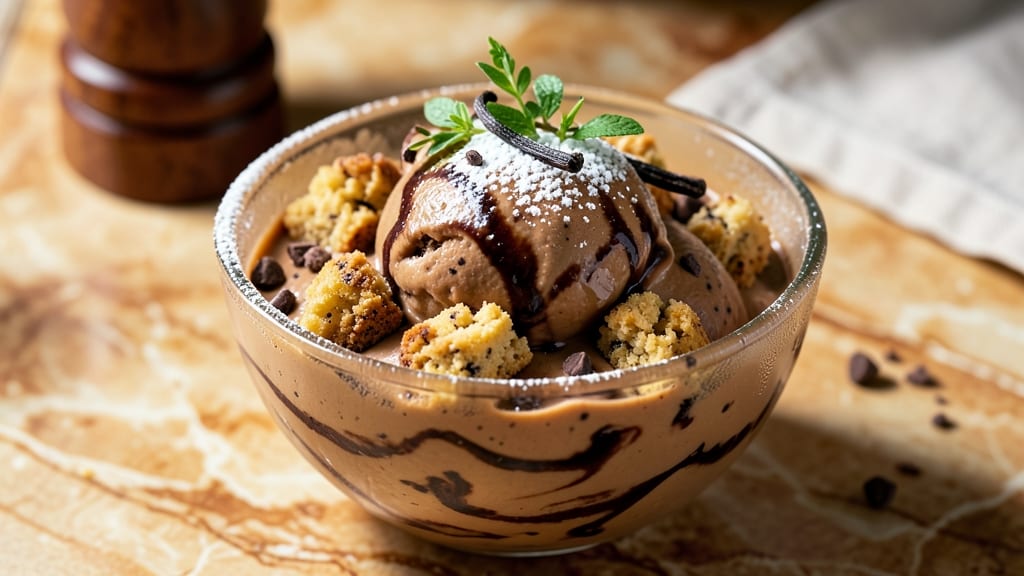
This vegan cookie dough ice cream recipe delivers all the nostalgic flavors of your favorite childhood treat—without dairy, eggs, or guilt.
The magic lies in a no-bake base of creamy coconut milk, rich cocoa powder, and a touch of vanilla bean, swirled with plant-based cookie dough that stays soft and chewy even after freezing.
I perfected this recipe after years of testing vegan desserts, ensuring every bite has that perfect balance of sweetness, crunch, and cookie dough goodness.
The secret to this ice cream isn’t just the flavor—it’s the texture. By using a blend of crunchy pretzel bites and vanilla bean swirls, we create layers of contrast that keep it exciting from first bite to last.
The cookie dough chunks stay tender thanks to a simple aquafaba (chickpea brine) binder, while the pretzels add a satisfying snap. No special equipment is needed—just a few pantry staples and a little patience for freezing.
What you’ll end up with is a restaurant-quality dessert that looks as impressive as it tastes—creamy vanilla swirls, pockets of cookie dough, and salty pretzel crunch in every spoonful. This recipe is perfect for impressing guests, celebrating special occasions, or simply treating yourself without compromise.
The best part? It’s completely plant-based, so everyone at the table can enjoy it.
Whether you’re serving it in bowls, cones, or as a sundae, this vegan cookie dough ice cream proves that dairy-free desserts can be just as indulgent. Let’s make it—your taste buds (and your conscience) will thank you.
Ingredients for vegan cookie dough ice cream
Creamy coconut milk, rich cocoa, and crunchy pretzels—this vegan ice cream delivers nostalgic cookie dough magic without dairy or eggs.
| Ingredient | Amount | Notes |
|---|---|---|
| Full-Fat Coconut Milk 🥥 | 1 can | Chilled overnight, scoop solid cream |
| Vanilla Bean 🌿 | 1 whole | Seeds scraped for maximum flavor |
| Unsweetened Cocoa Powder 🍫 | ½ cup | Dutch-processed for smooth texture |
| Maple Syrup 🍁 | ½ cup | Grade B for richer flavor |
| Aquafaba 🥫 | ¼ cup | From chickpea brine, whipped |
| All-Purpose Flour 🌾 | ½ cup | Gluten-free blend if needed |
| Brown Sugar 🍯 | ¼ cup | Lightly packed |
| Vanilla Extract 🌸 | 1 tbsp | Pure vanilla preferred |
| Salt 🧂 | ¼ tsp | Fine sea salt |
| Crunchy Pretzel Bites 🍞 | 1 cup | Unsalted for balanced flavor |
| Mini Chocolate Chips 🍫 | ½ cup | Vegan chocolate chips |
| Cornstarch 🌾 | 1 tbsp | For smooth texture |
| Lemon Juice 🍋 | 1 tsp | Freshly squeezed |
The coconut milk is non-negotiable—full-fat canned (like Goya or Thai Kitchen) gives the creamiest texture. Chill it overnight so you can scoop out just the solid cream, which becomes your ice cream base. Vanilla bean is worth the splurge here—Madagascar beans have the best aroma. For the cocoa, Dutch-processed (like Hershey's Special Dark) dissolves smoothly. If you're using store-brand, sift it first to avoid lumps. The pretzel bites should be unsalted—you'll add salt through the recipe, and you want that salty-sweet contrast to shine.
No vanilla bean? Pure vanilla extract (like McCormick or Nielsen-Massey) works, but you'll miss that floral depth. Aquafaba (chickpea brine) is the secret binder—store it in the fridge and use within 5 days. For the cookie dough chunks, gluten-free flour is a must if anyone at your table has allergies. Brown sugar adds moisture, but if you only have white, pack it tightly into the measuring cup. Mini chocolate chips should be vegan—check labels, as some brands use milk chocolate. Pro tip: Toast the pretzels lightly before adding to enhance their flavor.
This ice cream tastes even better after 24 hours in the freezer—patience pays off! Store it in an airtight container with parchment paper between layers to prevent freezer burn. Portion into scoops before serving for perfect portions. Leftovers? Thaw in the fridge for 10 minutes before scooping. The vanilla swirls and cookie dough chunks keep best when frozen, so don’t worry about prepping ahead. Double the batch—it disappears fast!
Why You'll Love This Recipe
- No Blender Needed: I swear by this—just whisk the aquafaba until it’s fluffy, then fold in the rest. The coconut milk and cocoa powder melt together like magic, no fancy equipment required. (Yes, even my blender-hating roommate makes this.)
- Cookie Dough Magic: That first spoonful? Pure nostalgia. The vanilla bean isn’t just an extract—it’s real, swirled into the mix with the cocoa for a taste that’s actually like digging into jarred cookie dough, but better. Honestly, I’ve caught myself sneaking bites before it even hits the freezer.
- Freezer-Friendly Flex: Make a big batch on Sunday, and you’ve got dessert for the week. Scoop it straight from the freezer for a quick treat, or soften slightly for a creamy topping on pancakes. (My kids call it “ice cream” but I know the truth—it’s adulting with dessert.)
- Pantry Staple Power: Five ingredients, zero weird swaps. The maple syrup keeps it rich without overpowering, and the aquafaba replaces eggs without a hint of egginess. I’ve made this with expired spices, a dented can of coconut milk, and it still came out solid. Budget win, flavor win.
Step-by-step instructions for vegan cookie dough ice cream
Here's how to create creamy, no-bake vegan ice cream with that perfect cookie dough swirl and crunchy texture!
Prepare the Coconut Milk Base
First, chill the 1 can full-fat coconut milk overnight in the refrigerator. The next morning, carefully scoop out the solid cream that forms on top, leaving behind the liquid. You'll need about 1 cup of this thick coconut cream for the base. This step is crucial—it gives your ice cream that ultra-smooth, creamy texture without any dairy.
In a medium bowl, whisk together the 0.5 cup maple syrup, 0.25 cup brown sugar, 1 tbsp vanilla extract, and 1 tbsp cornstarch. The cornstarch helps stabilize the mixture and prevents iciness. Add the scraped seeds from the 1 whole vanilla bean and mix well. The vanilla bean adds a depth of flavor that vanilla extract alone can't match.
Whip the Aquafaba and Combine Ingredients
In a separate bowl, whip the 0.25 cup aquafaba (chickpea brine) with an electric mixer until it forms stiff peaks, similar to whipped cream. This step is what gives your ice cream that light, airy texture. Gradually fold the whipped aquafaba into the coconut cream mixture until fully combined. The aquafaba will help create a silky-smooth consistency.
Now, gently fold in the 0.5 cup unsweetened cocoa powder and 0.25 tsp salt. Mix just until everything is incorporated—overmixing can deflate the aquafaba. The cocoa powder should dissolve completely, giving the mixture a rich, chocolatey hue. Taste and adjust sweetness if needed, adding a bit more maple syrup if desired.
Add the Cookie Dough Swirl
In a small bowl, combine the 0.5 cup all-purpose flour, 0.5 cup mini chocolate chips, 1 cup crunchy pretzel bites, and 1 tsp lemon juice. The lemon juice helps balance the sweetness and adds a subtle tang. Mix well to evenly distribute the chocolate chips and pretzel bites. This is your cookie dough swirl—keep it chunky for that classic cookie dough texture!
Pour half of the coconut mixture into your ice cream maker and churn according to the manufacturer's instructions. Once it starts to thicken, add the cookie dough mixture and fold it in gently. Then, add the remaining coconut mixture and continue churning until it reaches a soft-serve consistency. This should take about 20-25 minutes. The result should be creamy and smooth with visible cookie dough swirls.
Freeze and Serve
Transfer the churned ice cream to a loaf pan or airtight container. Smooth the top with a spatula, pressing down gently to ensure even freezing. Cover the container with parchment paper or plastic wrap, pressing it directly onto the surface to prevent ice crystals. Freeze for at least 4 hours, or until completely firm.
To serve, let the ice cream sit at room temperature for 5-10 minutes before scooping. This makes it easier to get perfect, creamy portions. Enjoy immediately for the best texture—this ice cream is at its creamiest right out of the freezer. Store any leftovers in the freezer for up to 2 weeks, though it’s likely to disappear much faster!
Pro Tips For Making Vegan Cookie Dough Ice Cream
- Whisk Aquafaba Cold: I learned this the hard way—warm or room-temperature aquafaba won’t whip as stiff or stable. Pop the can in the fridge for 10 minutes first, then whisk it until it’s glossy and holds peaks. Cold protein = better texture, no guesswork.
- Toast the Cocoa: Skip the raw cocoa powder, and you’ll get a flat, chalky flavor. Dry-toast the unsweetened cocoa in a skillet over medium-low for 2–3 minutes, stirring constantly, until it smells toasty and rich. Let it cool before mixing—this makes all the difference in depth.
- Chill the Base First: Pouring warm coconut milk into the ice cream maker? Don’t. Chill the mixture for at least 30 minutes before churning—otherwise, you’ll end up with a soupy mess or a motor that burns out. (Yes, I’ve done both.)
- Scrape the Vanilla: Vanilla bean paste is easy, but scraping the seeds from a real pod and adding the scraped pulp gives a pro-level flavor. Use 1 bean per batch, split the seeds, and save the scraped pod for future recipes—it’s worth the extra 30 seconds.
Health benefits of these flavors
Plant-Based Protein Boost
This vegan ice cream packs a surprising amount of plant-based protein from ingredients like aquafaba and coconut milk. A single serving delivers about 4-5 grams of protein, making it a great option for those looking to boost their protein intake without dairy.
The aquafaba (chickpea brine) isn’t just a binder—it’s a functional ingredient that adds both protein and a light, airy texture. 💪
Rich in Antioxidants
The unsweetened cocoa powder and mini chocolate chips provide a powerful dose of antioxidants, particularly flavonoids that support heart health and reduce oxidative stress. Darker cocoa (like the Dutch-processed variety used here) contains even more of these beneficial compounds.
This makes your dessert not just delicious, but also a nutritious treat compared to traditional dairy-based options.
Heart-Healthy Fats
Coconut milk is rich in medium-chain triglycerides (MCTs), which are metabolized differently than long-chain fats and may support heart health and energy levels. While coconut milk does contain saturated fat, the MCTs in it are actually easier for your body to process efficiently.
Plus, the pretzel bites add a satisfying crunch without the heavy saturated fats found in many traditional ice cream bases. 🍯
Natural Energy Source
The maple syrup used in this recipe provides a natural source of energy with its manganese and zinc content, both essential minerals for metabolism and immune function. Unlike refined sugars, maple syrup retains some of its original nutrients, making it a slightly healthier sweetener choice.
The brown sugar adds moisture and a caramel-like depth while contributing small amounts of calcium and iron.
Gluten-Free Adaptable
While this recipe uses all-purpose flour, it can easily be adapted for gluten-free diets by substituting a gluten-free flour blend. This makes it accessible for those with celiac disease or gluten sensitivities without sacrificing texture or flavor.
The aquafaba and coconut milk base remain naturally gluten-free, ensuring the foundation of your ice cream is safe for everyone at the table. ✨
No Added Preservatives
Unlike many store-bought vegan ice creams, this homemade version contains no artificial preservatives or additives. The natural ingredients—like aquafaba, coconut milk, and vanilla bean—preserve freshness while delivering authentic flavor.
The cornstarch acts as a natural stabilizer, preventing iciness and maintaining a smooth texture without the need for chemical additives. This makes it a cleaner, more wholesome option for health-conscious eaters. 💫
Nutrition facts
Frequently asked questions
Can I make this vegan ice cream without an ice cream maker?
For a no-churn version, spread the churned mixture into a loaf pan, cover tightly with plastic wrap (pressed directly on the surface), and freeze for 6 hours. Stir vigorously with a fork every 1-2 hours to break up ice crystals. This method takes longer but works perfectly for small batches.
Why does my vegan cookie dough ice cream get icy?
Iciness happens when water crystallizes during freezing. To prevent this, ensure your coconut milk is fully chilled overnight and use the solid cream only. The cornstarch in the recipe also helps stabilize the texture. If it still gets icy, try adding 1 extra tbsp of cornstarch to the base mixture.
Can I substitute aquafaba with something else?
Yes! If you don’t have aquafaba, whisk 1/4 cup coconut cream until stiff peaks form (like whipped cream). For a vegan egg substitute, you could also use 1 tbsp ground flaxseed + 3 tbsp water, but the texture may be slightly denser. The aquafaba creates that signature lightness, so it’s the best option if possible.
How do I make this gluten-free?
Swap the all-purpose flour for a 1:1 gluten-free flour blend (like Bob’s Red Mill). The aquafaba and coconut milk base remain naturally gluten-free, so the only adjustment needed is the flour. Test your blend first to ensure it doesn’t make the cookie dough chunks too crumbly.
Can I add nuts or other mix-ins?
Chopped pecans, walnuts, or vegan chocolate chunks work beautifully. For extra crunch, toast your nuts lightly before adding. Just be mindful of portion sizes—too many mix-ins can make the texture grainy. Stick to 1/2 cup total of additional mix-ins for best results.