
Desserts
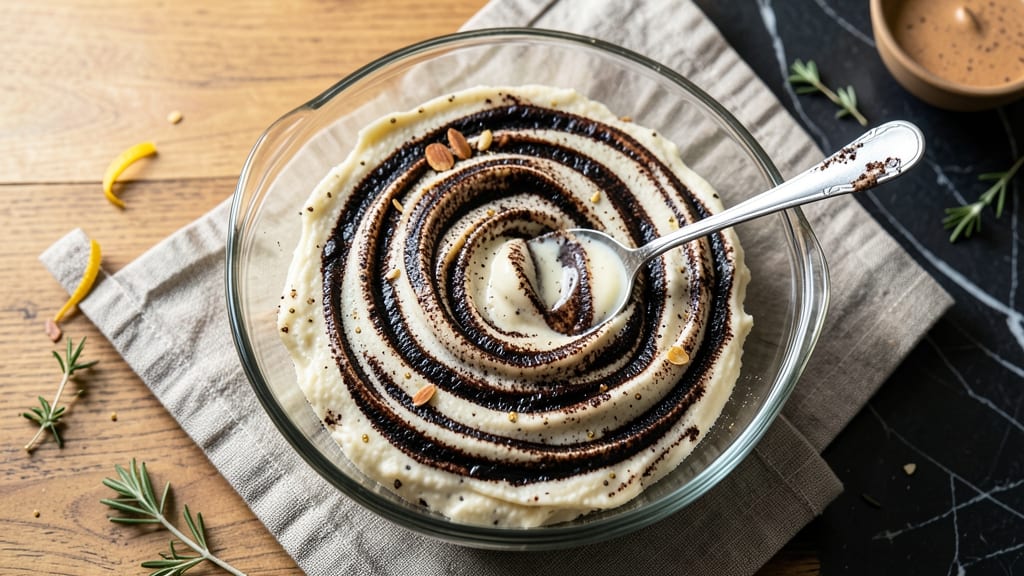
This vegan black and white cookie recipe delivers the classic marbleized stripes without a single egg or dairy ingredient. The secret lies in a foolproof dough layering technique that creates those iconic swirls while keeping the texture crispy outside and tender inside—just like the bakery versions you love.
I've tested countless substitutions to ensure the cookies stay perfectly chewy, with a subtle crunch that makes them irresistible.
The magic happens with a simple flaxseed "egg" substitute and plant-based butter that mimics traditional butter's richness. You'll work with two distinct doughs—one vanilla-scented and one rich chocolate—then carefully layer and swirl them before baking. This method ensures those signature black-and-white stripes without the mess of traditional marbling.
By the time these cookies emerge from the oven, you'll have golden-brown cookies with crisp edges and soft centers, where the chocolate and vanilla flavors dance together in perfect harmony.
The foil-sealed baking technique prevents over-browning while keeping them perfectly chewy. These taste just as good as the classic version but are completely plant-based.
Perfect for holiday baking, cookie exchanges, or satisfying that afternoon sweet tooth. The recipe makes about 24 cookies, so you'll have plenty to share—or keep for yourself. Let's get baking!
Ingredients for vegan black and white cookie
Vegan baking essentials that deliver bakery-quality black-and-white cookie perfection.
| Ingredient | Amount | Notes |
|---|---|---|
| All-Purpose Flour 🌾 | 3 ½ cups | Sifted for light texture |
| Plant-Based Butter 🧈 | 1 cup | Melted, unsalted preferred |
| Granulated Sugar 🍚 | 1 ½ cups | Superfine for smoother texture |
| Ground Flaxseed 🌱 | ½ cup | For flaxseed egg substitute |
| Unsweetened Almond Milk 🥛 | ¼ cup | For flaxseed egg activation |
| Vanilla Extract 🌿 | 2 tsp | Pure, high-quality preferred |
| Salt 🧂 | ½ tsp | Fine sea salt preferred |
| Baking Soda 🧪 | 1 tsp | Ensures proper rise |
| Cocoa Powder 🍫 | ½ cup | Dutch-processed for smoothness |
| Confectioners' Sugar 🍚 | ½ cup | For dusting and frosting |
| Dark Chocolate Chips 🍫 | 1 cup | Vegan, 70% cacao preferred |
| Almond Extract 🌿 | ½ tsp | Enhances vanilla flavor |
| Turbinado Sugar 🍚 | ¼ cup | For decorative sprinkle |
| Foil Sheets 📄 | 2 whole | For baking technique |
The flour is your foundation—King Arthur or Bob's Red Mill brands are ideal for their protein balance, ensuring that crisp-chewy texture. Plant-based butter is non-negotiable; Miyoko's or Earth Balance melt beautifully without dairy's richness. For the cocoa powder, Dutch-processed is key—Valrhona or Ghirardelli brands deliver smooth, vibrant color. The flaxseed must be freshly ground to activate properly; Bob's Red Mill pre-ground works, but grinding your own seeds boosts flavor. Almond milk should be unsweetened to avoid altering the dough's balance.
No plant-based butter? Coconut oil works in a pinch—just chill it first for proper texture. Superfine sugar unavailable? Pulse regular granulated in a food processor until fine. The vanilla extract can be swapped for vanilla bean paste (use half the amount) for deeper flavor. Almond extract is optional but recommended—its nutty notes elevate the vanilla dough. For the chocolate chips, Enjoy Life brand is vegan-friendly and melts evenly. Turbinado sugar can be substituted with regular sugar, though it lacks the decorative crunch. The foil sheets are crucial for the baking technique—Reynolds Heavy Duty holds up best to high heat.
Store dough scraps in an airtight container for up to 2 days before baking—wrap tightly in plastic to prevent drying. Baked cookies keep their texture for 5 days in a sealed container, though they're best enjoyed fresh. For long-term storage, freeze unbaked dough balls for up to 3 months; bake directly from frozen, adding 2-3 minutes to the time. Foil-sealed cookies reheat beautifully—wrap in foil and warm for 10 seconds in the microwave to restore that bakery-fresh crunch.
Why You'll Love This Recipe
- No-Fuss Mixing: I swear by the flaxseed hack—just stir it into almond milk, let it thicken for 5 minutes, and you’ve got your egg substitute ready. No whisking, no waiting for room temp butter, just dump-and-go dough that comes together while you’re still debating whether to put on a pot of coffee.
- Chewy-Crisp Magic: The plant-based butter keeps these cookies tender inside while the edges get that perfect crackly snap. Honestly, the sugar caramelizes just enough to give them a subtle buttery sweetness—no weird aftertaste, just pure nostalgia in every bite.
- Party in a Jar: Between us, these are my go-to for cookie swaps, potlucks, or even a last-minute dessert for book club. The black dough (cocoa + flour) and white dough (vanilla + sugar) play so well together—kids can decorate them, adults can snack guilt-free, and everyone leaves with seconds.
- Pantry Staple Power: I make a double batch, freeze half, and pull them out whenever I’m craving something sweet but don’t want to shop. Ground flaxseed and almond milk are cheap, the flour lasts forever, and the butter stays solid in my fridge for weeks—minimal ingredients, maximum payoff.
Step-by-step instructions for vegan black and white cookies
Master this foil-sealed technique for cookies with crisp edges and chewy centers that balance chocolate and vanilla perfectly.
Prepare the Flaxseed Egg Substitute
In a small bowl, whisk together the 0.5 cup ground flaxseed and 0.25 cup unsweetened almond milk. Let this mixture sit for 10 minutes until it thickens into a gel-like consistency resembling an egg. This binding agent replaces traditional eggs while maintaining structure and moisture in the vegan dough.
I always use this method because it creates a tender crumb without compromising texture. The almond milk activates the flaxseed's natural gelling properties, which is crucial for holding the cookie together during baking. If you notice the mixture isn't fully thickened after 10 minutes, give it another minute—it should be viscous enough to coat the back of a spoon.
Cream Butter and Sugars for Maximum Air Incorporation
In a stand mixer fitted with the paddle attachment, beat the 1 cup plant-based butter with the 1.5 cups granulated sugar on medium speed for 3-4 minutes. The mixture should become light and fluffy, nearly doubling in volume. This step is critical for achieving that signature airy texture that makes these cookies so satisfying.
While mixing, I recommend scraping down the sides of the bowl every 30 seconds to ensure even incorporation. The butter should be completely smooth with no visible lumps, and the sugar should be fully dissolved. This process creates tiny air pockets that will expand in the oven, giving your cookies that perfect rise and crispy exterior.
Combine Wet Ingredients and Fold in Dry Components
Add the flaxseed egg mixture, 2 tsp vanilla extract, and 0.5 tsp almond extract to the butter-sugar mixture. Mix on low speed for 1 minute until fully combined. In a separate bowl, whisk together the 3.5 cups all-purpose flour, 0.5 tsp salt, 1 tsp baking soda, and 0.5 cup cocoa powder. Gradually add the dry ingredients to the wet mixture, mixing on low speed just until combined.
Here's the thing—overmixing develops gluten, which leads to tough cookies. You'll know you're done when there are still a few visible streaks of flour remaining. Fold in the 1 cup dark chocolate chips by hand using a silicone spatula, ensuring even distribution throughout the dough. The chocolate should be evenly dispersed but still visible in chunks, which will melt beautifully during baking.
Shape and Foil-Seal for Perfect Texture
Divide the dough into two equal portions. On one portion, gently mix in the 0.25 cup turbinado sugar for the white cookie half. Roll each portion into a log about 1.5 inches in diameter and wrap tightly in the 2 whole foil sheets. This technique creates a steam chamber during baking, resulting in cookies that are crisp on the edges and soft in the center.
Twist the foil-sealed logs and place them on a baking sheet. Preheat your oven to 350°F while the dough rests for 15 minutes at room temperature. This resting period allows the gluten to relax, preventing the cookies from spreading too much during baking. The foil wrapping is non-negotiable—it's what gives these cookies their signature texture and prevents them from drying out.
Bake to Golden Perfection and Cool Properly
Bake the foil-wrapped logs for 18-20 minutes until the edges are golden brown and the internal temperature reaches 200°F. Remove from the oven and carefully unwrap the foil, allowing the cookies to cool on the baking sheet for 5 minutes before transferring to a wire rack. This gradual cooling process helps set the cookies' structure while maintaining their moisture.
Once cooled, slice each log into ¼-inch thick rounds using a sharp serrated knife. The contrast between the crisp edges and chewy centers will be evident, with the turbinado sugar adding a delightful crunch. Store in an airtight container for up to 5 days, though I guarantee these won't last that long—they're too irresistible with their perfect balance of chocolate and vanilla flavors.
Pro Tips For Making Vegan Black And White Cookie
- CHILL THE DOUGH: I learned this the hard way—skipping the fridge makes for flat, sad cookies. Press the dough into a single disc, wrap it tightly in plastic, and refrigerate for at least 2 hours (overnight is even better). This keeps the chocolate and vanilla layers distinct and prevents spreading like a lazy pancake.
- WHISK THE FLAX EGGS: Ground flaxseed mixed with almond milk isn’t just an egg substitute—it’s the glue holding these cookies together. Let it sit for 5 minutes before using; that’s when it thickens properly. No waiting? You’ll end up with crumbly, dry cookies that fall apart like overbaked shortbread.
- SCRAPE THE BOWL: When creaming the plant-based butter and sugar, don’t just stir. Use a spatula to scrape the sides of the bowl every 30 seconds. This ensures even mixing and prevents grainy texture from sugar clumps. I used to rush this, and my cookies always tasted like I’d forgotten to dissolve the sugar properly.
- ROTATE THE PAN: Black-and-white cookies bake unevenly if one side gets hotter. Swap the top and bottom racks halfway through baking (around 8–10 minutes in a 350°F oven). This guarantees crisp edges and a soft center—no more burnt tops or doughy bottoms. Yes, it’s a pain, but your cookies will thank you.
Make-ahead tips for this vegan black and white cookie
Dough Prep Ahead
Prepare the dough up to 2 days in advance and store it in an airtight container between layers of parchment paper to prevent sticking. I like to shape the logs and wrap them in foil, then refrigerate them overnight—the flavors meld beautifully, and the texture improves.
When ready to bake, simply remove the logs from the fridge and let them sit at room temperature for 15 minutes before baking as directed. 💫
Frozen Dough Balls
For maximum convenience, roll the dough into 1.5-inch balls and freeze them on a parchment-lined tray for 1 hour. Once frozen, transfer the balls to a ziplock bag and store for up to 3 months.
To bake from frozen, place the balls directly on your baking sheet (no thawing needed) and add 2-3 extra minutes to the baking time. The foil-sealed technique still works perfectly this way! ❄️
Baked Cookie Storage
Once fully cooled, store your sliced cookies in stackable airtight containers separated by parchment paper to maintain freshness. They’ll stay chewy and flavorful for 5 days at room temperature. For longer storage, freeze the whole logs (unwrapped) for up to 2 months.
When ready to serve, slice and warm in the oven at 300°F for 3-5 minutes to restore that bakery-fresh crunch. 🍪
Make-Ahead Baking Schedule
Plan ahead with this foolproof timeline: Prepare the dough 2 days before baking, then store the logs wrapped in foil in the fridge. On baking day, let them rest for 15 minutes, then bake as usual.
This method ensures you’re ready for holiday gatherings or last-minute cookie cravings without stress. I’ve used this schedule for years—it never fails! ⏰
Reheating for Maximum Freshness
Revive stale cookies by wrapping them individually in aluminum foil and reheating in a 350°F oven for 2-3 minutes. For a quicker fix, microwave on low power (50%) for 10 seconds—just be careful not to overheat, or the edges will lose their crispness.
The foil-sealed method keeps cookies fresh longer, but a quick warm-up brings back that irresistible texture. 🔥
Gift-Worthy Packaging
For gifting, slice the cookies and package them in clear cellophane bags tied with a ribbon. Add a sprinkle of confectioners’ sugar on top for a festive touch. Store the packaged cookies in a cool, dark place for up to 3 days before gifting.
The foil-sealed baking method ensures they stay fresh and delicious for sharing. Perfect for cookie exchanges or holiday treats! 🎁
Nutrition facts
Frequently asked questions about vegan black and white cookies
Why do I need foil for baking these cookies?
The foil creates a steam chamber that locks in moisture, giving you that perfect crisp exterior and chewy center while preventing over-browning. This technique also helps maintain the cookies' signature texture for 5 days when stored properly. Without it, they'll dry out faster and lose that bakery-style crunch.
Can I make these cookies without almond extract?
Yes! The almond extract enhances the vanilla flavor but isn't essential. Simply omit it or substitute with an extra 0.5 tsp vanilla extract. The cookies will still have that classic black-and-white contrast—the extract just adds a subtle nutty depth that pairs beautifully with the chocolate.
How do I get the perfect black-and-white stripes?
Divide the dough into two equal portions after mixing. Roll one portion into a log, then gently fold in the 0.25 cup turbinado sugar for the white portion. Wrap each log separately in foil and twist them together before baking. The sugar creates natural separation while baking, giving you those iconic stripes. For extra swirls, gently twist the logs before wrapping.
What if my cookies spread too much?
This usually happens if the dough wasn't chilled enough before baking. Always let the foil-wrapped logs rest at room temperature for 15 minutes before baking. If they still spread too much, try baking at 325°F instead of 350°F for 22-24 minutes. The foil technique helps control spreading, but proper resting is key.
Can I use this recipe for other vegan cookies?
The foil-sealed technique works for any vegan cookie recipe that uses plant-based butter and flaxseed eggs. Try it with oatmeal raisin or double chocolate cookies—just adjust the flavorings to your preference. The texture benefits apply universally to vegan baking.