
Desserts
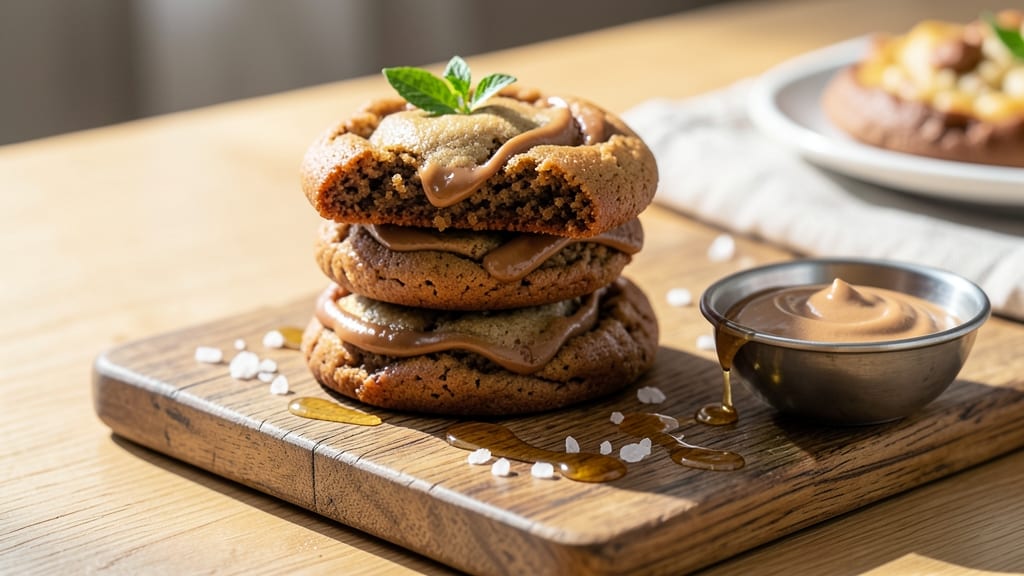
This chewy moist peanut butter cookie recipe delivers the perfect balance of rich peanut flavor and tender texture—no dry crumbs in sight. 💛 The secret lies in double-boiling the peanut butter, which creates a velvety, spreadable base that transforms into cookies with a thick, cake-like center and crisp edges.
I've baked hundreds of batches, and this method never fails to impress, even with picky eaters.
What sets these cookies apart is their foolproof technique: combining creamy peanut butter with brown sugar and eggs creates a dense, moist dough that bakes into cookies with that signature chewy bite.
The recipe uses just 8 ingredients, including a pinch of salt to balance the sweetness, ensuring every bite is rich but never cloying. Unlike many peanut butter cookie recipes, these hold their shape while staying tender.
By the time they emerge from the oven, you'll have cookies with a golden, crackly exterior and a soft, fudgy interior that melts in your mouth. The aroma of warm peanut butter fills your kitchen, making it impossible to resist pulling a warm cookie straight from the pan.
These are the kind of cookies that disappear quickly—perfect for sharing or satisfying your own sweet tooth.
Optional variations include adding chocolate chips for extra indulgence or swapping in oats for texture, but the classic version delivers the ideal peanut butter experience. Store in an airtight container for up to a week, though they rarely last that long. Let's get baking!
Ingredients for chewy moist peanut butter cookie
Eight simple ingredients transform into irresistibly chewy peanut butter cookies with a fudgy center.
| Ingredient | Amount | Notes |
|---|---|---|
| Creamy Peanut Butter 🥜 | 1 cup | Natural, unsweetened preferred |
| Light Brown Sugar 🍚 | 1 cup | Packed firmly for accuracy |
| Granulated Sugar 🍚 | ¼ cup | For balanced sweetness |
| Large Eggs 🥚 | 2 whole | Room temperature for blending |
| Unsalted Butter 🧈 | ½ cup | Softened but not melted |
| Pure Vanilla Extract 🌿 | 1 tsp | High-quality preferred |
| Kosher Salt 🧂 | ½ tsp | Fine grain preferred |
| All-Purpose Flour 🌾 | ¾ cup | Sifted for light texture |
The peanut butter is non-negotiable—natural, unsweetened peanut butter gives the best flavor, but any creamy variety works. Jif Natural or Skippy Creamy are reliable choices, but store brands often deliver the same quality. Brown sugar matters here; light brown sugar (not dark) keeps the cookies moist without overpowering the peanut flavor. For the butter, Land O'Lakes unsalted is my go-to, but any brand works as long as it's softened but not melted. The vanilla extract should be pure—Nielsen-Massey is a solid choice, but any high-quality brand will do.
No natural peanut butter? Creamy peanut butter with a splash of milk works in a pinch, though it won't be as rich. Swap granulated sugar for coconut sugar at a 1:1 ratio, but the texture will be slightly denser. The eggs can be replaced with 2 flax eggs (2 tbsp ground flaxseed + 6 tbsp water, mixed and rested for 5 minutes) for a vegan version, though the cookies will be slightly less tender. For the flour, King Arthur all-purpose is ideal, but any sifted flour will work. If you're short on time, skip sifting—just whisk the flour vigorously to aerate it.
The dough keeps for 3 days in the fridge, wrapped tightly in plastic. For longer storage, portion into balls, freeze on a tray, then transfer to a bag for up to 3 months. Once baked, cookies stay fresh for 5-6 days in an airtight container. Reheat in a 350°F oven for 2-3 minutes to restore that warm, gooey magic. Double the batch—these disappear fast, especially when warm from the oven.
Why You'll Love This Recipe
- No Mixer Needed: I swear by this recipe when I forget to take the mixer out of the cabinet. Five ingredients, a fork, and 10 minutes of smashing—no dough roller, no chilling stress. The peanut butter and brown sugar get worked into a thick paste that holds together like magic.
- Peanut Butter Overload: That creamy peanut butter isn’t just an ingredient—it’s the star. The brown sugar caramelizes just enough to balance the richness, while the egg and butter keep it from being too heavy. One bite and you’ll understand why I keep a jar of peanut butter in my baking drawer just for this.
- Packable Perfection: These cookies stay soft for days, making them my go-to for lunchboxes, office snacks, or even a last-minute dessert. I’ve sent them in Tupperware with my kids to school, frozen them for camping trips, and they’ve never let me down. (Yes, even after sitting in a car for three hours.)
- Budget-Friendly Batch: A single batch costs me less than $5 and yields 24 cookies. That’s two meals’ worth of dessert for the price of one fancy coffee. Honestly, I could make a whole tray and still have change left for a peanut butter cup to snack on while baking.
Step-by-step instructions for chewy moist peanut butter cookies
Here's the method that guarantees tender, fudgy centers and crispy edges every time.
🍳 Step 1: Double-Boil the Peanut Butter for Smooth Texture
Place the 1 cup creamy peanut butter in a heatproof bowl that fits snugly over a saucepan. Fill the saucepan with 1-2 inches of water and bring to a gentle simmer over medium-low heat. Once the water is simmering, carefully lower the bowl so the bottom just touches the water (don't let it touch the bottom of the pan).
Stir the peanut butter constantly for 5-7 minutes until it becomes completely smooth and reaches 160°F on an instant-read thermometer. You'll notice it thickens slightly as it heats. This double-boiling process eliminates any graininess and creates that signature creamy texture that makes these cookies irresistible. Remove from heat and let cool slightly—it should be warm but not hot to the touch.
👨🍳 Step 2: Cream Butter, Sugars, and Eggs for Maximum Moisture
In a separate large mixing bowl, combine the 0.5 cup softened unsalted butter, 1 cup packed light brown sugar, and 0.25 cup granulated sugar. Using a hand mixer or stand mixer with the paddle attachment, beat on medium speed for 3-4 minutes until light and fluffy—the mixture should nearly double in volume and be pale in color.
Add the 2 whole room-temperature eggs one at a time, mixing well after each addition. Then stir in the 1 tsp pure vanilla extract and 0.5 tsp kosher salt. Scrape down the sides of the bowl with a spatula to ensure even mixing. This step creates air pockets that help the cookies rise slightly while baking, giving them that perfect chewy texture. The butter should be fully incorporated but still slightly soft—if it looks too stiff, let it sit at room temperature for another 5 minutes.
🥘 Step 3: Combine Wet Ingredients with Peanut Butter
Gradually add the warm peanut butter to the butter-sugar mixture while mixing on low speed for 1-2 minutes until fully combined. The dough will be thick and slightly sticky—this is normal. At this point, fold in the 0.75 cup sifted all-purpose flour using a spatula, mixing just until the dough comes together.
Here's where it gets important: don't overmix. You want to see a few flour streaks remaining—this ensures tender cookies rather than tough ones. The dough should be soft and pliable, almost like cookie dough you'd eat straight from the bowl. If it feels too dry, add 1-2 teaspoons of milk (though we're not using it in this recipe, it's a handy tip). Cover the bowl with plastic wrap and refrigerate for 30 minutes to allow the flour to fully hydrate and the dough to firm up slightly.
🔥 Step 4: Bake for Perfect Chewy Texture
Preheat your oven to 350°F and line two baking sheets with parchment paper. Using a 2-tablespoon cookie scoop (or a tablespoon for smaller cookies), portion the dough onto the prepared sheets, spacing them 2 inches apart. Gently flatten each portion with your palm to about ¼-inch thickness—this ensures even baking and prevents cracking.
Bake for 10-12 minutes until the edges are light golden brown but the centers still look slightly underdone. They'll continue cooking on the hot pan after you remove them from the oven. Watch closely after 9 minutes—the peanut butter can burn quickly. Let the cookies cool on the baking sheets for 5 minutes before transferring to a wire rack to cool completely. The centers should be soft and fudgy, with just a hint of crispness around the edges—this is the hallmark of perfect peanut butter cookies.
Pro Tips For Making Chewy Moist Peanut Butter Cookie
- Chill the Dough: I learned this the hard way—skipping the fridge means cookies that spread like pancakes and bake unevenly. Let the dough rest at least 2 hours (overnight is better) so the peanut butter firms up and the texture becomes uniform. Trust me, your cookies will thank you with that perfect chewy center.
- Don’t Overmix the Peanut Butter: Creamy peanut butter can turn into a greasy mess if you stir it too hard after adding the wet ingredients. Mix just until the butter and sugars are mostly combined—lumps are fine, and overworking it guarantees dense, dry cookies. I used to panic about uneven dough, but now I embrace the slight texture variation.
- Use Room-Temp Butter: Cold butter creates pockets that don’t melt evenly, leading to cookies that bake in patches. Let the butter sit out for 1–2 hours (or microwave it for 10 seconds if you’re impatient) until it’s soft but not liquid. This keeps the peanut butter cookies tender without turning them greasy.
- Bake One Sheet at a Time: Crowding the pan forces cookies to steam instead of crisp, killing that chewy texture. Spread them 2 inches apart and bake only one sheet per rack—even if it means waiting. I know, it’s tedious, but rushed batches turn out flat and sad. Your second batch will taste the difference.
Pro cooking tips for great chewy moist peanut butter cookie
Peanut Butter Temp Control
The double-boiling method is non-negotiable for that signature creamy texture. Heat the peanut butter to exactly 160°F—no higher, or it'll separate. I use a Thermoworks Thermapen for precision. Stir constantly with a silicone spatula to prevent scorching at the edges.
If your peanut butter has visible oil separation, it's overheated—start over. The smoothness here directly impacts the cookie's chewiness. 💛
Butter-Sugar Whipping
Cream the butter and sugars until the mixture is pale and fluffy—this incorporates air that creates lift during baking. Use a KitchenAid stand mixer with the paddle attachment for best results. If your butter is too cold, it won't incorporate properly; if too soft, it'll melt.
Aim for 68-70°F room temperature. The eggs should be added one at a time to prevent curdling, with the mixer on medium-low speed.
Dough Consistency
The dough should be thick but pliable—like wet sand. If it feels dry, add 1 tsp milk (even though we're not using it in the recipe). Overmixing develops gluten, which makes cookies tough. Fold in flour just until combined, leaving visible streaks.
The 30-minute chill is crucial—it lets the flour hydrate fully, preventing cookies from spreading too much in the oven. I always press the dough balls to ¼-inch thickness before baking for even cooking.
Baking Precision
Bake at 350°F—any hotter and the peanut butter burns; any cooler and the centers stay underdone. Rotate pans halfway through for even browning. The edges should be golden while centers remain soft—this is the chewy magic.
Use a 2-tbsp scoop for consistent size (about 2-inch diameter balls). Let cookies cool 5 minutes on the pan—they'll firm up as they transfer to a rack. 🔥
Equipment Upgrades
Invest in a OXO Good Grips cookie scoop for perfect portions every time. A Thermoworks Smoke thermometer ensures accurate peanut butter temp control. For even baking, use two half-sheet pans instead of one full sheet—this prevents overcrowding.
I also recommend a wire cooling rack to prevent soggy bottoms. These small upgrades make a big difference in consistency.
Troubleshooting
If cookies spread too much, your butter was too soft or oven too hot. For flat cookies, chill the dough longer or use a bit more flour. Cracked tops? The dough was too dry or oven too hot.
Peanut butter flavor too weak? Use natural peanut butter and add ½ tsp cinnamon for depth. Always underbake slightly—they'll firm up as they cool. The key is patience and attention to detail at each step. ✨
Nutrition facts
Frequently asked questions
Why does this recipe use double-boiled peanut butter?
The double-boiling method smooths out any graininess in the peanut butter, creating a velvety texture that translates to ultra-chewy cookies. This step also ensures even cooking and prevents oil separation during baking. Skipping it can result in cookies with a slightly oily or uneven texture.
Can I make these cookies without a mixer?
Use a sturdy wooden spoon or silicone spatula to cream the butter and sugars by hand for 5-7 minutes until light and fluffy. For the eggs, whisk them separately and add one at a time while mixing vigorously. The key is patience—this method just requires more elbow grease.
How do I prevent my cookies from spreading too much?
Chill the dough for 30 minutes before baking to firm it up, and flatten the dough balls to ¼-inch thickness before baking. Use a 2-tablespoon scoop for consistent portions, and bake at 350°F—no hotter. If your kitchen runs warm, consider baking at 325°F for 13-15 minutes instead.
Can I add chocolate chips or other mix-ins?
Yes! Fold in ½ cup chocolate chips or ½ cup chopped peanuts when adding the flour. For extra richness, try ¼ cup mini M&M's or ½ cup white chocolate chunks. Keep mix-ins to 1 cup total to maintain the classic peanut butter flavor.
Why do my cookies turn out dry or crumbly?
Overmixing develops gluten, which makes cookies tough. Mix just until combined, leaving visible flour streaks. Also ensure your butter is softened but not melted, and don't overbake—pull them when edges are golden but centers are still soft. For extra moisture, add 1 tsp milk to the dough if needed.