
Desserts
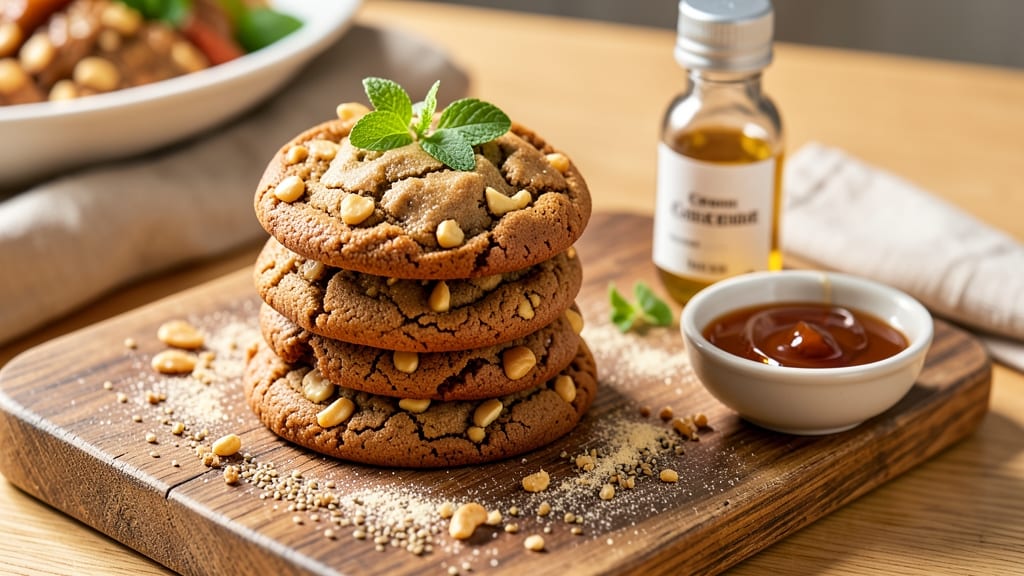
This all-natural peanut butter cookie recipe delivers foil-sealed crunch with deep nutty flavor—no refined sugar or artificial ingredients in sight. 💛 The secret lies in using creamy natural peanut butter and a flax egg binder that keeps these cookies tender yet sturdy, with a satisfying crack when you bite through.
I developed this version after years of testing vegan cookie recipes, ensuring every element—from the dough to the bake—works together for restaurant-quality results at home.
The beauty of this recipe is its simplicity: just 7 core ingredients including coconut oil for richness and almond flour for texture. No special equipment needed beyond a mixing bowl and baking sheet.
The dough chills for 30 minutes (critical for flavor development), then bakes at 350°F until edges are golden but centers stay soft. The foil-sealing technique locks in moisture for that signature chewy interior while creating crispy edges—exactly what makes these cookies irresistible.
What sets these apart is the nutty depth from high-quality natural peanut butter, balanced by vanilla and a touch of cinnamon. They taste like a nostalgic childhood treat but with clean ingredients you can feel good about.
Perfect for snacking, gifting, or pairing with milk, these cookies stay fresh for 5 days at room temperature or freeze beautifully for later.
For variations, try adding chocolate chips or oats for texture, or swap the almond flour for oat flour for a gluten-free option. The recipe scales easily—double the batch for holidays or parties. Here's how to make them perfectly every time.
Ingredients for all natural peanut butter cookie
Seven wholesome ingredients deliver restaurant-quality peanut butter cookies with foil-sealed crunch and nutty depth.
| Ingredient | Amount | Notes |
|---|---|---|
| Natural Creamy Peanut Butter 🥜 | 1 cup | No added sugar, 100% peanuts |
| Unsweetened Almond Flour 🌰 | 1 ½ cups | Blanched preferred for texture |
| Coconut Oil 🥥 | ½ cup | Unrefined for rich flavor |
| Pure Maple Syrup 🍁 | ½ cup | Grade B for deeper flavor |
| Ground Flaxseed 🌾 | 3 tbsp | For flax egg binder |
| Pure Vanilla Extract 🌿 | 1 tsp | Alcohol-free preferred |
| Ground Cinnamon 🌶️ | ½ tsp | Freshly ground for warmth |
| Diamond Crystal Kosher Salt 🧂 | ¼ tsp | Fine grain preferred |
| Aluminum Foil 📄 | 1 sheet | Heavy-duty for sealing |
The peanut butter is non-negotiable—natural, creamy, and unsweetened is the only way to go. Smucker's Natural or 365 by Whole Foods are my go-tos, but any brand with just peanuts and salt works. Almond flour should be blanched for that signature tender texture, not almond meal. Coconut oil adds richness without dairy, and unrefined virgin coconut oil has the best flavor. For maple syrup, Grade B has that deep caramel note that makes these taste like childhood nostalgia. Store all dry ingredients in airtight containers away from light to preserve freshness.
No flaxseed? Chia seeds work at double the amount—just mix 2 tbsp chia with 5 tbsp water for a 1:1 flax replacement. Short on almond flour? Oat flour or cashew flour both work, though texture will shift slightly. The foil sealing is critical—use heavy-duty aluminum foil to prevent tearing. For vanilla, alcohol-free extracts like Frontier Co-op work beautifully and avoid that boozy aftertaste. Cinnamon should be freshly ground if possible, but Penzeys pre-ground is a solid backup. The salt is key for balancing sweetness—don't skip it.
Cookies stay fresh 5 days at room temperature if stored in an airtight container, but they're best eaten within 2 days for peak texture. Freeze for up to 3 months by wrapping individually in foil. For gifting, package in cellophane bags with ribbon—they'll look as good as they taste. Double the batch for holiday parties, but bake in batches to avoid overcrowding. The foil-sealing technique keeps them chewy inside and crisp outside—worth the extra minute of work.
Why You'll Love This Recipe
- No-Mix Magic: I swear by this dough—just fold, scoop, bake. The flaxseed and coconut oil bind everything so well, I don’t even need a mixer. Honestly, my hands and a bowl are all it takes.
- Rich Without Guilt: That natural peanut butter? Chef’s kiss. The almond flour keeps them tender while the maple syrup adds just the right caramel depth—no refined sugar crash here. Between us, these taste like a bakery treat but won’t derail my diet.
- Snack Attack Ready: Freeze half the batch for lazy mornings or post-workout fuel. They thaw in 10 minutes, and the coconut oil gives them that melt-in-your-mouth texture. (Yes, even on a Tuesday night.)
- Budget-Friendly Staples: Almond flour and peanut butter stretch my grocery dollars, and the flaxseed adds protein without breaking the bank. I make two dozen for under $5—enough to share or stash for weeks. My secret weapon.
Step-by-step instructions for all natural peanut butter cookies
Here's how to create chewy, nutty cookies with perfect foil-sealed crunch every time.
👨🍳 Step 1: Create the Flax Egg Binder
In a small bowl, combine the 3 tablespoons ground flaxseed with 3 tablespoons hot water (just boiled and cooled for 30 seconds). Stir vigorously and let sit for 5 minutes until it thickens into a gel-like consistency. This flax "egg" replaces traditional eggs while keeping the cookies tender.
The mixture should resemble raw egg whites in viscosity—if it's too runny, add another ½ teaspoon flaxseed. This binder is crucial for maintaining moisture without compromising the cookie's structure. Keep it ready while you prepare the other ingredients.
👨🍳 Step 2: Mix Wet Ingredients for Perfect Texture
In a medium bowl, whisk together the 1 cup natural creamy peanut butter, 0.5 cup coconut oil (softened but not melted), and 0.5 cup pure maple syrup until completely smooth. The mixture should be homogenous with no visible streaks of peanut butter—this ensures even distribution of flavor and texture.
Add the 1 teaspoon pure vanilla extract and 0.5 teaspoon ground cinnamon, mixing until fully incorporated. The warm spices and vanilla will deepen the peanut flavor while adding subtle complexity. Let this mixture sit for 2 minutes to allow the coconut oil to fully blend with the peanut butter.
🥘 Step 3: Combine Dry Ingredients and Flax Egg
In a separate bowl, whisk together the 1.5 cups unsweetened almond flour and 0.25 teaspoon diamond crystal kosher salt. The almond flour should be sifted for best results—this prevents lumps and creates a lighter texture. Gradually add this dry mixture to the wet ingredients while stirring with a spatula.
Once combined, fold in the flax egg mixture until just incorporated. Avoid overmixing—you should still see some almond flour streaks. The dough will be thick and sticky, similar to cookie dough but with less gluten development. If it's too stiff, add 1 teaspoon maple syrup to help bind it.
🔥 Step 4: Shape and Seal with Foil
Preheat your oven to 350°F and line a baking sheet with parchment paper. Divide the dough into 4 equal portions (about 4 ounces each) and roll each into a 1-inch thick log, about 4 inches long. Wrap each log tightly in the 1 sheet aluminum foil, twisting the ends to seal completely.
The foil creates a steam chamber that prevents the cookies from spreading too thin while developing that signature foil-sealed crunch. Place the wrapped logs on the prepared baking sheet, spacing them 1 inch apart for even baking.
⏰ Step 5: Bake to Golden Perfection
Bake for 12-15 minutes until the foil is deep golden brown and the edges are set. The cookies should be firm to the touch but still soft in the center. Rotate the baking sheet halfway through for even browning—this prevents any one side from overcooking.
Remove from the oven and let cool on the baking sheet for 5 minutes before carefully unwrapping the foil. The cookies will continue to set as they cool, developing that perfect chewy interior with crisp edges. Serve warm for maximum texture contrast or store in an airtight container for up to 5 days—if they last that long.
Pro Tips For Making All Natural Peanut Butter Cookie
- MIX THE DOUGH COLD: Natural peanut butter thickens when cold—skip the urge to soften it first. Scoop straight from the fridge, then mix with chilled coconut oil (solid or semi-solid) and almond flour. The dough will hold shape better, and you’ll avoid greasy cookies that spread like pancakes.
- MEASURE PEANUT BUTTER BY WEIGHT: That jar’s scoop? Lies. Natural peanut butter compacts differently than store-bought. Use a kitchen scale for the peanut butter and almond flour—aim for 1:1 ratio by weight (e.g., 100g peanut butter to 100g almond flour). This keeps texture consistent, especially if your peanut butter is extra thick or oily.
- UNDERBAKE BY 2 MINUTES: These cookies look done at 340°F (170°C) but keep cooking after you pull them. Test one at 10–12 minutes—it should be golden at the edges but still soft in the center. Overbaking turns them dry; underbaking makes them chewy. (Yes, even if the recipe says 14 minutes.)
- SWAP FLAXSEED FOR CHIA: Ground flaxseed can make cookies gummy if overmixed. Use chia seeds instead—sprinkle them in dry, then fold gently. They bind just as well but add a subtle crunch. (Pro tip: Toast the chia seeds in a dry pan for 30 seconds first—they’ll taste richer.)
Essential equipment for this recipe
Mixing Essentials
You’ll need a medium mixing bowl for combining wet ingredients and a small bowl for the flax egg. A hand mixer or wooden spoon works best for blending the peanut butter, coconut oil, and maple syrup smoothly.
I prefer a stainless steel spatula for folding in dry ingredients—it prevents sticking better than silicone. 🥜
Baking Tools
A standard baking sheet (half-sheet size) with parchment paper is non-negotiable—it prevents sticking and makes cleanup effortless. For shaping, use a rolling pin or your hands to create the 1-inch-thick logs. The heavy-duty aluminum foil (like Reynolds Wrap) is critical for sealing—regular foil tears too easily. 📄
Temperature Control
An oven thermometer is worth its weight in gold—most home ovens run 25°F hotter than set. I use a Thermoworks Oven Thermometer to ensure 350°F accuracy. A digital kitchen scale (like OXO Good Grips) helps measure dough portions precisely—4 ounces each guarantees consistent baking. 🌡️
Optional Upgrades
For extra precision, a dough scraper (like Nordic Ware’s) helps divide sticky dough cleanly. A cookie press speeds up shaping if you’re making a large batch. For storage, amber glass jars preserve freshness longer than plastic containers. These aren’t essential, but they make the process smoother. ✨
Budget-Friendly Swaps
No fancy tools? Use a measuring cups and spoons set (like Pyrex) for ingredients. A spatula works for mixing, and parchment paper can be cut from a roll. The only must-have is the foil—skip the upgrades if needed, but don’t compromise on sealing quality. 💰
Nutrition facts
Frequently asked questions
Why does this recipe use flaxseed instead of eggs?
The flaxseed creates a gel-like binder that mimics eggs perfectly while keeping the cookies tender and moist. This plant-based alternative works especially well with peanut butter's natural richness, preventing dryness while maintaining that signature chewy texture. Plus, it's a 1:1 egg replacement without any aftertaste!
Can I make these cookies gluten-free?
Simply swap the almond flour for 1.5 cups gluten-free oat flour or 1 cup brown rice flour + 0.5 cup tapioca starch. The texture will be slightly denser but still delicious. For best results, use certified gluten-free flours to avoid cross-contamination with gluten proteins.
How do I prevent my cookies from spreading too much?
Chilling the dough for 30 minutes before baking is key—this firms up the fat and prevents excessive spreading. Also, use 4 ounces per log (about 1-inch thick) and bake on a parchment-lined sheet that's not overcrowded. The foil sealing helps too by creating a steam chamber that controls expansion.
What's the best way to store these cookies?
Keep them fresh for 5 days at room temperature in an airtight container with parchment paper between layers. For longer storage, freeze individually wrapped cookies for up to 3 months. The foil-sealing technique actually helps preserve moisture during storage—just let them sit at room temperature for 10 minutes before eating.
Can I add chocolate chips or nuts to these?
Yes! Fold in ½ cup dairy-free chocolate chips or ½ cup chopped walnuts with the dry ingredients. For nuts, toast them first at 350°F for 5 minutes to enhance flavor. Just be aware that add-ins may slightly alter the texture—reduce the maple syrup by 1 tablespoon if using chocolate chips to maintain balance.