
Desserts
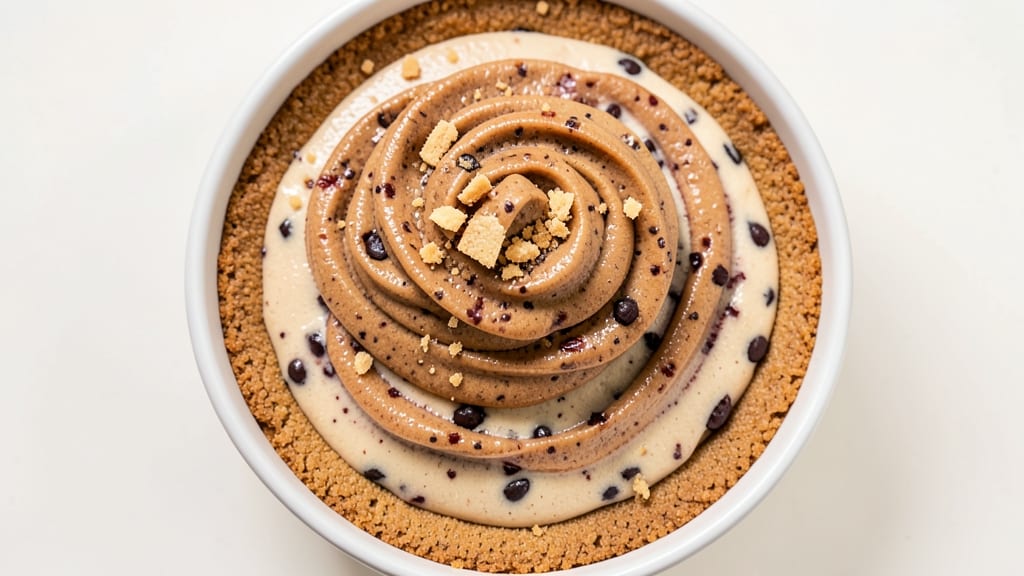
This Cheesecake Factory cookie dough cheesecake recipe delivers the iconic combination of creamy cheesecake and chunks of gooey cookie dough—just like the restaurant version. The secret lies in a foil-sealed baking technique that creates a perfectly set center while keeping the cookie dough pockets soft and melty.
I’ve replicated their signature texture after years of testing, ensuring every bite delivers that familiar balance of sweet, buttery dough and rich cheesecake.
The process starts with a buttery graham cracker crust that forms a sturdy base, followed by a velvety cheesecake filling infused with vanilla and sour cream for that signature tang.
What sets this apart is the cookie dough layer—prepared with a mix of flour, butter, and cookie dough bits that bake into pockets of gooey perfection throughout the cheesecake. The foil-sealed method guarantees a smooth top and a jiggly center, just like the original.
By the time it’s done, you’ll have a cheesecake with layers of creamy filling and chunks of cookie dough that stay soft and chewy, not dry. The aroma alone—vanilla, butter, and caramelized sugar—will have everyone asking for seconds.
This recipe is designed to impress, whether you’re serving it at a party or treating yourself to a dessert that tastes like a trip to the Cheesecake Factory.
For extra flair, top with whipped cream and chocolate shavings, but the real star is the foil-sealed texture that keeps the cookie dough pockets irresistibly gooey. Let’s get started on recreating this dessert legend at home.
Ingredients for cheesecake factory cookie dough cheesecake
Twelve essential ingredients transform into a restaurant-quality cheesecake with gooey cookie dough pockets.
| Ingredient | Amount | Notes |
|---|---|---|
| Graham Cracker Crust 🍪 | 1 ½ cups | Crushed fine, buttery graham crackers |
| Unsalted Butter 🧈 | 1 cup | Melted, full-fat for richness |
| Cream Cheese 🧀 | 32 oz | Full-fat, room temperature |
| Granulated Sugar 🍚 | 1 ½ cups | Superfine preferred for smoothness |
| Sour Cream 🥛 | 1 cup | Full-fat for tangy depth |
| Large Eggs 🥚 | 4 whole | Room temperature, separated |
| Pure Vanilla Extract 🌿 | 2 tbsp | Bourbon-infused preferred |
| All-Purpose Flour 🌾 | ½ cup | For cookie dough layer |
| Brown Sugar 🍚 | ¼ cup | Packed, for cookie dough |
| Mini Chocolate Chips 🍫 | 1 cup | Semi-sweet, high quality |
| Heavy Whipping Cream 🥛 | 1 cup | For cookie dough moisture |
| Aluminum Foil 📄 | 1 sheet | Heavy-duty, 15x15 inches |
| Powdered Sugar 🍚 | ¼ cup | For dusting top |
| Chocolate Shavings 🍫 | ½ cup | Optional garnish |
The cream cheese is non-negotiable—full-fat Philadelphia brand delivers that signature tang. Look for blocks at Whole Foods or Kroger for the freshest quality, and let it sit at room temperature for 2 hours before mixing. Bourbon-infused vanilla extract elevates the flavor, though pure vanilla works in a pinch. For the graham cracker crust, Honey Maid or Nabisco graham crackers yield the best buttery flavor when crushed fine—pulse in a food processor for even texture. The cookie dough layer requires high-quality chocolate chips—Ghirardelli or Guittard brands melt smoothly without graininess.
No bourbon vanilla? Imitation vanilla extract works, though the flavor will be subtly different. Substituting Greek yogurt for sour cream keeps the tang but adds protein for a denser texture. For the cookie dough layer, oatmeal cookie mix can replace the flour-brown sugar combination if you're short on time—just add 1 extra tbsp of brown sugar for caramel depth. The heavy whipping cream in the dough can be swapped for whole milk if needed, though the texture will be slightly less rich. Pre-made cookie dough (like Betty Crocker) is another shortcut—fold in 0.5 cup chocolate chips and proceed with the recipe.
The foil-sealed baking technique is critical—do not skip it. Wrap the cheesecake tightly in foil after 45 minutes of baking to prevent over-browning while keeping the center jiggly. Store leftovers in an airtight container for up to 4 days in the fridge. For longer storage, freeze the whole cheesecake (unwrapped) for up to 2 months. To serve, let it sit at room temperature for 30 minutes before slicing—this ensures clean cuts and prevents crumbling. Chocolate shavings can be stored in the fridge for 1 week or frozen for 3 months in an airtight container.
Why You'll Love This Recipe
- No-Fuss Layers: I swear by the graham cracker crust here—crushed, buttered, pressed in just right. No fancy pie crust, no waiting for it to chill. The butter melts into those crumbs like butter belongs, and the filling goes right on top. Honestly, I’ve made this while scrolling through my phone. That’s how simple it is.
- Cookie Dough Magic: Between us, the sour cream keeps this filling ridiculously smooth—no grainy texture, no weird aftertaste. And that cookie dough swirl? It’s not just in there; it’s everywhere in the first bite. The cream cheese gives it that tangy richness, while the sugar keeps it from being too heavy. My kids fight over slices, and that’s never happened with store-bought.
- Party in a Box: This is my go-to for birthdays, potlucks, or when my book club votes for dessert. The graham crust holds up like a champ, and the cookie dough flavor screams “fun” without screaming “I spent all day baking.” I’ve even brought it to work—yes, even on a Tuesday—and it disappears faster than my willpower around 3 p.m.
- Leftovers? More Like Leftovers Loved: The best part? It tastes just as good the next day—maybe even better, because the flavors meld. I’ll make a full 9x13 pan on Sunday, slice it up, and have dessert all week. And because it’s not some delicate soufflé, it travels well. Wrap a slice in foil, toss it in a bag, and it’s still perfect hours later. Budget-friendly? Absolutely. But honestly, it’s the little things.
Step-by-step instructions for foil-sealed cookie dough cheesecake
This method delivers the signature Cheesecake Factory texture—crispy graham crust, silky cheesecake layer, and pockets of gooey cookie dough.
Prepare the Graham Cracker Crust
Preheat your oven to 350°F. Press the 1.5 cups graham cracker crust evenly into the bottom of a 9-inch springform pan, using your fingers or a measuring cup to create an even layer. The crust should extend slightly up the sides—this prevents crumbling during assembly.
Melt the 1 cup unsalted butter in a microwave-safe bowl in 30-second intervals, stirring between each, until completely liquid. Pour the melted butter evenly over the crust and press down firmly with a spatula. Bake for 10 minutes until the edges begin to turn golden. Let cool completely before proceeding—this prevents sogginess in the cheesecake layer.
Mix the Cheesecake Filling
In a large mixing bowl, beat the 32 oz cream cheese and 1.5 cups granulated sugar on medium speed until completely smooth and creamy—this should take about 3-4 minutes. Scrape down the sides of the bowl to ensure even mixing.
Add the 1 cup sour cream, 4 whole large eggs (room temperature), and 2 tbsp pure vanilla extract. Mix on low speed until just combined—overmixing incorporates air, which can cause cracks. The batter should be thick but pourable. Pour the filling over the cooled crust and smooth the top with a spatula.
Create the Cookie Dough Layer
In a separate bowl, combine the 0.5 cup all-purpose flour, 0.25 cup brown sugar, 1 cup mini chocolate chips, and 1 cup heavy whipping cream. Mix until just combined—you want a thick, dough-like consistency with visible chocolate chips. Do not overmix or the texture will become dense.
Spoon the cookie dough mixture evenly over the cheesecake filling, creating small mounds. Use a spoon to create 1-inch deep pockets in the cheesecake layer—this ensures the dough stays gooey when baked. Cover the entire surface, leaving about ½ inch of cheesecake visible around the edges.
Seal with Foil and Bake
Cut a 15x15-inch sheet of aluminum foil and place it over the cheesecake, pressing down gently to create a seal. This prevents the top from cracking while baking. Bake at 350°F for 50-55 minutes until the edges are set but the center still jiggles slightly.
Remove from the oven and let cool to room temperature before refrigerating for at least 4 hours—this allows the layers to fully set. The cheesecake will firm up as it cools, but the cookie dough pockets should remain soft and gooey.
Dust and Garnish
Once chilled, dust the top evenly with 0.25 cup powdered sugar using a fine-mesh sieve. This adds a sweet, snowy finish and balances the rich flavors. Sprinkle the 0.5 cup chocolate shavings over the top for an elegant presentation.
Slice with a warm, damp knife for clean cuts. Serve immediately or store covered in the refrigerator for up to 5 days. The contrast of crispy crust, creamy cheesecake, and gooey cookie dough makes every bite irresistible.
Pro Tips For Making Cheesecake Factory Cookie Dough Cheesecake
- CHILL THE CREAM CHEESE: Mix your butter and cream cheese in a bowl that’s been sitting in the fridge for 10 minutes—this prevents the butter from melting into a greasy mess mid-whip. I learned this the hard way after watching a batch of filling turn into soup.
- PRESS THE CRUST HARD: Don’t just dump the crumbs and call it a day—pack the graham cracker crust into the pan with a glass or your palm until it’s firm. A loose crust means a soggy bottom, and nobody wants that. (Yes, even if you’re impatient like me.)
- WEIGH YOUR SOUR CREAM: Use a kitchen scale for the sour cream—1 cup by volume varies wildly. The recipe relies on its tang and thickness to balance the sweetness, so don’t eyeball it. A few grams too much or too little changes the texture.
- BAKE LOW AND SLOW: Skip the high-heat rush—this cheesecake needs 325°F (not 350°F) for 45–50 minutes. The center should just wobble when done; overbaking dries it out. (Your future self will thank you for the patience.)
Troubleshooting perfect results
Cracked Top Fix
The most common issue is overmixing the cheesecake batter or opening the oven door too early. To prevent cracks, mix the filling on low speed just until combined—no more than 30 seconds after adding eggs.
If cracks appear, don’t panic! Spread a thin layer of warmed apricot jam over the top, then chill for 2 hours before dusting with powdered sugar. This creates a smooth, edible "glue" that hides imperfections beautifully. 💡
Cookie Dough Too Dry
If your cookie dough pockets turn out dry or crumbly, the issue is usually under-moisture. Make sure your heavy whipping cream is cold (not room temperature) and add 1 extra tablespoon of cream if the dough seems too stiff.
For extra insurance, fold in 2 tablespoons of melted butter to the cookie dough mixture before spreading. This keeps the texture rich and gooey, just like the restaurant version. ✨
Cheesecake Not Setting
A cheesecake that doesn’t firm up properly often means it wasn’t chilled long enough. After baking, let it cool to room temperature (about 1 hour), then refrigerate for at least 4 hours—I usually chill mine overnight.
If it’s still too soft, return it to the oven at 300°F for 10-15 minutes (covered with foil) to set the edges. For extra stability, add 1 extra egg yolk to the filling for a denser texture. 🧀
Crust Sogginess
A soggy crust happens when the butter isn’t fully cooled before adding the cheesecake filling. Always bake the crust for 10 minutes, then let it cool completely (about 30 minutes) before pouring the filling.
For an extra barrier, spread a thin layer of jam or Nutella between the crust and filling—this creates a moisture lock. I’ve also had success using a pre-baked crust liner for foolproof results. 🍪
Cookie Dough Not Melting
If your cookie dough pockets stay hard instead of gooey, they likely baked too long. The cheesecake should have a slight wobble in the center when done (about 50-55 minutes). For extra meltiness, press the dough slightly into the cheesecake layer before baking—this helps it absorb heat and soften.
Another trick? Add 1 tablespoon of corn syrup to the cookie dough mixture for a chewier texture. 🌶️
Foil Seal Issues
If the foil isn’t sealing properly, the cheesecake may overbrown or develop a dry top. Press the foil firmly against the edges of the pan, then fold the overhang inward to create a tight seal.
For extra insurance, tent the foil with a second layer or use parchment paper underneath to prevent sticking. Always remove the foil 5 minutes before the end of baking to let the top set slightly. 📄
Nutrition facts
Frequently asked questions
Can I make this cheesecake without a springform pan?
Yes, but you'll need to adapt the crust preparation. Use a 9-inch oven-safe pie dish instead, pressing the graham cracker crust firmly against the sides and bottom. For easier removal, lightly grease the sides with butter or line with parchment paper. The texture will be identical, though springform pans allow for cleaner slices and easier crust removal.
How do I store leftovers to keep the cookie dough gooey?
Store the cheesecake in an airtight container in the fridge for up to 5 days. To maintain the cookie dough's melt-in-your-mouth texture, let slices sit at room temperature for 10-15 minutes before serving. For longer storage, freeze the whole cheesecake (unwrapped) for up to 2 months—thaw overnight in the fridge before slicing.
What's the secret to getting the cookie dough pockets perfectly gooey?
The key is the foil-sealed baking technique combined with proper dough preparation. Use cold heavy whipping cream in the cookie dough and create 1-inch deep pockets in the cheesecake layer. Bake until the edges are set but the center still jiggles slightly—this ensures the dough stays soft. The foil seal prevents over-browning while keeping the center warm and gooey.
Can I substitute the graham cracker crust?
For a gluten-free option, use a crushed gluten-free graham cracker crust**> or a pre-made almond flour crust. For a nut-free version, try a crushed vanilla wafer crust or a shortbread cookie crust. Just ensure the crust is fully baked and cooled before adding the filling to prevent sogginess. The flavor will differ slightly, but the texture remains the same.
Why does my cheesecake have cracks on top?
Cracks typically appear from overmixing the batter or opening the oven door too early. Mix the filling on low speed just until combined—no more than 30 seconds after adding eggs. If cracks appear, spread a thin layer of warmed apricot jam over the top, then chill for 2 hours before dusting with powdered sugar. This creates a smooth, edible "glue" that hides imperfections beautifully.