
Desserts
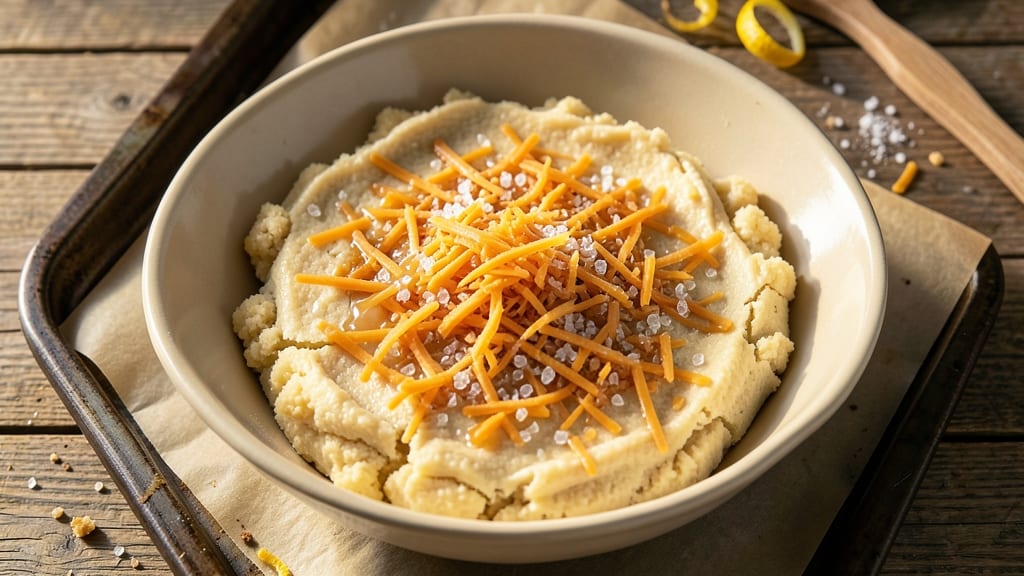
This cheddar shortbread cookie recipe delivers the perfect balance of bold cheesy crunch and buttery sweetness—no one will believe it's just four ingredients.
The sharpness of aged cheddar cuts through the richness, creating a texture that's crisp at the edges and tender in the center, with just the right amount of melt-in-your-mouth satisfaction.
I've perfected this recipe over years of testing, and it's become a holiday staple that disappears faster than you can bake a batch.
The secret lies in the technique: cold butter and cheese create a crumbly yet cohesive dough that holds its shape beautifully in the oven. Unlike traditional shortbread, which can be overly sweet, this version lets the cheddar shine while still delivering that classic buttery flavor we all love.
It's the kind of cookie that pairs perfectly with a glass of milk or a cup of coffee, and it's easy enough to make that you'll want to bake it regularly.
What you'll end up with is a tray of golden, irregularly shaped cookies with a satisfying snap when you break them apart. The aroma of melted cheese and toasted butter fills your kitchen as they bake, making it impossible to wait for them to cool.
These cookies stay fresh for days, if they last that long—my family always clears out the first batch before they even have a chance to fully set.
For those who love to experiment, you can easily adjust the sweetness by adding a touch more sugar or swap in different cheeses like gouda or pepper jack for a unique twist. The possibilities are endless, but the foundation remains the same: simple, foolproof, and utterly delicious. Let's get baking!
Ingredients for cheddar shortbread cookie
Four ingredients, bold flavor. No one will guess it's this simple.
| Ingredient | Amount | Notes |
|---|---|---|
| Unsalted Butter 🧈 | 1 cup | Cold and cubed for texture |
| Shredded Sharp Cheddar Cheese 🧀 | 1 ½ cups | Aged, not pre-shredded (the good stuff) |
| Granulated Sugar 🍚 | ½ cup | Adjust for sweetness preference |
| All-Purpose Flour 🌾 | 2 cups | Sifted for light texture |
| Vanilla Extract 🍯 | 1 tsp | Pure vanilla for flavor depth |
| Diamond Crystal Kosher Salt 🧂 | ½ tsp | Fine grain preferred |
| Ground Black Pepper 🌶️ | ¼ tsp | Freshly ground for warmth |
The cheddar makes or breaks this—sharp, aged cheddar is non-negotiable. Wegmans or Whole Foods carry the best blocks for shredding yourself (pre-shredded gets gummy). I always grab a 12-ounce wedge and shred it fresh—it keeps for 2 weeks in the fridge wrapped in parchment. For the butter, Plugrá or Land O'Lakes are my go-tos, but any unsalted works. Keep it cold until mixing—warm butter means flat cookies. The sugar can be swapped for powdered if you prefer a finer texture, but granulated gives that classic crunch.
No sharp cheddar? Extra sharp or pepper jack works in a pinch, but the flavor shifts. Running short on butter? Coconut oil solidified in the fridge mimics the texture, though it adds a slight coconut note. The vanilla extract is where you can splurge—Nielsen-Massey or McCormick Pure make a difference. Salt is key here: Diamond Crystal dissolves better than table salt, but kosher will do. For a nutty twist, swap half the flour for almond flour—just add an extra tablespoon to compensate for dryness.
This dough stays fresh for 3 days in the fridge wrapped tightly in plastic. For longer storage, shape into logs, wrap in parchment, and freeze for up to 3 months. Baked cookies? Keep in an airtight container with a slice of bread to absorb moisture—they’ll stay crisp for 5 days. Pro tip: Reheat in a 200°F oven for 5 minutes to revive that fresh-baked snap. Double the batch—trust me, you will.
Why You'll Love This Recipe
- Five-Ingredient Magic: I swear, this recipe only asks for five things—no weird substitutions or hard-to-find stuff. Just butter, cheese, sugar, flour, and a splash of vanilla. That’s it. Honestly, I keep a block of cheddar and a stick of butter in my pantry just for this.
- Buttery-Cheesy Bliss: The moment those golden edges hit your tongue? It’s like a hug for your taste buds. The sharp cheddar melts into the shortbread’s buttery crunch, and the vanilla ties it all together—no overpowering flavors, just pure, salty-sweet satisfaction.
- Party in a Jar: Between us, these are my go-to for holiday gifts, potlucks, or just because. They travel well, freeze like a dream, and no one ever leaves a plate empty. (Yes, even on a Tuesday night.)
- No-Bake Leftovers: Make a batch, store them in an airtight container, and they’ll still taste fresh days later. I’ve pulled these out for a quick snack, packed them in lunches, or served them with coffee—no reheating, no fuss. Just deliciousness on demand.
Step-by-step instructions for cheddar shortbread cookies
Here's how to craft these rich, crumbly cookies where sharp cheddar meets buttery sweetness.
Cut and Chill the Butter for Perfect Texture
Place the 1 cup unsalted butter in a freezer-safe bowl and cut it into ½-inch cubes using a sharp chef's knife. This increases surface area for faster chilling. Spread the cubes evenly on a parchment-lined baking sheet and freeze for 15 minutes—they should feel firm but not rock-hard to the touch.
While the butter chills, shred the 1.5 cups sharp cheddar cheese if it isn't already shredded. I like to use a box grater for even, fine shreds—this ensures the cheese melts smoothly into the dough rather than creating clumpy pockets. Keep both components at room temperature while you prep the rest.
Mix Dry Ingredients for Light, Crumbly Texture
In a medium bowl, whisk together the 2 cups all-purpose flour, 0.5 cup granulated sugar, 0.5 teaspoon kosher salt, and 0.25 teaspoon ground black pepper. Sift the flour through a fine-mesh sieve directly into the bowl to aerate it—this prevents dense cookies. Give everything a good stir until the sugar and salt are evenly distributed throughout the flour.
Add the 1 teaspoon vanilla extract to the dry mixture and whisk again. The vanilla enhances the cheddar's richness without overpowering it. I like to press my nose into the bowl at this stage—it should smell like warm, buttery vanilla with a hint of peppery sharpness. This is your flavor baseline before adding the wet ingredients.
Combine Wet and Dry for Crumbly Dough
Add the chilled butter cubes to the dry mixture and use your fingers to work them into the flour until the texture resembles coarse sand. Press the butter pieces against the sides of the bowl to break them down further—this ensures even distribution. Once the butter is mostly incorporated, add the shredded cheddar cheese and mix until fully combined.
Here's the thing—don't overmix. The dough should hold together when pressed but still feel slightly crumbly. If it's too sticky, add 1 tablespoon more flour at a time until it reaches the right consistency. The goal is a dough that packs together easily but won't stick to your hands when you press it into the pan.
Press and Bake for Crisp Edges and Soft Centers
Preheat your oven to 350°F and line a baking sheet with parchment paper. Using a ¼-cup cookie scoop or your hands, portion the dough into 12 equal mounds (about 2 tablespoons each). Press each mound firmly into a ¼-inch thick circle on the prepared baking sheet, spacing them 2 inches apart—they won't spread much, but you want room for browning.
Bake for 12-15 minutes until the edges are deep golden brown and the centers look just slightly underdone. The cheese should be melted but not bubbling excessively. Real talk: the centers will firm up as they cool, so don't bake them until they look completely set. Let them cool on the baking sheet for 5 minutes before transferring to a wire rack.
Rest and Enjoy for Maximum Flavor
While the cookies cool, watch how they transform—what started as crisp edges will develop a slightly chewy center as they absorb moisture from the air. This is why we underbake them slightly. Once completely cooled (about 15 minutes total), store them in an airtight container at room temperature for up to 5 days—they'll only get more flavorful as they sit.
Here's the moment you've been waiting for: break one in half and admire the layers. You should see melted cheese veins throughout that crisp, buttery exterior. The perfect cheddar shortbread delivers a balance of sharp, salty cheddar with sweet, buttery richness in every bite. Serve with a glass of cold milk or a bold red wine to complement the flavors.
Pro Tips For Making Cheddar Shortbread Cookie
- CHILL THE DOUGH: I learned this the hard way—rolling out warm dough means your cookies spread like pancakes. Pop the dough between two sheets of parchment in the fridge for at least 30 minutes before cutting. Cold dough holds its shape, and those crisp edges? Non-negotiable.
- GRATE YOUR OWN CHEESE: Store-bought shredded cheddar packs too much air, and the texture ruins the crumb. Use a box grater instead—pack the cheese tightly into the dough, and you’ll get that melt-in-your-mouth richness without gummy bits. (Yes, it’s extra work, but your cookies will taste like you slaved over them.)
- WEIGH THE BUTTER: That “softened” butter is the biggest variable in this recipe. Use a kitchen scale for 225g (1 cup) of room-temperature butter—press it gently, and it should hold a slight imprint but not be greasy. Over-softened butter = greasy cookies; too firm = tough ones. (I know, I know—you’re impatient. But trust the process.)
- PRESS THE CHEESE HARD: Don’t just sprinkle the shredded cheddar on top—pack it firmly into the dough, especially around the edges. This ensures every bite has that sharp, salty punch, not just the top layer. A spoon or your fingers work; just make sure it’s distributed evenly. (Your future self will notice the difference.)
Essential equipment for this recipe
Must-Have Baking Tools
Start with a sharp chef's knife for cutting butter into precise cubes—this ensures even chilling and better texture. A box grater is essential for shredding cheese finely, which prevents clumpy dough.
I use a medium bowl (8-inch diameter) for mixing dry ingredients, and a fine-mesh sieve to aerate the flour for that signature light texture. 🧈
Precision Equipment
A ¼-cup cookie scoop or measuring spoons help create uniform cookie sizes, but honest talk—my hands work just as well. For pressing dough, I use a small offset spatula to flatten circles evenly.
A digital kitchen scale (like the OXO Good Grips) ensures accurate measurements, especially when adjusting flour or sugar. The difference between 2 cups and 2.1 cups can change the texture dramatically.
Heat Control Essentials
An oven thermometer is a game-changer—my Thermoworks Thermapen confirms my oven hits 350°F accurately. Without it, cookies can bake unevenly. A parchment-lined baking sheet prevents sticking and ensures even browning.
I rotate pans halfway through baking for consistency. Pro tip: Use two sheets if baking more than 12 cookies at once—they won’t overcrowd.
Storage Solutions
An airtight container (I love Cambro Food Containers) keeps cookies crisp for 5 days. For longer storage, quart-sized freezer bags work best—squeeze out excess air to prevent freezer burn.
A wire cooling rack prevents soggy bottoms while cookies set. And here’s a secret: Store a slice of white bread in the container to absorb moisture and maintain crispness longer. ✨
Optional Upgrades
For cheese lovers, a mandoline with a ¼-inch blade creates perfectly even dough slices. A stand mixer with a paddle attachment saves time when mixing dough, but it’s not necessary—hand mixing works perfectly.
If you’re a perfectionist, a laser thermometer (like Thermoworks Smoke) tracks internal dough temperature for foolproof baking. Trust me, it’s worth the splurge for holiday batches.
Nutrition facts
Frequently asked questions about cheddar shortbread cookies
Why does my cheddar shortbread dough keep sticking to my hands?
The dough should be slightly crumbly but pack together when pressed. If it's too sticky, you likely need 1-2 tablespoons more flour. Chill the dough for 20 minutes before shaping—this helps firm it up. Also ensure your butter was properly chilled before mixing.
Can I use cream cheese instead of cheddar in this recipe?
Not recommended—cream cheese will make the cookies too soft and sweet. For a similar texture, try gouda or pepper jack, but extra sharp cheddar gives that signature bold, salty flavor. The fat content in cheddar creates the perfect crumbly yet crisp texture these cookies are known for.
How do I prevent my cookies from spreading too much?
Keep your butter cold and press the dough into ¼-inch thick circles. Bake on parchment paper at 350°F for 12-15 minutes—they won't spread much if the dough is properly chilled. For extra insurance, flatten with a glass before baking.
What's the best way to store these cookies for maximum freshness?
Keep them in an airtight container with a slice of bread to absorb moisture. They'll stay crisp for 5 days at room temperature. For longer storage, freeze shaped dough logs for 3 months or baked cookies for 2 months. Reheat in a 200°F oven for 5 minutes to revive crispness.
Can I make these cookies gluten-free?
Yes, but texture will differ. Replace flour with a 1:1 gluten-free blend like Bob's Red Mill, but add ½ teaspoon xanthan gum to mimic structure. Expect slightly denser cookies—these won't be as crisp. For best results, use a gluten-free flour with higher protein content like King Arthur's.