
Desserts
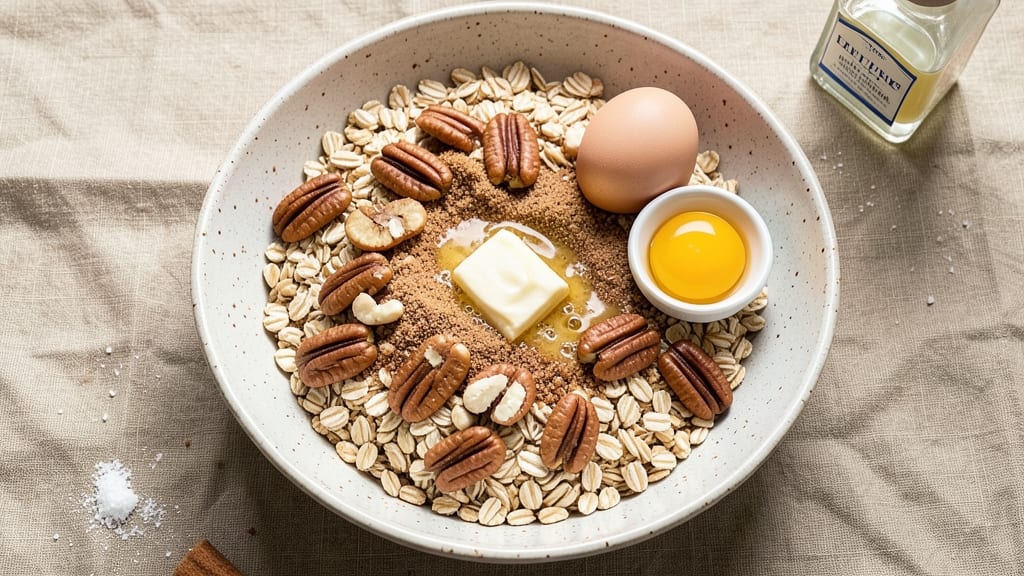
This brown sugar pecan oatmeal cookie recipe delivers a perfect balance of chewy centers, crispy edges, and caramelized brown sugar sweetness with every bite. The foil-sealing technique ensures cookies stay moist while developing that signature crunch—no dry texture here.
I’ve perfected this recipe over years of baking, and it’s become a holiday favorite that disappears faster than you can pull them from the oven.
The secret lies in the 350°F bake and the right mix of ingredients: old-fashioned oats for heartiness, toasted pecans for crunch, and just enough brown sugar to create deep caramelized pockets.
Unlike traditional oatmeal cookies, these hold their shape while staying tender inside. The foil seal during baking traps steam, locking in moisture for that melt-in-your-mouth texture you’ll crave again and again.
What makes these cookies truly special is the pecan crunch that contrasts beautifully with the chewy base, while the brown sugar adds a rich, buttery depth that caramelizes as they bake. They’re sturdy enough to handle travel but delicate enough to crumble slightly at the edges—ideal for gifting or sharing.
The aroma alone will fill your kitchen with warmth, making these the perfect treat for cozy nights or holiday gatherings.
For extra indulgence, fold in chocolate chips or swap in walnuts, but the classic combination of brown sugar, pecans, and oats is where the magic happens. Ready in just 12 minutes of baking time, these cookies are foolproof yet feel like a bakery secret.
Let’s get baking—your taste buds will thank you.
Ingredients for brown sugar pecan oatmeal cookie
Pantry staples plus a few key tricks for bakery-style cookies at home.
| Ingredient | Amount | Notes |
|---|---|---|
| Old-Fashioned Rolled Oats 🍚 | 2 cups | Not instant oats for texture |
| Light Brown Sugar 🍯 | 1 cup | Packed firmly for caramelization |
| Unsalted Butter 🧈 | 1 cup | Cold, cubed for even mixing |
| Large Eggs 🥚 | 2 whole | Room temperature for blending |
| Pure Vanilla Extract 🌿 | 1 tbsp | High-quality for aroma |
| Salt 🧂 | ½ tsp | Diamond Crystal preferred |
| Ground Cinnamon 🌶️ | 1 tsp | Freshly ground for warmth |
| Toasted Pecans 🥜 | 2 cups | Chopped, skin-on for crunch |
| All-Purpose Flour 🌾 | 1 ½ cups | Sifted for light texture |
| Baking Soda 🧪 | ½ tsp | Fresh for leavening |
| Heavy Cream 🥛 | ¼ cup | Cold for foil-sealing |
| Aluminum Foil 📄 | 1 sheet | Heavy-duty for sealing |
The oats are non-negotiable—Bob's Red Mill old-fashioned or similar gives that perfect chew. Toast them first (350°F for 8-10 minutes) to deepen the flavor, but don't burn them. Pecans? Trader Joe's or Costco have the best price—just toast them with the oats. Brown sugar should be packed firmly in the cup; don't scoop loosely. For butter, Plugrá or Land O'Lakes works, but keep it cold when mixing to prevent spreading. The foil sealing is what makes these cookies special—heavy-duty foil is worth the extra penny.
No vanilla extract? Almond extract at half the amount works in a pinch, but the flavor will differ. Short on pecans? Walnuts or hazelnuts toasted work too. If you're gluten-free, swap the flour for a 1:1 blend, but these cookies rely on the texture. The baking soda needs to be fresh—if it's over a year old, toss it. For extra richness, add 1 tbsp sour cream to the dough. And trust me on the cold butter—it creates those perfect pockets of caramelized sugar.
Dough keeps for 3 days in the fridge, wrapped tightly. For longer storage, freeze portions on a tray first, then bag. These cookies reheat beautifully—just 30 seconds in the microwave with a damp paper towel revives that bakery-fresh warmth. The foil-sealed method means they stay moist for 5 days at room temperature. Double the batch—these disappear faster than you can say 'holiday cookie platter.'
Why You'll Love This Recipe
- No-Fuss Mixing: I swear by this recipe because it’s all about dump-and-stir. Just pulse the oats in a food processor (or smash them by hand—no judgment), toss them with melted butter, brown sugar, and vanilla, then fold in pecans. The eggs bind everything together without extra fuss, and the texture comes out perfectly chewy every time.
- Caramel-Pecan Magic: That brown sugar doesn’t just sweeten—it caramelizes just enough to give these cookies a deep, buttery richness. Pair it with toasted pecans, and you’ve got a flavor combo that tastes like a hug from your favorite bakery. The vanilla ties it all together with warmth that lingers.
- Snack Attack Ready: Between us, these cookies are my go-to for lunchboxes, after-school snacks, or even a quick breakfast (yes, really). They hold up for days in an airtight container, and I’ve sent them to work with coworkers who’ve asked for the recipe. No one turns down a cookie that’s basically dessert for any occasion.
- Pantry Staple Power: Honestly, this recipe is my budget-friendly secret weapon. Rolled oats and brown sugar are cheap, and I always have butter and eggs on hand. A batch makes 24 cookies, so I can freeze half for later—no wasted ingredients, just pure, delicious leftovers that taste just as good reheated as they do fresh.
Step-by-step instructions for brown sugar pecan oatmeal cookies
Here's how to create chewy, caramelized cookies with perfect foil-sealed texture—every bite delivers that buttery oat crunch.
Mix Dry Ingredients for Perfect Texture
In a large mixing bowl, combine the 2 cups Old-Fashioned Rolled Oats, 1.5 cups All-Purpose Flour, 0.5 tsp Salt, 0.5 tsp Baking Soda, and 1 tsp Ground Cinnamon. Use your fingers to break up any oat clusters—this ensures even distribution and prevents dense pockets in your cookies. The oats should be uniformly distributed throughout the flour mixture.
I like to press the oats against the sides of the bowl with my fingers to make sure they're fully incorporated. This step is crucial because the oats give these cookies their signature texture. Set this mixture aside while you prepare the wet ingredients—you'll want to combine them quickly to maintain the butter's cold temperature.
Cream Butter and Sugar for Maximum Flavor
In a separate large bowl, combine the 1 cup Unsalted Butter (still cold and cubed) with the 1 cup Light Brown Sugar. Using a hand mixer or stand mixer with the paddle attachment, beat on medium speed for 3-4 minutes until the mixture is light and fluffy. You're looking for a pale, creamy consistency that nearly doubles in volume.
The reason we keep the butter cold is to prevent over-creaming, which can lead to flat cookies. As the butter softens, it should leave a slight impression when pressed, but not be completely melted. Add the 2 whole Large Eggs one at a time, mixing just until each is fully incorporated. Then stir in the 1 tbsp Pure Vanilla Extract and 0.25 cup Heavy Cream—this creates the perfect balance of richness and moisture.
Combine Wet and Dry Ingredients
Gradually add the dry ingredient mixture to the wet ingredients, mixing on low speed just until combined. Be careful not to overmix—you should still see some flour streaks. Fold in the 2 cups Toasted Pecans using a silicone spatula, making sure they're evenly distributed throughout the dough. The pecans should be visible but not clumped together.
Here's the thing—this dough will look slightly shaggy, and that's perfect. The texture should be thick but still scoopable. If it seems too dry, add 1-2 tablespoons of cold water to help bind it together. The dough should hold its shape when you press it between your fingers but still be soft enough to form balls.
Shape and Foil-Seal for Maximum Crunch
Line two baking sheets with parchment paper. Using a 2-tablespoon cookie scoop (or a tablespoon for smaller cookies), portion the dough into 24 equal balls (about 1.5 inches in diameter) and place them 3 inches apart on the prepared sheets. Press each ball gently but firmly to flatten slightly—this helps create that signature oatmeal cookie shape.
Here's where the magic happens: Cut a 12-inch square from the 1 sheet Aluminum Foil and place it on the baking sheet. Using a second piece of foil, carefully press it over the cookies to create a sealed packet. The foil creates steam during baking, which keeps the cookies soft and chewy inside while creating that beautiful caramelized crust on top. Make sure the foil is sealed tightly around the edges.
Bake to Golden Perfection
Preheat your oven to 350°F. Place the foil-sealed baking sheets on the middle rack and bake for 20-25 minutes, rotating the pans halfway through for even baking. The cookies are done when the edges are deep golden brown and the tops look slightly puffed. The foil will prevent over-browning, but you want that beautiful caramelized color.
Remove the foil carefully and let the cookies bake for an additional 2-3 minutes until the tops are set. They'll look slightly underdone in the center, but they'll continue cooking as they cool. Transfer the baking sheets to a wire rack and let the cookies cool for 5 minutes before carefully removing them from the parchment paper. The result should be cookies with crisp edges, a soft center, and that perfect caramelized sweetness from the brown sugar.
Pro Tips For Making Brown Sugar Pecan Oatmeal Cookie
- Pulse Oats Coarse: DESCRIPTION:
- Brown Sugar First: DESCRIPTION:
- Chill the Dough: DESCRIPTION:
- Toast Pecans Low: DESCRIPTION:
Regional styles of these flavors
Southern Comfort
In the American South, these cookies take center stage during holiday gatherings and church potlucks. The key adaptation here is using dark brown sugar instead of light for a deeper molasses flavor, and adding ½ tsp of ground ginger to complement the pecans.
Southern cooks often serve them warm with a glass of sweet tea—the heat from the cookies pairs perfectly with the tea's tartness. I remember my grandmother always doubling the batch for Thanksgiving, storing them in amber glass jars to keep them fresh. 🍯
Midwest Homestyle
The Midwest version keeps the classic brown sugar and pecan combination but swaps the foil-sealing technique for a lightly cracked top—they bake uncovered at 325°F for 18-20 minutes to create a crispier exterior.
Many Midwest bakers add ½ cup of shredded coconut to the dough for extra texture, creating a hybrid oatmeal-pecan-coconut cookie. These are often served at state fairs and county fairs, where they’re a crowd favorite for their sturdy structure and ability to handle travel.
I’ve seen them sold in clear cellophane bags at local markets, still warm from the oven. 🏕️
Pacific Northwest Twist
On the West Coast, particularly in Washington and Oregon, these cookies get a fruitier twist. Many recipes incorporate ¼ cup of dried cranberries or chopped dried apricots into the dough, balancing the richness of the brown sugar with tartness.
The pecans are often lightly toasted with a pinch of cayenne for a subtle heat, and the cookies are baked at 375°F for a slightly crispier texture. They’re a popular holiday cookie in this region, often paired with local craft cider or espresso for a sophisticated touch.
I’ve tried this version with Oregon-grown pecans, and the flavor difference is noticeable. 🌲
New England Classic
Up north, these cookies are often made with maple syrup instead of some of the brown sugar—about ¼ cup—giving them a distinct caramelized-maple flavor. The pecans are sometimes rolled in a little cinnamon-sugar mix before baking, and the dough is chilled for 30 minutes before shaping to prevent spreading.
New England bakers love serving them with a dash of sea salt on top, which cuts through the sweetness beautifully. These are a staple at harvest festivals and Thanksgiving dinners, often packed in wax paper-lined tins for gifting. 🍁
Texas-Style Spiced
In Texas, these cookies get a bold, spiced kick with the addition of ½ tsp of smoked paprika and ¼ tsp of cayenne pepper, giving them a subtle smoky depth. The pecans are often chopped coarsely and toasted with a pinch of ground chipotle powder for extra heat.
Texans prefer baking them at 375°F for a crispier texture, and they’re frequently served with iced tea or Mexican hot chocolate for contrast. I’ve seen food trucks in Austin selling these as sweet-and-spicy cookie bites, proving their versatility beyond the kitchen. 🌶️
Modern Fusion
For a contemporary twist, try adding dark chocolate chunks (about ½ cup) or white chocolate drizzle after baking. Some bakers also experiment with almond flour (replacing ¼ cup of the all-purpose flour) for a gluten-free option without sacrificing texture.
In urban areas like New York or Chicago, these cookies are often decorated with edible gold leaf or flaky sea salt for a gourmet touch. I’ve even seen them served as mini cookie sandwiches with salted caramel filling—perfect for brunch or dessert bars. ✨
Nutrition facts
Frequently asked questions
Why do I need to toast the pecans and oats?
Toasting deepens their natural flavors—pecans develop a rich, nutty aroma while oats gain a toasty crunch. Skip this step and you'll miss that bakery-quality depth. Toast pecans at 350°F for 5-7 minutes until fragrant, then chop. For oats, toast them with the pecans or spread on a baking sheet for 8-10 minutes until golden.
Can I substitute regular oats for quick oats?
Never! Quick oats will make your cookies dense and gummy. Old-fashioned or rolled oats create that perfect chewy texture. If you're out of old-fashioned, blend quick oats in a food processor for 30 seconds to mimic the texture—but it won't be the same as the real thing.
How do I fix dough that's too sticky or dry?
Too sticky? Add 1-2 tablespoons cold water and mix gently. Too dry? Stir in 1 teaspoon heavy cream or an extra ½ teaspoon vanilla extract to restore moisture. The dough should hold together when pressed but still be soft enough to scoop—like playdough but sweeter!
What's the secret to perfect foil sealing?
Use heavy-duty foil and press it tightly over the cookies, leaving no gaps. The steam creates that signature chewy center while caramelizing the edges. Remove the foil after 20 minutes and bake 2-3 more minutes uncovered for crispy tops. Pro tip: Poke a few tiny holes in the foil if your oven runs hot!
Can I make these cookies gluten-free?
Yes! Replace the all-purpose flour with a 1:1 gluten-free baking flour blend (like Bob's Red Mill). Add ½ teaspoon xanthan gum if your blend doesn't include it. The texture will be slightly denser, but still delicious. For extra crunch, toast the gluten-free flour with the oats before mixing.