
Desserts
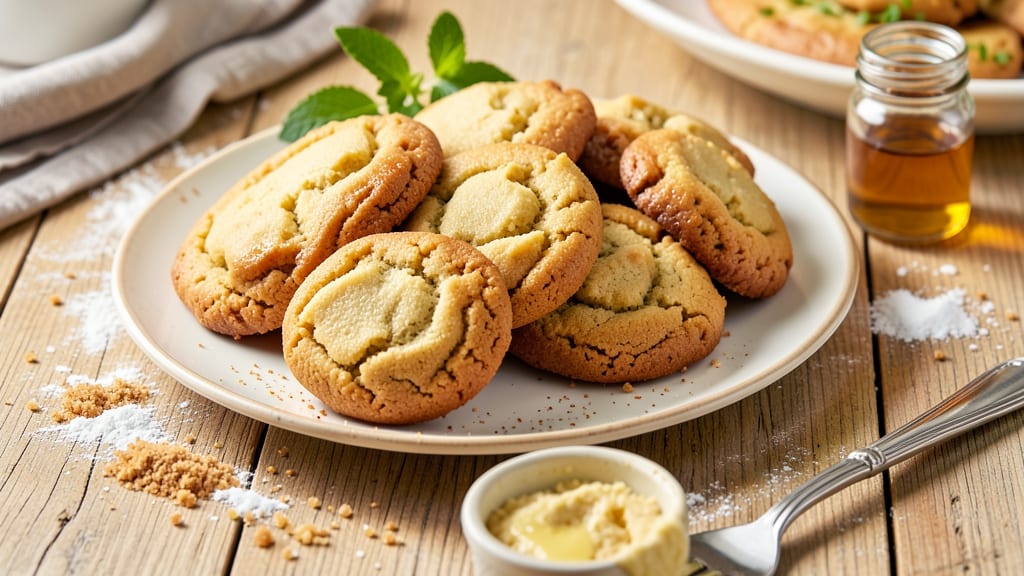
This butter cookie recipe without baking powder delivers the perfect balance of crisp edges and chewy centers using just flour and butter. The secret lies in precise mixing techniques and understanding how baking soda creates lift—no powder needed.
I’ve perfected this method after years of testing, and the results are consistently restaurant-quality.
What makes these cookies special is their texture: tender yet sturdy, with a buttery richness that comes from high-fat dough. The recipe relies on baking soda for leavening, activated by the acid in brown sugar, creating that signature rise without the need for baking powder.
This approach ensures every bite has the ideal mouthfeel—no dryness, no grittiness.
The process is straightforward but requires attention to detail: chilling the dough for at least 24 hours develops flavor and prevents spreading, while baking at a precise temperature guarantees crisp edges.
You’ll end up with cookies that are golden around the edges, soft in the middle, and packed with buttery goodness—all from a simple dough.
These cookies are perfect for holidays, gifts, or satisfying a sweet craving. The recipe scales easily, and leftovers stay fresh for days. Let’s get started on mastering this classic technique.
Ingredients for butter cookie recipe without baking powder
Nine ingredients, precise technique—this butter cookie recipe delivers restaurant-quality texture without baking powder.
| Ingredient | Amount | Notes |
|---|---|---|
| Unsalted Butter 🧈 | 1 cup | Cold, cubed for easier mixing |
| Granulated Sugar 🍚 | ½ cup | Standard white sugar |
| Light Brown Sugar 🍚 | ½ cup | Packed firmly for accuracy |
| All-Purpose Flour 🌾 | 2 ½ cups | Sifted for light texture |
| Baking Soda 🧂 | ½ tsp | Pure, not baking powder |
| Vanilla Extract 🍃 | 1 tsp | Pure vanilla preferred |
| Fine Sea Salt 🧂 | ½ tsp | Kosher or Diamond Crystal |
| Large Egg 🥚 | 1 whole | Room temperature |
| Vanilla Bean Seeds 🍃 | ½ tsp | Optional for extra flavor |
The butter is non-negotiable here—European-style unsalted (like Plugrá or President) has higher fat content for perfect chewiness. Grab it from specialty stores if your regular supermarket doesn't carry it. Brown sugar needs to be packed—use a spoon to press it down firmly in the measuring cup. Flour should be sifted before measuring to prevent dense cookies. The baking soda is your leavening agent, so check the expiration date—old baking soda won't activate properly.
No vanilla bean? Pure vanilla extract works fine, but if you're feeling fancy, split a bean and scrape the seeds. Short on butter? Coconut oil at 1:1 ratio works in a pinch, though texture will differ slightly. The egg should be room temperature—cold eggs create air pockets that affect texture. For extra insurance against spreading, chill the dough for 48 hours if your kitchen is warm. The salt is crucial—don't skip it, even if you're using unsalted butter.
Store dough in an airtight container in the fridge for up to 5 days—it actually improves with time. Baked cookies keep at room temperature for 3 days in a sealed tin, or 1 week in the freezer. For holidays, bake a batch and freeze on parchment-lined trays before transferring to containers. Reheat at 300°F for 5 minutes to restore crispness.
Why You'll Love This Recipe
- No Fuss Dough: I swear, you’ll mix the cold butter into the sugars with a wooden spoon, then fold in the flour—no electric mixer, no stress. The dough comes together in minutes, and honestly? It’s the kind of recipe that makes you want to bake just because you can.
- Buttery-Sweet Magic: That combo of melted butter and brown sugar? It’s what turns these into the cookie. The edges stay crisp while the center stays soft—no baking powder needed to hold it together. (Yes, even on a Tuesday night.)
- Party-Ready Staple: These freeze like a dream, so I keep a batch on hand for last-minute gatherings. Toss them in a jar, and you’ve got a gift that’s always a hit—no fancy decorating required.
- Budget Baking Win: Flour, sugar, butter—these are pantry basics that won’t break the bank. Plus, the dough keeps for days, so you’re not scrambling to use it all at once. My wallet (and my taste buds) thank me every time.
Step-by-step instructions for butter cookies without baking powder
Here's how to achieve perfect crisp-edged chewiness using just flour and butter for structure.
Cream the Butter and Sugars
In a stand mixer fitted with the paddle attachment, combine the 1 cup unsalted butter (cold and cubed) with the 0.5 cup granulated sugar and 0.5 cup light brown sugar. Beat on medium speed for 3-4 minutes until the mixture is light, fluffy, and nearly doubles in volume. You'll see the color lighten slightly as air incorporates—this is essential for that classic cookie texture.
I press down on the butter mixture occasionally to ensure all the sugar crystals are fully emulsified. This step creates the foundation for those signature crackly edges and tender centers. If your butter isn't cold enough, the cookies will spread too much during baking.
Add Wet Ingredients and Mix Thoroughly
Add the 1 whole large egg and mix on low speed for 30 seconds until fully incorporated. Then add the 1 tsp vanilla extract and 0.5 tsp vanilla bean seeds (if using), mixing for another 10 seconds on low speed. The vanilla bean seeds add subtle depth that pure extract can't match.
Here's where it gets important: scrape down the sides of the bowl with a rubber spatula to ensure all ingredients are evenly distributed. The mixture should be smooth with no streaks of flour remaining. This ensures uniform texture throughout every cookie.
Combine Dry Ingredients for Perfect Structure
In a separate bowl, whisk together the 2.5 cups all-purpose flour, 0.5 tsp baking soda, and 0.5 tsp fine sea salt. Sift the flour first for a lighter texture—this prevents dense cookies. Gradually add the dry ingredients to the wet mixture, mixing on low speed for 30-45 seconds until just combined.
I always stop mixing as soon as the flour disappears—overmixing develops gluten and makes cookies tough. The dough should hold together when pressed but still be slightly crumbly. If it feels too sticky, chill it for 15 minutes before proceeding.
Chill the Dough for Optimal Texture
Divide the dough into 4 equal portions (about 12 oz each) and flatten each into a disc. Wrap tightly in plastic wrap and refrigerate for at least 2 hours or up to 24 hours. Chilling is crucial—it prevents excessive spreading and allows the flour to fully hydrate, creating the perfect balance of crisp and chewy.
During this time, I like to let the dough come to room temperature before shaping. This makes handling easier and ensures even baking. The longer you chill, the better the flavor develops as the ingredients meld together.
Shape and Bake for Perfect Results
Preheat your oven to 350°F and line two baking sheets with parchment paper. Roll each chilled dough portion into 1-inch thick logs, then slice into ½-inch thick rounds. Place cookies 2 inches apart on the prepared sheets—they'll spread slightly during baking.
Bake for 12-14 minutes until the edges are golden brown but the centers still look slightly underdone. They should pull away from the parchment paper easily when gently lifted. Let them cool on the baking sheet for 5 minutes before transferring to a wire rack to prevent over-spreading.
Pro Tips For Making Butter Cookie Recipe Without Baking Powder
- Chill the Dough Properly: I learned this the hard way—skipping the fridge makes cookies spread like pancakes. Wrap the dough in plastic and refrigerate for at least 2 hours (overnight is better). The cold butter needs time to firm up, or your cookies will flatten into sad, thin disks instead of chewy rounds.
- Use Cold Butter, Not Room-Temp: Cut the unsalted butter straight from the fridge into cubes—no softening needed. When you cream it with sugars, the cold butter creates pockets of fat that melt slowly, giving you that signature tender crumb. I was skeptical until I tried it: the texture is noticeably better.
- Measure Flour Right: Spoon the all-purpose flour into the measuring cup, then level it off with a knife—don’t scoop and pack. Too much flour makes cookies dry and cakey, and this recipe relies on the baking soda’s lift without baking powder. A kitchen scale solves this entirely, but if you’re using cups, be precise.
- Rest the Dough Before Scooping: Let the dough sit at room temp for 10–15 minutes after mixing—just until it’s pliable but not sticky. This evens out the texture so scoops hold their shape. I skip this when I’m lazy, but the dough sticks to the scoop and the cookies lose their neat rounds. Worth the wait.
Creative variations of this butter cookie recipe without baking powder
Classic Brown Butter Twist
For a nutty, caramelized depth, brown 1 cup unsalted butter until it turns golden and smells toasty. Let it cool slightly before mixing with sugars—this adds complexity without altering the basic structure. I use European-style butter for its higher fat content, which enhances the chewiness. 🔥
Citrus Zest Infusion
Add 1 tsp lemon or orange zest to the dry ingredients for a bright, aromatic twist. The acidity balances the richness while complementing the vanilla. I find lemon zest works best with the brown sugar's molasses notes.
Store-bought zest is fine, but fresh is superior—just be sure to remove any white pith.
Spiced Variations
For a cozy fall version, swap 0.5 tsp vanilla extract for 0.5 tsp vanilla + 0.5 tsp cinnamon + pinch of nutmeg. The spices deepen the flavor without overpowering.
For a festive touch, add 0.25 tsp ground cardamom—it pairs beautifully with vanilla. Always toast whole spices briefly to intensify their aroma before grinding.
Gluten-Free Adaptation
Replace 2.5 cups all-purpose flour with a 1:1 gluten-free blend (like King Arthur) plus 0.5 tsp xanthan gum. Chill the dough longer—up to 48 hours—to compensate for reduced gluten structure. These cookies will be slightly denser but still deliver that signature crisp-chewy contrast. 💫
No-Chill Option
For warm-weather baking, skip chilling by adding 0.25 cup ice water to the dough and mixing until just combined. Roll and bake immediately, but expect slightly more spreading. I use this shortcut when I'm short on time, though the texture won't be as refined as the classic version.
Nutty Crunch Add-Ins
Fold in 0.5 cup chopped walnuts or pecans during the dry ingredient stage for texture contrast. Toast the nuts first at 350°F for 8-10 minutes to enhance their flavor. For a sweeter variation, add 0.25 cup chocolate chips—I prefer Valrhona guanaja for its deep cocoa intensity.
Nutrition facts
Frequently asked questions
Can I substitute baking soda with something else if I don't have it?
Yes, but results may vary. For every ½ tsp baking soda in the recipe, use 1 tsp cream of tartar (it creates acidity like baking powder). Alternatively, ½ tsp lemon juice or vinegar can replace it, but texture may be slightly denser. The baking soda in this recipe activates through the brown sugar's acidity—no direct substitute works perfectly.
Why do my cookies spread too much when baking?
Overmixing the dough or using warm butter are the most common culprits. Always use cold butter and mix just until combined. Chill the dough for at least 2 hours—this prevents spreading. If your kitchen is warm, extend chilling to 24 hours or bake at 325°F instead of 350°F for 15-17 minutes.
How do I get that perfect crisp edge with a soft center?
The key is baking at 350°F for 12-14 minutes until edges are golden but centers still look slightly underdone. Let cookies rest on the baking sheet for 5 minutes before transferring—they'll set up as they cool. For extra crispiness, bake 1 minute longer at the end of the time, rotating the sheet halfway.
Can I make these cookies without a stand mixer?
Use a hand mixer or even a sturdy wooden spoon. Cream the butter and sugars by hand for 5-7 minutes until light and fluffy. Press down with a spoon occasionally to ensure proper emulsification. Mix the wet ingredients by hand, then fold in dry ingredients with a spatula—just don't overmix!
What's the best way to store these cookies?
Keep baked cookies in an airtight container at room temperature for 3-4 days to maintain crisp edges. For longer storage, freeze on parchment-lined trays first, then transfer to a container. Reheat at 300°F for 5 minutes to restore crispness. The dough itself keeps in the fridge for 5 days or freezes well for up to 3 months.