
Beverages
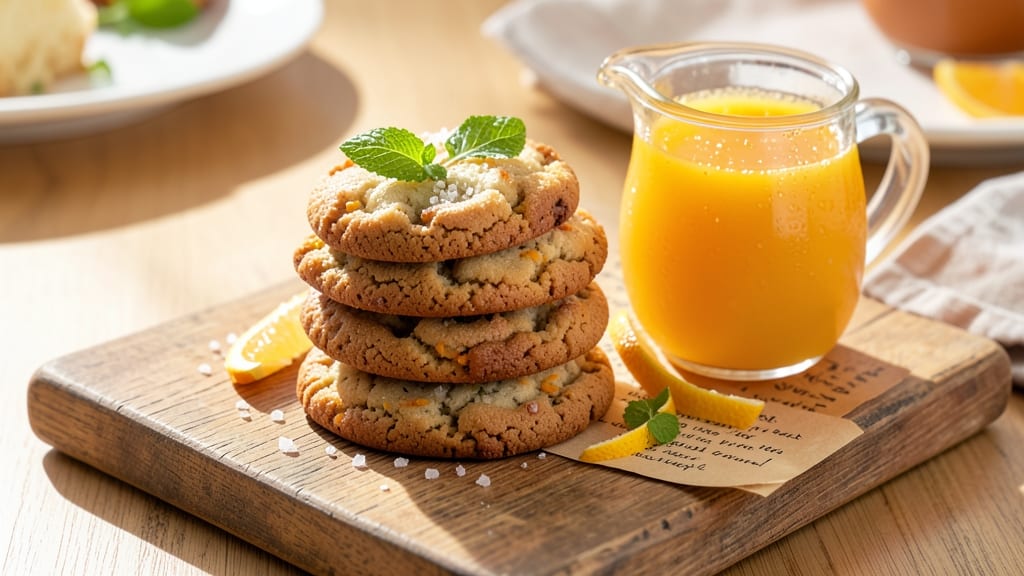
This butter cookie recipe with orange juice transforms ordinary cookies into bright, citrus-kissed chewiness that tastes like a vacation in every bite. The secret lies in replacing water with fresh orange juice, which infuses the dough with subtle tang and keeps the cookies tender for days.
I developed this recipe after years of baking, searching for that perfect balance between buttery richness and citrus brightness—now you can achieve it in just 10 minutes of active time.
The magic happens in the dough, where orange juice replaces water and creates a subtle citrus aroma that bakes into the cookies. This recipe delivers a foolproof method for perfectly chewy centers with crisp edges, thanks to a precise ratio of brown and white sugar.
The cookies stay soft for days when stored properly, making them perfect for gifting or meal prep. No fancy equipment is needed—just a mixing bowl and a baking sheet.
What you'll end up with is a batch of golden, fragrant cookies that smell like a sunny afternoon in a bakery. The orange juice adds a delicate citrus note that pairs beautifully with the buttery richness, while the powdered sugar garnish gives them that classic cookie-shop finish.
These aren't just cookies—they're a celebration of simple ingredients transformed into something extraordinary. Ready to bake?
Perfect for holidays, potlucks, or just treating yourself to something special, these cookies are versatile enough to dress up any occasion. The recipe scales easily, so you can make a single batch for two or double it for a crowd.
Once you taste the difference that orange juice makes, you'll never go back to ordinary butter cookies again.
Ingredients for butter cookie recipe with orange juice
These 11 simple ingredients create cookies so bright and chewy, they’ll taste like sunshine in every bite.
| Ingredient | Amount | Notes |
|---|---|---|
| Unsalted Butter 🧈 | 1 cup | Cold, cut into small cubes |
| Granulated White Sugar 🍚 | ¾ cup | For crisp edges and sweetness |
| Packed Brown Sugar 🍚 | ½ cup | For chewy centers |
| Fresh Orange Juice 🍊 | ½ cup | Not from concentrate, freshly squeezed |
| Large Eggs 🥚 | 2 whole | Room temperature for even mixing |
| Vanilla Extract 🌿 | 1 tsp | Pure vanilla for depth |
| All-Purpose Flour 🌾 | 2 ½ cups | Sifted for light texture |
| Baking Powder 🧂 | 1 tsp | For lift |
| Salt 🧂 | ½ tsp | Fine sea salt |
| Powdered Sugar 🍚 | ¼ cup | For garnish |
| Orange Zest 🍊 | 1 tbsp | From same orange as juice |
The orange juice is non-negotiable here—freshly squeezed from concentrate-free juice makes all the difference. ReaLemon or Tropicana Pure Premium are my go-tos at the store, but anything labeled 'not from concentrate' works. The zest? Use the same orange—it doubles the citrus magic. For the butter, Plugrá or Land O’Lakes unsalted are my favorites, but any good-quality brand will do. Keep it cold when mixing to avoid spreading too much, and don’t skip sifting the flour—it keeps those cookies light and airy.
No fresh orange juice? Substitute with 2 tbsp orange extract plus 3 tbsp water, but you’ll lose that fresh brightness. Short on zest? Amplified orange extract at half the amount works in a pinch. The baking powder is crucial—Aluminum-free, double-acting like Rumford is best. For a gluten-free version, swap the flour for a 1:1 gluten-free blend, but reduce the leavening by 25% to avoid over-rising. And if you’re feeling fancy, add a pinch of cardamom—it pairs beautifully with the citrus.
These cookies stay soft for 5-7 days when stored in an airtight container with a slice of bread to absorb moisture. For longer storage, freeze the dough balls—up to 3 months—and bake straight from frozen, adding 1-2 minutes to the time. The powdered sugar garnish is optional but adds that bakery-fresh finish. Double the batch and gift them in mason jars—they’re always a hit at holidays!
Why You'll Love This Recipe
- These work for everything: gift boxes for teachers, a quick dessert after dinner, or a midnight craving fix. The orange twist makes them feel special without needing frosting or fancy decorating.
- No-Fuss Mixing: I swear by this dough—just creaming butter, sugars, and orange juice until it’s silky smooth. No food processor, no overworking, just a sturdy spoon and 5 minutes of elbow grease. That citrusy richness cuts through the sweetness without extra effort.
- Citrus Butter Magic: The orange juice isn’t just flavor—it’s the star. It keeps the cookies tender, adds a bright zing, and pairs perfectly with the buttery richness. Honestly, the first batch disappears faster than my usual chocolate chip cookies.
- Holiday or Snack Attack: These work for everything: gift boxes for teachers, a quick dessert after dinner, or a midnight craving fix. The orange twist makes them feel special without needing frosting or fancy decorating.
Step-by-step instructions for citrus butter cookies
Here's how to create perfectly balanced cookies with crisp edges and chewy centers—every bite bursts with bright orange flavor.
Cream the Butter and Sugars Together
In a stand mixer fitted with the paddle attachment, beat the 1 cup unsalted butter (cold, cut into small cubes) on medium speed for 1-2 minutes until softened but still slightly firm. Add the 0.75 cup granulated white sugar and 0.5 cup packed brown sugar, then continue beating for 3-4 minutes until light and fluffy. You'll know it's ready when the mixture nearly doubles in volume and leaves faint streaks on the bowl.
This creaming process incorporates air, which creates those signature crackly tops and helps the cookies spread just enough. If your butter melts too quickly, chill the bowl for 5 minutes before continuing. The texture should be smooth but still hold its shape when pressed.
Add Eggs, Orange Juice, and Zest
Beat in the 2 whole large eggs one at a time, mixing on low speed for 30 seconds after each addition. Add the 0.5 cup fresh orange juice and 1 tbsp orange zest, then mix until fully combined. The mixture will look slightly curdled, but don't worry—it will smooth out when you add the dry ingredients. The orange zest adds a bright, aromatic kick that pairs perfectly with the citrusy juice.
Here's a pro tip: Use freshly squeezed orange juice from the same orange you zest. The flavor is far more vibrant than concentrate, and the zest will have maximum potency. If your mixture seems too thin, let it sit for 5 minutes before proceeding—it will thicken as the flour absorbs the liquid.
Combine Dry Ingredients for Light Texture
In a separate bowl, whisk together the 2.5 cups all-purpose flour, 1 tsp baking powder, and 0.5 tsp salt. Gradually add this to the wet mixture, mixing on low speed just until combined—you should still see a few flour streaks. Overmixing develops gluten, which can make the cookies tough. Fold in the 1 tsp vanilla extract by hand to ensure even distribution.
The reason we sift the flour (if possible) is to prevent dense pockets in the cookies. If you don't have a sifter, simply whisk the dry ingredients thoroughly to break up any clumps. The baking powder ensures a light rise, while the salt balances the sweetness and enhances the orange flavor.
Chill the Dough for Perfect Shape
Cover the dough with plastic wrap and refrigerate for at least 1 hour (or up to 24 hours). Chilling is non-negotiable—it prevents excessive spreading in the oven and allows the flour to fully hydrate for a tender crumb. The dough should be firm but still pliable when you remove it from the fridge. If it's too sticky, let it sit at room temperature for 10-15 minutes before scooping.
This step also intensifies the orange flavor as the citrus oils meld with the butter. Pro tip: If you're short on time, freeze the dough into a log for 30 minutes before scooping. The cold dough holds its shape beautifully, giving you those thick, chewy cookies with crisp edges.
Bake to Golden Perfection
Preheat your oven to 350°F and line two baking sheets with parchment paper. Scoop the chilled dough into 1.5-tablespoon portions (about 1 inch in diameter) and place them 2 inches apart on the prepared sheets. Flatten each portion slightly with your palm—this ensures even baking and prevents cracking.
Bake for 10-12 minutes until the edges are golden brown and the centers look slightly underdone. They'll continue cooking on the hot pan after you remove them. Let them cool on the baking sheet for 5 minutes before transferring to a wire rack. While still warm, dust the tops with 0.25 cup powdered sugar for a sweet, snowy finish.
Resist the urge to overbake—these cookies should be soft in the center with a crisp exterior. If you bake them too long, they'll dry out and lose their chewy texture. Serve warm with a glass of milk or orange juice for the ultimate citrusy treat!
Pro Tips For Making Butter Cookie Recipe With Orange Juice
- CHILL THE DOUGH: Chill the dough for at least 2 hours—or overnight if you can. I learned this the hard way after baking a batch of flat, sad cookies that spread like pancakes. Cold dough holds its shape and develops better flavor.
- USE FRESHLY SQUEEZED JUICE: Skip the bottled stuff—freshly squeezed orange juice makes all the difference. The pulp adds texture, and the acidity brightens the flavor. Strain it if you prefer a smoother dough, but don’t skip the freshness.
- MEASURE BUTTER BY WEIGHT: Use a kitchen scale for the butter—1 cup of packed butter isn’t always 2 sticks. Unsalted butter varies in density, and precision here keeps the cookies tender without being greasy. Yes, it’s a pain, but it’s worth it.
- BAKE ONE PAN AT A TIME: Crowding the oven leads to uneven baking and cookies that steam instead of crisp. Space them out—even if it means two batches. Your cookies will thank you with consistent color and texture. (I know, I know—patience isn’t your strong suit.)
Storing and reheating this dish
Refrigerator Storage
Store your freshly baked cookies in an airtight container with a slice of white bread to absorb moisture and keep them soft. Place the container in the refrigerator for up to 5-7 days—the bread helps maintain that perfect chewy texture.
I like using Oxo Good Grips containers because they seal tightly. 💫
If you prefer to store the dough instead, wrap it tightly in plastic wrap and refrigerate for up to 24 hours. This method intensifies the orange flavor as the citrus oils meld with the butter.
For best results, let the dough sit at room temperature for 10-15 minutes before scooping to prevent sticking.
Freezer Storage
For longer storage, freeze the dough in 1.5-tablespoon portions on a parchment-lined tray for 30 minutes before transferring to a freezer-safe bag. This prevents the dough from sticking together.
The dough will keep for up to 3 months—just bake straight from frozen, adding 1-2 minutes to the baking time. 🧊
If you've already baked the cookies, store them in the freezer for up to 2 months in an airtight container. Thaw at room temperature for 1-2 hours before enjoying. The texture remains chewy and crisp, just like fresh-baked!
Reheating Methods
For the best results, reheat cookies in a 350°F oven for 2-3 minutes to restore that warm, gooey center. Place them on a baking sheet and watch closely—they warm up quickly. This method works perfectly for reviving cookies that have lost some of their chewiness. 🔥
Avoid the microwave—it can make the cookies rubbery. If you're in a hurry, try warming them in a toaster oven for 1-2 minutes on low heat. The powdered sugar garnish will melt slightly, giving them that bakery-fresh finish again.
Gift-Worthy Packaging
To package cookies for gifting, place them in mason jars or cellophane bags tied with a ribbon. Add a small orange slice on top for a festive touch.
These cookies stay fresh for 3-4 days at room temperature when packaged this way. I love using Ball mason jars for a rustic, charming look. 🎁
For a longer shelf life, include a small packet of silica gel in the container to absorb moisture. Label the jar with the date and baking instructions—this makes them an easy and thoughtful gift for any occasion.
Nutrition facts
Frequently asked questions
Can I substitute orange juice with another citrus liquid?
Yes, but the flavor will change. Use lemon juice (equal amount) for a sharper tang, or grapefruit juice (reduce by 25%) for a more bitter note. For a sweeter profile, try pineapple juice, though it lacks the citrus brightness. Always use fresh juice—not from concentrate—for the best results.
Why do my cookies spread too much?
Overmixing the dough or skipping the 1-hour chill are the most common causes. Make sure your butter is cold (not melted) and don't overcream the sugars. Also, scoop portions from chilled dough—they'll hold their shape better in the oven.
How can I make these cookies gluten-free?
Replace the all-purpose flour with a 1:1 gluten-free flour blend and reduce baking powder by 25% (use 0.75 tsp instead). For best texture, add 1 tbsp xanthan gum to the dry ingredients. The cookies will be slightly denser but still delicious.
Can I add chocolate chips to this recipe?
Fold in 1 cup chocolate chips with the dry ingredients. Use semi-sweet or dark chocolate for a rich contrast. For extra citrus-chocolate flavor, try orange chocolate chips. Just don't overmix after adding them to avoid breaking up the chips.
What's the secret to extra chewy cookies?
The brown sugar (not white) and underbaking slightly are key. Bake until edges are golden but centers look soft (they'll firm up as they cool). Also, use 1.5-tablespoon portions—smaller scoops yield thicker cookies that stay chewy longer.