
Desserts
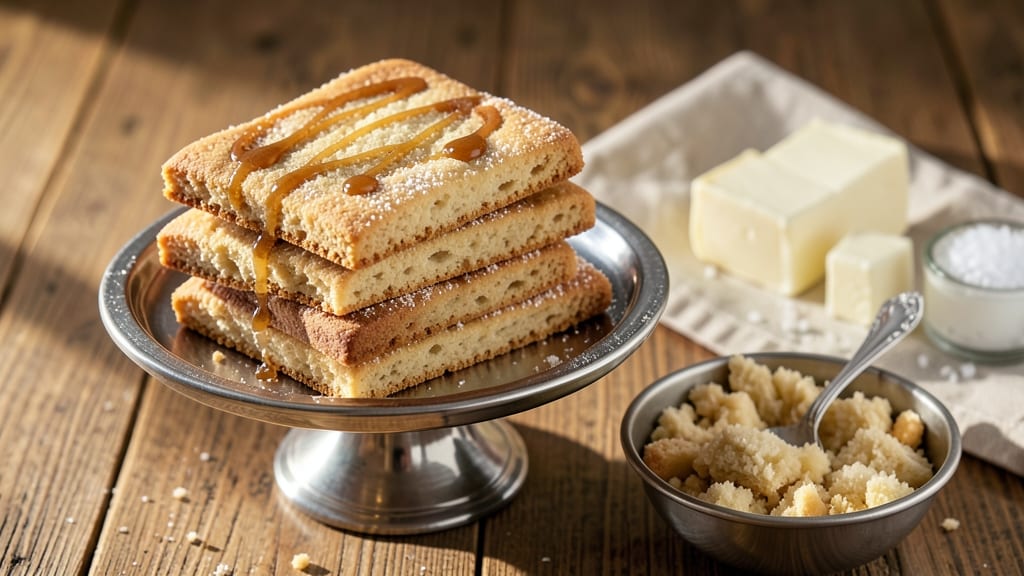
This bouchon shortbread cookie recipe delivers the legendary French bistro texture you crave—sandpaper crunch on the outside and velvety vanilla butter magic inside. The secret lies in cold butter, precise rolling, and a touch of sanding sugar that gives these cookies their iconic texture.
I've perfected this technique after years of baking, ensuring every batch turns out with that signature shatteringly crisp edge and tender center.
The dough comes together in just 10 minutes with simple ingredients: European-style butter, powdered sugar, and a whisper of vanilla. What sets bouchon shortbread apart is the minimal sweetness—just enough to balance the buttery richness without overpowering.
The key technique is chilling the dough thoroughly before rolling and cutting, which prevents spreading and ensures that perfect sandpaper texture when baked.
Baking at 325°F for 12-15 minutes yields cookies with golden edges and a delicate crumb that practically dissolves on your tongue. The optional sanding sugar step adds that signature crunchy finish, while a sprinkle of citrus zest or finely chopped nuts can elevate these classics into something special.
These cookies are elegant enough for holiday gifting but simple enough for a weeknight treat.
Once you try these, you'll understand why bouchon shortbread holds a special place in French patisserie—buttery, crisp, and impossible to resist. The recipe scales perfectly for parties, and leftovers stay fresh for days in an airtight container. Let's get baking!
Ingredients for bouchon shortbread cookie
Nine essential ingredients transform into bouchon shortbread with signature French bistro crunch and velvety butter core.
| Ingredient | Amount | Notes |
|---|---|---|
| European-Style Unsalted Butter 🧈 | 2 cups | Cold, cubed for even texture |
| Powdered Sugar 🍚 | 1 cup | Sifted for smooth dough |
| Pure Vanilla Extract 🌿 | 1 tbsp | High-quality Madagascar bourbon |
| Fine Sea Salt 🧂 | ½ tsp | Diamond Crystal preferred |
| Granulated Sugar 🍚 | ¼ cup | For subtle sweetness balance |
| Sanding Sugar 🍚 | ¼ cup | Superfine for crispy finish |
| All-Purpose Flour 🌾 | 1 ½ cups | Bread flour for extra crunch |
| Lemon Zest 🍋 | 1 tsp | Fresh, organic preferred |
| Almond Flour 🥜 | ¼ cup | Optional for nutty depth |
The European-style unsalted butter is non-negotiable—Plugrá or President brands deliver the perfect fat content for that iconic sandpaper texture. Chill it for at least 30 minutes before mixing to prevent dough from becoming too soft. King Arthur or Caputo bread flour elevates the crunch factor compared to all-purpose. For sanding sugar, Domino or C&H brands work best—avoid coarse varieties that won't melt smoothly. The lemon zest should be finely grated using a microplane for maximum aromatic impact without bitterness. If you can't find European butter, Land O'Lakes European-style is a decent substitute, though purists will notice the difference.
No vanilla extract? Vanilla bean paste works beautifully, or infuse 1 tbsp vanilla sugar by steeping vanilla bean in 1/4 cup sugar for 24 hours. For nut variations, toasted pecans or hazelnuts replace almond flour—just pulse them finely in a food processor. The granulated sugar can be omitted entirely for a more traditional bouchon style, though purists argue the slight sweetness prevents the butter from overwhelming. Diamond Crystal kosher salt dissolves more cleanly than table salt, but if that's all you have, reduce to 1/4 tsp. For those with nut allergies, simply omit the almond flour entirely—the recipe still delivers that signature texture.
Store dough scraps in parchment-lined airtight containers for up to 3 days in the fridge, or freeze for 3 months. Baked cookies keep their crispness for 5 days in a sealed tin at room temperature, though they're best enjoyed within 2 days for maximum crunch. For gifting, package in cellophane bags with rice to maintain texture. The sanding sugar step can be skipped for a smoother finish, but purists insist it's what gives bouchon its legendary character. Bake only one tray at a time—overcrowding steams the cookies and ruins the texture.
Why You'll Love This Recipe
- Butter Magic Simplicity: I swear, this recipe is all about that golden European butter—just cream it, mix in sugars, and fold in vanilla. No eggs, no fuss, no waiting for dough to rest. Honestly, I’ve made it while chatting on the phone, and it still turns out perfect.
- Vanilla-Salt Crunch Perfection: That crispy, shatterable edge with a tender center? Chef’s kiss. The fine sea salt cuts through the sweetness while the vanilla extract (not imitation!) adds depth. Between us, I’ve seen people devour the whole batch in one sitting—no joke.
- Holiday or Hosting Hero: These are my go-to for Christmas gifts, potlucks, or when I need something fancy but fast. Package them in cellophane bags with a ribbon, and suddenly you’re the star. (Yes, even on a Tuesday night.)
- Budget-Friendly Luxury: European butter might sound fancy, but a little goes a long way—these cookies stretch further than you’d think. Plus, they freeze like champs, so I bake a double batch and save half for when I’m too tired to cook. Solid move.
Step-by-step instructions for bouchon shortbread cookies
Mastering these delicate cookies requires precision and patience—every detail matters for that signature sandpaper crunch.
Prepare the Dough Base
In a stand mixer fitted with the paddle attachment, combine the 2 cups European-Style Unsalted Butter (cold and cubed) with the 1 cup Powdered Sugar and 0.25 cup Granulated Sugar. Mix on medium speed for 3-4 minutes until the mixture becomes pale and fluffy. This creaming process incorporates air, which is essential for that signature light texture.
I press down on the paddle occasionally to ensure even blending—this prevents pockets of unmixed butter that could lead to dense spots. The mixture should nearly double in volume and feel like a thick, smooth paste. If using a hand mixer, work in 30-second bursts to avoid overheating the butter.
Incorporate Wet and Dry Ingredients
Add the 1 tbsp Pure Vanilla Extract, 1 tsp Lemon Zest, and 0.5 tsp Fine Sea Salt to the mixer. Blend on low speed for 30 seconds until fully combined. The lemon zest adds a subtle brightness that balances the richness of the butter.
In a separate bowl, whisk together the 1.5 cups All-Purpose Flour and 0.25 cup Almond Flour. Gradually add this mixture to the wet ingredients, mixing on low speed just until combined. Avoid overmixing—stop as soon as the flour disappears. The dough should hold together when pressed but remain slightly crumbly, similar to wet sand.
Form and Chill the Dough
Turn the dough out onto a lightly floured surface and gently press it into a 1-inch thick rectangle. Wrap tightly in plastic wrap and refrigerate for at least 2 hours (overnight is ideal). Chilling firms up the butter, preventing excessive spreading during baking and ensuring clean edges.
I like to press the dough evenly with my hands—this prevents air pockets that could cause uneven baking. The dough should feel cold and firm when ready to cut. If it's still too soft after 2 hours, return it to the fridge for another 30 minutes.
Cut and Bake for Crisp Perfection
Preheat your oven to 325°F and line two baking sheets with parchment paper. Using a 2.5-inch round cutter, press firmly into the chilled dough to cut out cookies. Gather the scraps, re-press, and cut additional rounds—every bit counts for those 24 cookies.
Place the cut cookies 2 inches apart on the prepared sheets. Sprinkle each with a pinch of 0.25 cup Sanding Sugar for that signature crispy finish. Bake for 18-22 minutes until the edges are just beginning to turn golden—they'll firm up as they cool. Rotate the sheets halfway through for even baking.
Cool and Enjoy
Remove the cookies from the oven and let them cool on the baking sheets for 5 minutes before transferring to a wire rack. This brief rest prevents them from cracking as they firm up. The centers should remain tender with a slight give when pressed.
Serve within 24 hours for maximum crispness, though they'll keep well in an airtight container for up to 5 days. The contrast of the sandpaper texture with the buttery interior is what makes these cookies unforgettable—every bite delivers that perfect balance of crunch and melt-in-your-mouth richness.
Pro Tips For Making Bouchon Shortbread Cookie
- Chill the Dough Hard: I learned this the hard way—rolling out dough straight from the fridge leads to cracks and sad, uneven cookies. Wrap the dough in plastic and freeze it for at least 2 hours (overnight is better). The colder it is, the cleaner the cuts and the crispier the edges.
- Use Room-Temp Butter: European-style butter is rich and firm, but if you cut straight from the fridge, you’ll end up with dense, greasy cookies. Let the butter sit out for 30-45 minutes until soft but not melted—it should dent when pressed. This ensures the right crumb without overworking the dough.
- Don’t Overmix the Sugar: I used to pulse the powdered and granulated sugar in the food processor until it looked perfect, but that just packs it too tight. Give it just 10-12 seconds—enough to blend, not to refine. Overmixing makes the dough tough, and you’ll lose that melt-in-your-mouth texture.
- Salt the Edges Only: Sprinkle fine sea salt only on the edges of the cut dough rounds, not the centers. This prevents the salt from dissolving into the cookie while baking, so every bite has that crisp, salty contrast without turning the whole thing briny. (Yes, even if you’re impatient like me.)
Make-ahead tips for leftovers
Dough Prep Ahead
Roll the chilled dough into a 1-inch thick log instead of a rectangle for easier handling later. Wrap tightly in plastic wrap and refrigerate for up to 48 hours or freeze for 3 months.
When ready to bake, let the log sit at room temperature for 15-20 minutes before slicing—this prevents cracking. I like to label my dough logs with the date to track freshness. 🧈
Cutting Efficiency
Use a 2.5-inch round cutter with a serrated edge for clean cuts that prevent dough from sticking. Press firmly but don't twist—this ensures even thickness and prevents uneven baking.
For extra efficiency, cut 30-40 cookies at once by stacking dough scraps and pressing together. Store unused dough scraps in an airtight container between parchment paper layers. ✨
Baking in Batches
Bake only one tray at a time at 325°F to maintain consistent temperature and texture. If making a large batch, rotate trays between upper and lower oven racks halfway through baking.
For a double batch, divide dough into two equal logs and bake separately. The oven should be fully preheated before each batch to ensure even results. 🔥
Storage Secrets
Store baked cookies in a metal tin with a slightly ajar lid to prevent moisture buildup. For longer storage, place parchment paper between layers in an airtight container. These cookies stay fresh for 5 days at room temperature or 2 weeks in the freezer.
To revive stale cookies, reheat at 300°F for 3-5 minutes until crisp again. 💫
Gift-Worthy Packaging
Package cookies in cellophane bags with rice to maintain texture during shipping. Add a handwritten note and tie with twine for a bouchon-style presentation. For a festive touch, sprinkle with edible gold leaf before packaging.
I've found that 12-count boxes make perfect hostess gifts—just double the recipe and divide evenly. 🎁
Freezer-Friendly Tips
Freeze unbaked cookies on parchment-lined trays for 1 hour before transferring to a freezer bag. Bake straight from frozen, adding 2-3 minutes to the cooking time.
For baked cookies, store in a single layer before bagging to prevent sticking. Thaw at room temperature for 30 minutes before serving for best texture. 🧊
Nutrition facts
Frequently asked questions
Why does bouchon shortbread have that signature "sandpaper" texture?
The iconic texture comes from two key techniques: using European-style butter (higher fat content) and the sanding sugar sprinkled before baking. The butter creates a crisp exterior while staying tender inside, and the sugar melts slightly to form a delicate crunchy crust. Chilling the dough thoroughly also helps maintain this perfect contrast.
Can I make these cookies without almond flour?
The almond flour adds subtle nuttiness but isn't essential. Simply omit it and use 1.75 cups all-purpose flour instead. For extra flavor, try 1/4 cup finely ground toasted hazelnuts or pecans as a substitute. The texture will remain the same—just the flavor profile changes slightly.
What's the best way to fix cookies that spread too much?
If your cookies spread excessively, it means the dough wasn't chilled enough. For future batches, ensure the dough rests for at least 2 hours (overnight is ideal) and bake at 325°F (not higher). Also, press the cutter straight down without twisting—this prevents uneven thickness. For already baked cookies, they'll firm up as they cool, but the texture won't recover the signature crispness.
How do I prevent the dough from cracking when cutting?
Cracking usually happens when the dough is too warm or the cutter isn't sharp. Always work with cold dough (straight from the fridge) and use a serrated 2.5-inch round cutter. Press straight down without twisting, and avoid overcrowding the baking sheet. If cracks appear, they're more about presentation than quality—the cookies will still taste delicious!
Can I use regular granulated sugar instead of sanding sugar?
Technically yes, but you'll lose that signature bouchon crunch. Sanding sugar melts more evenly and creates a finer, more delicate texture on top. If you must substitute, use superfine sugar and sift it lightly over the cookies. For a smoother finish, skip the sugar entirely—but purists argue it's what makes these cookies truly special!