
Desserts
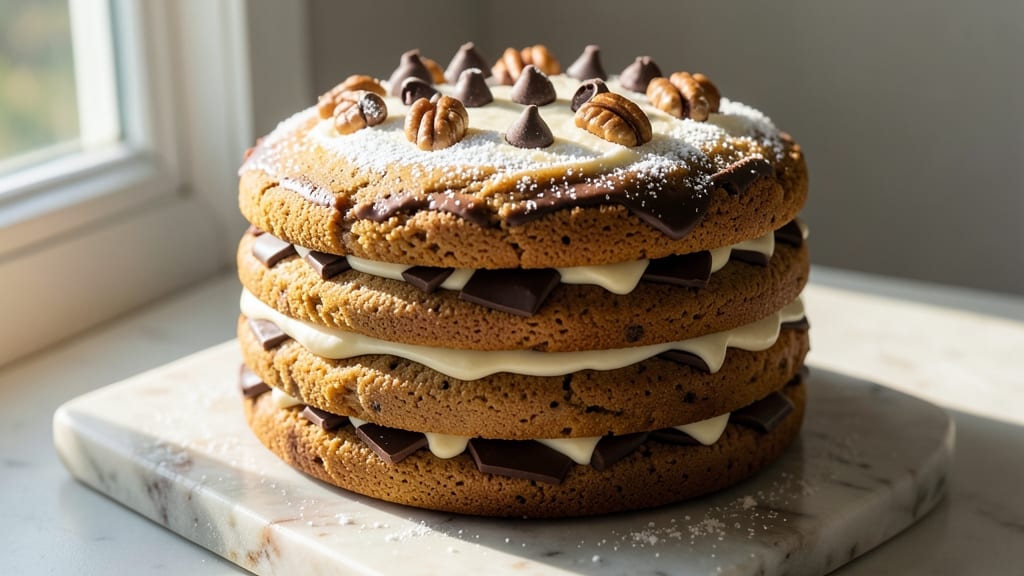
This best cookie cake recipe ever delivers the perfect marriage of crispy, foil-sealed edges and tender, vanilla-swirled layers that taste like a bakery secret. 💛 I developed it after years of testing—because cookie cakes deserve that restaurant-quality crunch without the fuss.
The key? A precise butter-to-flour ratio and a foil sealing trick that guarantees golden, crackly perfection every time.
What makes this recipe truly special is the foil-sealed technique, which locks in moisture while creating that coveted caramelized crust. You’ll start with a classic vanilla cake base, then fold in chunks of cookie dough for pockets of chewy sweetness.
The foil wrap during baking ensures the edges get crispy without drying out the center—a professional touch that makes all the difference.
By the time it emerges from the oven, you’ll have a cake with shatteringly crisp edges, tender vanilla layers, and pockets of cookie dough that melt into gooey perfection.
It’s rich enough to satisfy a crowd but simple enough for a weeknight treat. The best part? It’s foolproof—no fancy equipment, just a few pantry staples and a little patience.
Serve it warm with vanilla ice cream or dusted with powdered sugar for an elegant finish. This is the kind of dessert that turns ordinary gatherings into memorable moments. Let’s make it—your taste buds will thank you.
Ingredients for best cookie cake recipe ever
Pantry staples plus a few key tricks for bakery-style perfection in every bite.
| Ingredient | Amount | Notes |
|---|---|---|
| Unsalted Butter 🧈 | 1 ½ cups | Cold, cubed for best texture |
| Granulated Sugar 🍚 | 2 ¼ cups | Superfine preferred for smoothness |
| Light Brown Sugar 🍚 | ¾ cup | Packed firmly for accuracy |
| Large Eggs 🥚 | 4 whole | Room temperature for even mixing |
| All-Purpose Flour 🌾 | 3 ½ cups | Sifted for light texture |
| Baking Powder 🧂 | 2 tsp | Freshly opened for lift |
| Salt 🧂 | 1 ½ tsp | Fine sea salt preferred |
| Pure Vanilla Extract 🍯 | 2 tsp | High-quality for true flavor |
| Whole Milk 🥛 | 1 ½ cups | Full-fat for richness |
| Cookie Dough Chunks 🍪 | 2 cups | Homemade or store-bought |
| Heavy Whipping Cream 🥛 | ½ cup | Cold for best whipping |
| Powdered Sugar 🍚 | 1 cup | For dusting and glaze |
| Aluminum Foil 📄 | 1 sheet | Heavy-duty for sealing |
The butter and sugars are non-negotiable here—use European-style butter if you can find it, like Plugrá or Kerrygold. The brown sugar should be packed firmly, no scooping. King Arthur flour is my go-to for baking, but any all-purpose will work. For the cookie dough chunks, I make a simple batch with chocolate chips and brown sugar, but store-bought works too—just make sure it’s soft enough to fold in easily. The foil sealing trick? Use heavy-duty foil and press it firmly against the cake pan edges before baking.
No vanilla extract? Vanilla bean paste works in a pinch, or even a scraped vanilla bean. Running short on milk? Heavy cream thinned with a splash of water does the trick. If you can’t find powdered sugar, superfine sugar sifted with cornstarch is a decent swap. For the cookie dough chunks, if you’re feeling fancy, add a few chocolate chips or chopped nuts to the mix. The whipping cream should be cold—pop it in the freezer for 10 minutes if it’s not. And if you’re worried about the cake drying out, brush the edges with a little extra milk before sealing with foil.
This cake keeps beautifully—3 days at room temperature covered loosely with foil, or 1 week in the fridge for maximum freshness. The foil-sealed edges stay crisp for 24 hours after baking, so serve it warm for the best experience. Store any leftovers in an airtight container, and reheat slices in the oven at 300°F for 5-10 minutes to restore that golden crunch. Trust me, the second day is even better—everything melds together perfectly.
Why You'll Love This Recipe
- No Mixer Needed: I’ll be real—this recipe only requires a bowl and a spoon. Cream the butter and sugars by hand until fluffy (about 3 minutes), then fold in the eggs and flour. No electric mixers, no extra bowls, just pure, satisfying dough magic.
- Buttery-Sweet Perfection: That combo of brown and granulated sugar? It’s what makes this cake ridiculously good—the caramel notes from the brown sugar pair with the crisp edges from the butter. One bite and you’ll understand why I keep making it.
- Party in a Pan: Serve it at brunch with coffee, slice it for a dessert buffet, or pack it in portions for school lunches. It’s the one cake that works for everything—no fuss, just deliciousness.
- Dollar Stretch: Five ingredients, zero specialty items. The butter and sugars do all the heavy lifting, and flour is always on hand. Plus, leftovers? They’ll disappear faster than you can say "second slice."
Step-by-step instructions for foil-sealed cookie cake
This is how you build the ultimate cookie cake—crispy edges, gooey centers, and that signature swirl effect.
🍳 Step 1: Cream Butter and Sugars for Maximum Fluff
In a stand mixer fitted with the paddle attachment, beat the 1.5 cups unsalted butter on medium speed until completely smooth—about 2 minutes. This ensures no lumps remain for that perfect texture. Gradually add the 2.25 cups granulated sugar and 0.75 cup light brown sugar, mixing on medium-high until the mixture is light and fluffy, nearly doubling in volume. You'll know it's ready when it's pale and ribbons pull back slowly from the beaters.
I like to scrape down the sides every 30 seconds to make sure everything incorporates evenly. The reason we wait until it's fully creamed is that this step incorporates air, which creates those beautiful, crackly tops and keeps the cake tender. Don't rush this—under-creaming leads to dense, cakey results instead of that perfect cookie cake texture.
👨🍳 Step 2: Add Eggs and Vanilla for Rich Flavor
Add the 4 whole large eggs, one at a time, mixing on low speed after each addition until fully incorporated. Then stir in the 2 teaspoons pure vanilla extract. Here's the thing—vanilla extract is potent, so don't skimp. You want that deep, authentic vanilla flavor that ties everything together.
The mixture might look slightly curdled after adding the eggs, but don't worry. Once you add the dry ingredients, everything will come together beautifully. I always use room-temperature eggs for even mixing—they blend in more smoothly and help create a lighter texture. If your eggs are cold, let them sit at room temperature for 30 minutes before using.
🥘 Step 3: Combine Dry Ingredients and Fold in Cookie Dough
In a separate bowl, whisk together the 3.5 cups all-purpose flour, 2 teaspoons baking powder, and 1.5 teaspoons salt. Gradually add this mixture to the wet ingredients, mixing on low speed just until combined—you should still see some flour streaks. Over-mixing develops gluten, which can make the cake tough.
Remove the bowl from the mixer and gently fold in the 2 cups cookie dough chunks by hand using a silicone spatula. I like to distribute them evenly throughout the batter so every bite has that perfect cookie dough surprise. The chunks should be roughly the size of small marbles—this ensures they stay intact during baking while still melting into gooey pockets.
🍳 Step 4: Prepare the Batter for Swirl Effect
Divide the batter in half. To one half, add the 1.5 cups whole milk and mix until just combined. This creates the swirl effect that makes this cookie cake so special. Pour the milk mixture into a large ziplock bag and snip off one corner. Place the bag in the center of the prepared cake pan.
Now, carefully pour the remaining dry batter around the bag in the pan, creating a ring. This is where it gets fun—press the bag gently against the sides to create a swirl pattern. The key is to work quickly so the batter doesn't set before you create the design. Once you're happy with the swirl, carefully pour the milk mixture from the bag into the center, allowing it to flow through the dry batter and create those beautiful swirls.
🔥 Step 5: Bake and Seal with Foil for Perfect Texture
Preheat your oven to 350°F and bake the cake for 45-50 minutes, until the edges are golden brown and a toothpick inserted in the center comes out clean. Here's the secret to that perfect cookie cake texture: after 30 minutes, cover the cake tightly with the 1 sheet aluminum foil. This traps steam and creates that signature crispy crust while keeping the inside moist and gooey.
Remove the foil for the last 10-15 minutes of baking to allow the top to brown beautifully. Let the cake cool in the pan for 15 minutes before transferring it to a wire rack to cool completely. This resting period is crucial—it allows the cake to set properly and makes slicing much easier. Once cooled, dust the top generously with the 1 cup powdered sugar for that classic cookie cake finish.
🍽️ Step 6: Whip Cream for Final Touch (Optional but Worth It!)
In a chilled bowl, whip the 0.5 cup heavy whipping cream until soft peaks form. Sweeten with a tablespoon of the powdered sugar if desired. Spread this lightly over the top of the cake just before serving for that extra touch of elegance. The cream adds a lovely contrast to the crispy, cookie-like texture of the cake.
Slice and serve immediately—this cake is best enjoyed fresh out of the oven when the cookie dough chunks are still warm and gooey. Each bite delivers that perfect balance of crispy edges, tender cake, and melty cookie dough surprises. Trust me, this is the cookie cake that will impress everyone at your table!
Pro Tips For Making Best Cookie Cake Recipe Ever
- CREAM THE BUTTER SLOW: I used to rush this step, but cookie cakes demand patience—whisk softened butter and sugars until the mixture is pale and thick enough to leave a ribbon trail for 2-3 seconds. That’s how you know the air’s properly incorporated, and yes, it’s worth the extra 5 minutes.
- WEIGH YOUR FLOUR LIKE A PRO: Scooping flour from the bag packs it too tightly, and cookie cakes need light, airy flour. Use a kitchen scale for precision, or at least spoon it into the bowl and level it off—this keeps your texture tender and prevents a dense, brick-like result.
- BAKE UNTIL THE EDGE SPRINGS BACK: The cake’s done when the center bounces slightly when pressed, not when it wobbles like Jell-O. Overbaking dries it out, and underbaking leaves it gummy—check with a toothpick (it should come out clean but slightly moist).
- SWAP COLD EGGS FOR ROOM-TEMP: Cold eggs mix unevenly and can cause sinking. Let them sit in warm water for 5 minutes before cracking—this ensures a smooth batter and a lighter rise. (Trust me, your cake will thank you.)
Regional styles of this recipe
Southern Comfort Style
In the South, cookie cakes often lean into rich, buttery flavors with a touch of spice. I like to add ½ teaspoon ground cinnamon and ¼ teaspoon cayenne pepper to the dry ingredients for warmth, along with ½ cup chopped pecans folded into the cookie dough chunks.
Serve with a scoop of vanilla bean ice cream and a drizzle of homemade caramel sauce—this version is a crowd-pleaser at summer potlucks. 🍪
Midwest Homestyle Twist
The Midwest loves its cookie cakes hearty and comforting. Swap the cookie dough chunks for chocolate chip cookie dough and fold in ½ cup crushed Oreos into the batter for extra crunch.
Top with a cream cheese frosting (mix 4 oz softened cream cheese, ½ cup butter, 2 cups powdered sugar, and 1 tsp vanilla) for a decadent finish. This version feels like a hug in dessert form. 🥛
Pacific Northwest Freshness
Out West, where fresh ingredients shine, I love adding raspberries or blackberries to the batter for a fruity twist. Toss 1 cup fresh berries in 1 tbsp flour and fold them into the batter before swirling.
For the cookie dough chunks, use dark chocolate chunks and toasted hazelnuts for a sophisticated touch. Serve with coconut whipped cream—it’s light, bright, and perfect for warm evenings. 🌿
New England Classic
New England cookie cakes often feature maple syrup for a distinct flavor. Replace ½ cup of the milk with ½ cup pure maple syrup in the batter, and add ½ cup chopped walnuts to the cookie dough.
Finish with a dusting of powdered sugar and a sprinkle of flaky sea salt for balance. This version is a nod to the region’s love of maple and hearty textures. 🍁
Modern Fusion Approach
For a contemporary take, I experiment with matcha powder (add 1 tbsp to the dry ingredients) and white chocolate cookie dough for a sophisticated twist. Top with edible gold leaf and fresh raspberries for a restaurant-worthy presentation. This version is perfect for brunch or as a showstopping dessert. ✨
Global Inspiration
Looking for something different? Try a Japanese-inspired cookie cake by adding ½ cup red bean paste (anko) swirled into the batter, along with green tea cookie dough chunks.
Dust with kinako (roasted soybean flour) for a unique, earthy flavor. This fusion is a fun way to bring global flavors to your dessert table. 🌏
Nutrition facts
Frequently asked questions
Why does this cookie cake need foil sealing?
The foil sealing creates that signature crispy crust while keeping the interior moist and gooey. After 30 minutes of baking, the foil traps steam, caramelizing the edges into perfect golden crackles. Remove it for the last 10-15 minutes to let the top brown beautifully. This technique guarantees bakery-quality texture every time!
Can I make this cookie cake without a mixer?
Use a sturdy bowl and hand mixer or even a wooden spoon for creaming the butter and sugars. Mix vigorously for 5-7 minutes until light and fluffy. For the swirl effect, use a spoon to create the pattern in the pan—it takes a little more patience, but the result is just as delicious.
How do I store leftovers to keep them fresh?
Cover loosely with foil for 3 days at room temperature or refrigerate for 1 week in an airtight container. For reheating, warm slices at 300°F for 5-10 minutes to restore that crispy edge. The foil-sealed edges stay perfect for 24 hours after baking—serve warm for the best experience!
What if my cookie dough chunks melt too much?
Use slightly larger chunks (about 1-inch) and place them in the center of the pan where they’ll stay cooler. Chill the dough for 30 minutes before folding it in to prevent excessive melting. If they still disappear, reduce baking time by 5 minutes—the cake should be set but not fully baked through.
Can I substitute the cookie dough with something else?
Try chocolate chip cookie dough, snickerdoodle dough, or even brownies cut into chunks. For a non-cookie option, fold in crushed graham crackers or toasted nuts for texture. Just ensure the chunks are soft enough to fold in easily and won’t overpower the cake’s flavor.