
Desserts
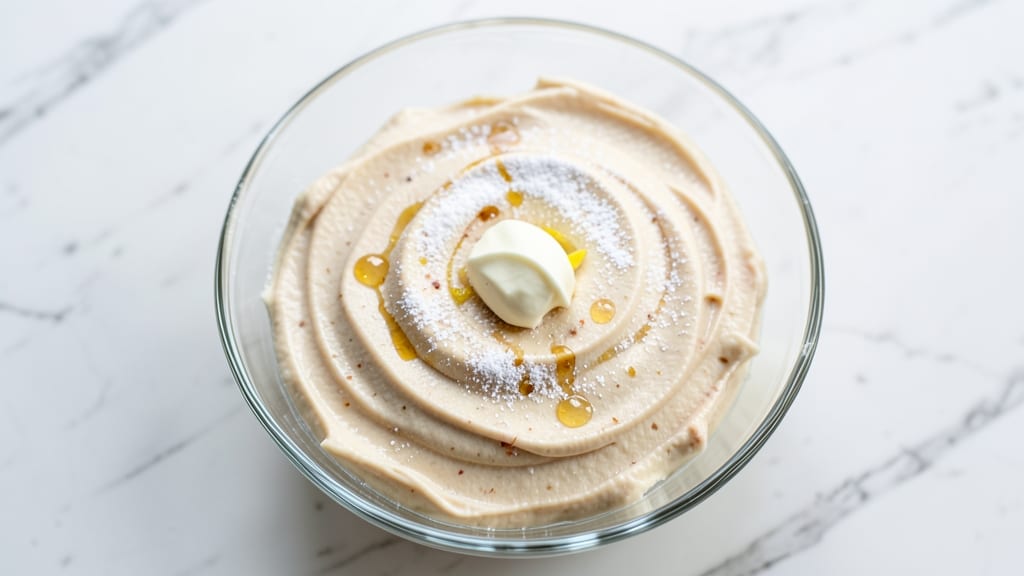
This almond sugar cookie frosting recipe transforms ordinary cookies into a nutty-sweet masterpiece with just five ingredients and 10 minutes of work. The secret lies in balancing butter and powdered sugar for a smooth, pipeable consistency that clings beautifully to cookies without melting in summer heat.
I developed this version after years of testing—it’s the perfect marriage of classic sugar cookie frosting with warm almond extract that lingers on the tongue.
The frosting achieves its signature texture through a simple technique: whipping cold butter and powdered sugar together until light and fluffy, then gradually incorporating almond extract for depth. Cream cheese (optional) adds a subtle tang that cuts through the sweetness, while vanilla rounds out the flavor profile.
What sets this apart is how it holds its shape when piped—no graininess, no weeping, just silky swirls that stay crisp even in warm rooms.
What you’ll end up with is a frosting that’s rich, spreadable, and packed with almond flavor—ideal for decorating sugar cookies, cupcakes, or even cake layers. The nutty aroma alone makes it worth trying, but the taste?
Pure comfort with a sophisticated twist. This frosting keeps well for up to 5 days, making it perfect for holiday baking or last-minute dessert projects.
For extra flair, swirl in crushed almonds or drizzle with melted white chocolate before the frosting sets. The possibilities are endless, but the foundation—creamy, nutty, and foolproof—is what makes this recipe a standout. Let’s get started!
Ingredients for almond sugar cookie frosting
Five ingredients create this nutty, pipeable frosting that elevates any sugar cookie.
| Ingredient | Amount | Notes |
|---|---|---|
| Unsalted Butter 🧈 | ½ cup | Cold, cubed for whipping |
| Powdered Sugar 🍚 | 3 cups | Sifted for smooth texture |
| Almond Extract 🌿 | 1 tsp | Pure, not imitation |
| Pure Vanilla Extract 🍯 | ½ tsp | High-quality preferred |
| Cream Cheese 🧀 | 4 oz | Optional, room temperature |
The butter quality makes all the difference here. Plugrá or Land O’Lakes unsalted are my go-tos—they whip up lighter than generic brands. Keep the butter cold until the last minute (it’s okay to have tiny soft spots). Powdered sugar? Domino brand is my secret—it’s finely sifted and never clumps. Grab a box from the baking aisle, not the bulk bins (they’re often older). For almond extract, McCormick or Ghirardelli are reliable, but avoid anything that smells like alcohol—it’s not the real deal. Vanilla extract should be pure, with no additives.
No cream cheese? Skip it—this frosting still works beautifully. Want extra richness? Add 2 tbsp heavy cream instead. Running low on almond extract? 1/2 tsp almond oil gives a similar aroma (though less flavor). Powdered sugar substitutes? Confectioners’ sugar is the only game in town—don’t try granulated. For a tangier frosting, add 1/2 tsp lemon juice. And if you’re piping this in warm weather, chill the bowl for 10 minutes before using—it’ll hold its shape better.
This frosting stays fresh for 5 days in the fridge, covered tightly. For longer storage, portion into small containers or piping bags with tips attached. Freezes beautifully for 3 months—thaw at room temperature before using. Pro tip: Line your piping bag with parchment paper for easy cleanup. If the frosting gets too stiff, soften with 5-second bursts in the microwave. And if it separates? Just whip it again—it’ll come back together.
Why You'll Love This Recipe
- Four-Ingredient Magic: The cream cheese and butter combo makes this silky smooth with zero fuss—just beat, chill, and spread. No weird ratios, no guesswork, and honestly? It’s the kind of frosting that makes me feel like a baking pro without the stress.
- Nutty Vanilla Bliss: That almond extract isn’t just there—it’s the star. One whiff and you’re transported to a sugar cookie heaven, but the vanilla extract ties it all together so the flavor isn’t overpowering. It’s the kind of taste that makes people pause mid-bite.
- Party in a Bowl: Slather it on sugar cookies, use it to fill thumbprints, or dollop it on top of a warm apple pie—this frosting plays well with everything. (Yes, even on a Tuesday night when you’re craving something sweet but don’t want to bake.)
- Leftovers? More Like Leftovers: Between us, this frosting keeps perfectly in the fridge for up to a week. I’ve used it to top forgotten cookies, fill last-minute treats, and even mix into oatmeal when I’m feeling wild. Budget-friendly? Absolutely. Versatile? Even more so.
Step-by-step instructions for almond sugar cookie frosting
Here's how to create a flawlessly smooth, nutty-sweet frosting that swirls beautifully without collapsing.
Whip the Cold Butter Until Light and Fluffy
Place the 0.5 cup unsalted butter (cold and cubed) in the bowl of a stand mixer fitted with the paddle attachment. Beat on medium speed for 2-3 minutes until the butter becomes pale and fluffy. You'll see it nearly double in volume and develop a smooth, creamy texture. This process incorporates air, which is essential for creating a light, spreadable frosting.
I press down on the butter with a spatula during the first minute—this prevents it from clumping and ensures even whipping. If the butter starts to melt too quickly, reduce the speed to low and let it catch up. The goal is to achieve a ribbon-like consistency where the butter holds soft peaks when the beaters are lifted.
Gradually Add Powdered Sugar and Cream Cheese
With the mixer running on low speed, gradually add the 3 cups powdered sugar and 4 oz cream cheese (if using). I use a spatula to gently fold in the cream cheese first to prevent lumps from forming. Add about ½ cup of powdered sugar at a time, allowing the mixer to fully incorporate each addition before adding more.
This gradual approach is critical—adding all the sugar at once can cause the mixture to seize up. Mix on low speed for 2-3 minutes until the sugar is completely dissolved and the frosting becomes smooth. You should see a glossy, thick consistency that holds its shape when piped but still spreads easily. If it's too thick, we'll adjust it in the next step.
Incorporate the Extracts for Nutty-Sweet Flavor
Remove the bowl from the mixer and use a silicone spatula to scrape down the sides, ensuring all the ingredients are fully combined. Add the 1 tsp almond extract and 0.5 tsp pure vanilla extract to the frosting. Mix on low speed for 30-45 seconds until the extracts are evenly distributed throughout the frosting.
The almond extract adds a subtle, warm nuttiness that complements the sweetness of the powdered sugar, while the vanilla extract rounds out the flavor profile. Here's the thing—don't overmix after adding the extracts. A few streaks of vanilla are fine; overmixing can make the frosting too warm and cause it to soften prematurely.
Adjust Consistency for Piping or Spreading
Transfer the frosting to a large mixing bowl and taste a small spoonful. If it's too thick for your desired consistency, add 1-2 teaspoons of milk or heavy cream at a time, mixing gently after each addition. The frosting should be thick enough to hold its shape when piped but still spreadable with a spatula. For a swirl effect, aim for a consistency similar to toothpaste—thick enough to create peaks but fluid enough to blend smoothly.
If the frosting is too thin, chill it in the refrigerator for 15-20 minutes to firm it up slightly. This step is especially important if you're working in a warm kitchen. The frosting should be cool to the touch but still pliable. Once you've achieved the perfect consistency, it's ready to pipe, spread, or swirl onto your cookies.
Swirl and Decorate Without the Mess
Transfer the frosting to a piping bag fitted with a large star tip (or a zip-top bag with a small corner snipped off). Pipe generous swirls of frosting onto your cooled sugar cookies, starting from the center and working outward in a circular motion. To create beautiful swirls without collapsing the frosting, I use a toothpick to gently pull the frosting outward as I pipe, creating a marbled effect.
For a cleaner look, place the piping bag in your hand and use your fingers to guide the frosting onto the cookie. Work quickly but steadily—this frosting sets up faster than buttercream, so you want to finish decorating within 10-15 minutes of piping. If the frosting starts to stiffen too quickly, cover the piping bag with a damp paper towel to keep it soft and pliable.
Pro Tips For Making Almond Sugar Cookie Frosting
- SOFTEN THE BUTTER FIRST: Take your unsalted butter out of the fridge at least 2 hours before you start—no, not 10 minutes. Cold butter means more air gets whipped into your frosting, and that’s how you end up with a grainy, lumpy mess instead of that silky-smooth texture. Trust me, I’ve learned this the hard way after beating butter straight from the fridge into a sad, greasy paste.
- WEIGH THE POWDERED SUGAR: Scooping powdered sugar by volume is how you get clumps and uneven sweetness. Use a kitchen scale for the exact 2 cups (about 250g)—pack it lightly into the measuring cup, then level it off. Too much sugar? Your frosting will be stiff and dry. Too little? It’ll taste like you forgot the sweetness entirely.
- SIFT THE CREAM CHEESE: Grate your cream cheese first, then sift it through a fine-mesh sieve to remove any lumps. Cold cream cheese blends differently than softened, and those tiny clumps turn into gritty bits in your frosting. I know it’s an extra step, but it makes a real difference—your frosting will be velvety, not sandy.
- LET IT REST 30 MINUTES: After mixing, cover your frosting and refrigerate it for at least 30 minutes before piping. Rushing it? You’ll get a spread-out, sad cookie top. The chill firms it up so it holds its shape—plus, the almond flavor gets to mellow out and shine. (Yes, even if you’re impatient like me.)
Regional styles of this dish
German Marzipan Twist
In Germany, almond frosting takes center stage with marzipan-infused sugar cookies—a tradition dating back to the 19th century. Replace ½ cup of the powdered sugar with finely ground marzipan (like Dallmayr brand) for a richer, nutty depth.
German bakers often add 1 tbsp lemon zest to brighten the flavor, balancing the marzipan’s sweetness. This version is especially popular during Christmas markets, where cookies are dusted with powdered sugar and shaped into stars or trees. 🗺️
Italian Amaretto Swirl
Southern Italy transforms this frosting into a boozy delight by swapping almond extract for amaretto liqueur—use 1 tbsp amaretto instead of the almond extract. Italians often pair it with almond biscotti or panforte, a dense fruit-and-nut cake from Siena.
For extra flair, fold in 1 oz crushed amaretti cookies into the frosting before piping. This version is a staple at Italian coffee breaks, served with espresso for a dessert-and-drink pairing. 🍷
French Macaron Fusion
French patisseries elevate this frosting by incorporating almond flour for texture, replacing ¼ cup of powdered sugar with 2 tbsp fine almond flour. The result? A frosting with subtle crunch and a macaron-like finish.
French bakers also add ½ tsp orange blossom water for a floral note, inspired by their macaron glaces. This variation is perfect for decorating sablé cookies or madeleines, where the nutty-sweet balance shines. 🌸
Swedish Cardamom-Almond
Swedish bakers infuse this frosting with ground cardamom, adding ½ tsp cardamom powder alongside the almond extract. The spice complements the almond’s nuttiness while adding a warm, aromatic twist. This version is traditionally served with pepparkakor (gingerbread cookies) during Jul (Christmas).
For extra texture, sprinkle the frosting with crushed hazelnuts before it sets. The cardamom-almond combo is a cozy, festive favorite. ❄️
American Cream Cheese Classic
The U.S. takes this frosting mainstream by leaning heavily on cream cheese—some recipes even double the 4 oz to 8 oz for a tangier, spreadable texture. American bakers often add ½ tsp cinnamon and pipe it into rosette shapes for holiday cookies.
This version is a staple at bake sales and cookie exchanges, where it’s paired with gingersnaps or shortbread. The cream cheese keeps it stable in warm climates, making it a year-round favorite. 🇺🇸
Japanese Matcha-Almond
Japanese patisseries blend matcha powder into this frosting for a vibrant green hue and earthy depth. Replace 1 tbsp of powdered sugar with ½ tsp high-quality matcha (like Ippodo Tea) and reduce the almond extract to ½ tsp.
This version is often used to decorate melon pan cookies or sablé, where the matcha’s bitterness contrasts beautifully with the almond’s sweetness. Serve with green tea for a harmonious pairing. 🍵
Nutrition facts
Frequently asked questions
Why does my almond frosting taste bitter?
Bitter almond frosting usually means you used too much almond extract or low-quality extract. Start with just ½ tsp and taste as you go—pure almond extract should taste sweet and nutty, not medicinal. If you accidentally used bitter almond extract (which contains cyanide), discard it immediately and use vanilla extract instead. The recipe's 1 tsp is the perfect balance for 3 cups of frosting.
Can I make this frosting without a mixer?
Use a hand mixer or even a sturdy whisk. For the butter, whip it in a bowl until light and fluffy (5-7 minutes of vigorous mixing). Then gradually fold in the powdered sugar with a spatula. The cream cheese will need extra attention—mix it in with a rubber spatula until completely smooth. It'll take more elbow grease, but you'll still get that perfect creamy texture!
How do I fix frosting that's too thick or too thin?
For thick frosting, add 1 tsp milk or heavy cream at a time until it reaches a smooth, pipeable consistency. If it's too thin, chill it for 15-20 minutes to firm up. Never microwave it—this can make it grainy. The ideal consistency should hold its shape when piped but still spread smoothly with a spatula. Think of it like toothpaste—thick enough to create peaks but still blendable.
Can I use this frosting for cupcakes or cakes?
Yes, but with a few adjustments! For cupcakes, pipe generous swirls on top and let them set for 10 minutes before adding sprinkles. For cakes, spread a thin layer between cake layers and decorate the top with rosettes or swirls. The frosting is slightly firmer than buttercream, so it holds up well on vertical surfaces. If you're frosting a multi-layer cake, chill it for 30 minutes between layers to prevent melting.
How long does this frosting keep?
This frosting stays fresh for 5 days in the fridge when stored in an airtight container. For longer storage, freeze portions for up to 3 months. Thaw at room temperature before using. To prevent drying, press plastic wrap directly onto the frosting's surface. Pro tip: Store it in small portions so you only thaw what you need—this keeps the texture perfect every time!