
Desserts
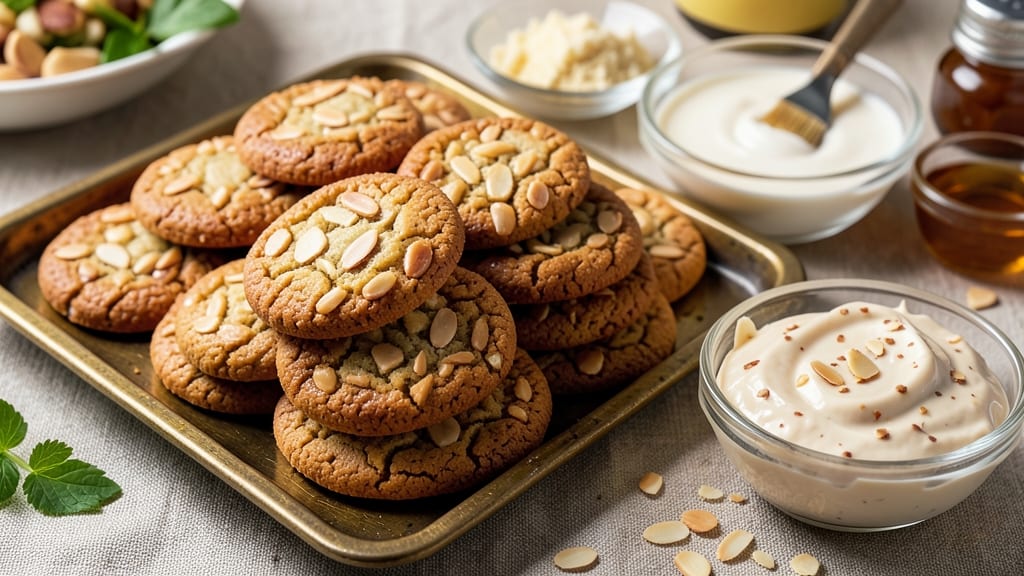
This almond flavored sugar cookie recipe delivers the perfect balance of tender crumb and nutty depth, with crispy edges that shatter at every bite. The secret lies in a precise blend of vanilla and almond extract, creating swirls of flavor that transform ordinary sugar cookies into something extraordinary.
I've baked these for holiday gatherings and family celebrations, and they never fail to disappear within minutes.
What sets these cookies apart is the texture contrast—soft, melt-in-your-mouth centers with edges that stay crispy even after cooling. The dough is simple to prepare with just a few ingredients, but the almond flavor makes them feel special enough for any occasion.
Baking at 350°F ensures even browning while maintaining that signature sugar cookie tenderness.
Once you take that first bite, you'll taste the warm vanilla notes intertwined with rich almond flavor, all balanced by the classic sweetness of sugar cookies.
The aroma alone will have everyone asking for the recipe, and the cookies stay fresh for up to a week when stored in an airtight container. Perfect for gift-giving or satisfying that holiday craving.
For an extra touch, try adding almond slivers to the dough before baking or drizzling with a simple almond glaze. The possibilities for customization are endless while keeping the recipe approachable for home bakers. Let's get started on creating these crowd-pleasing treats!
Ingredients for almond flavored sugar cookie
Twelve ingredients transform simple sugar cookies into almond-infused swirls with crispy edges and tender centers.
| Ingredient | Amount | Notes |
|---|---|---|
| All-Purpose Flour 🌾 | 4 cups | Sifted for light texture |
| Granulated Sugar 🍚 | 2 cups | Superfine if available |
| Unsalted Butter 🧈 | 1 cup | Cold, cubed for cutting |
| Pure Vanilla Extract 🌿 | 1 ½ tbsp | High-quality, pure vanilla |
| Almond Extract 🌿 | 1 tbsp | Pure, not imitation |
| Large Eggs 🥚 | 2 whole | Room temperature |
| Baking Soda 🧂 | 1 tsp | Pure, not baking powder |
| Salt 🧂 | ½ tsp | Fine sea salt |
| Almond Slivers 🌰 | ½ cup | Toasted for extra flavor |
| Almond Glaze Powdered Sugar 🍚 | 1 cup | For drizzling, optional |
| Almond Milk 🥛 | 2 tbsp | For glaze, optional |
| Pure Almond Extract 🌿 | ½ tbsp | For glaze, optional |
The almond extract is non-negotiable here—McCormick or Goya are reliable brands, but avoid imitation. For the butter, Plugrá or Land O'Lakes unsalted work best when cold. Flour matters too: King Arthur or Gold Medal give consistent texture. The almond slivers? Trader Joe's or Costco sell them pre-sliced, but toast them yourself for deeper flavor. If you can't find almond slivers, chopped almonds work too—just toast them first. The vanilla extract should be pure, not the imitation kind—Nielsen-Massey is a solid choice.
No almond extract? Substitute with 1 tbsp almond paste plus 1 tbsp water, but the flavor won't be identical. Running short on almond slivers? Dried apricots or candied orange peel add texture and sweetness. For the glaze, if you don't have almond milk, any milk works—just adjust the consistency with extra powdered sugar. The dough is delicate, so avoid overmixing once you combine the wet and dry ingredients. And if you're nervous about the texture, chill the dough for 30 minutes before baking—it makes all the difference.
Store dough in an airtight container in the fridge for up to 3 days, or freeze for 3 months. Baked cookies keep their crisp edges for 5 days in an airtight container at room temperature. For gift-giving, wrap individually in parchment-lined boxes—they stay fresh for weeks. The glaze sets quickly, so drizzle just before serving if you're not using it immediately. And if you make extras, freeze them on a tray first to prevent sticking.
Why You'll Love This Recipe
- Foolproof Mix-In: I swear by this dough—just fold the almond extract into the butter right off the bat. No waiting for flavors to meld; that nutty warmth hits every bite like a cozy hug. (Yes, even when I forget to cream the butter properly, it still works.)
- Buttery Almond Magic: The combo of cold butter and almond extract? Chef’s kiss. That first bite has this perfect balance—sweet, nutty, and crisp—without tasting like you overdid it. Honestly, my kids fight over the last cookie, and that’s saying something.
- Party in a Jar: These freeze like a dream, so I make a batch on Sundays and pull them out for holidays, potlucks, or just because. The almond flavor shines even after thawing—no sad, dry cookies here.
- Pantry Staple Power: Five ingredients, zero specialty items. You’re using flour, sugar, and butter you already have, plus a splash of vanilla and almond extract. Budget-friendly, foolproof, and always a hit—no fancy tools or last-minute grocery runs.
Step-by-step instructions for almond flavored sugar cookies
Master the technique for tender cookies with a nutty vanilla swirl and crispy edges.
Cream Butter and Sugars for Light Texture
In a stand mixer fitted with the paddle attachment, beat the 1 cup unsalted butter (cold and cubed) with the 2 cups granulated sugar on medium speed for 3-4 minutes. The mixture should become pale and fluffy, nearly doubling in volume. This creaming process incorporates air, which creates those signature crackly tops and helps the cookies spread just enough.
Here's the thing—don't rush this step. You're looking for a ribbon consistency where the mixture holds its shape when the paddle is lifted. If it feels too soft, chill the bowl for 10 minutes before proceeding. The butter must be cold enough to hold its shape when you fold in the dry ingredients later.
Add Extracts and Eggs for Rich Flavor
Reduce the mixer speed to low and add the 1.5 tablespoons pure vanilla extract and 1 tablespoon almond extract. Mix for 30 seconds until fully combined. The almond extract is potent, so I like to give it a moment to disperse evenly. Next, add the 2 whole large eggs, one at a time, mixing just until each is incorporated.
I know it seems weird, but don't overmix here. The dough will come together perfectly when you add the dry ingredients. The extracts will infuse the entire batch with that warm, nutty almond flavor that makes these cookies special. If the mixture looks curdled, don't worry—it will smooth out in the next step.
Combine Dry Ingredients and Fold in Almond Slivers
In a separate bowl, whisk together the 4 cups all-purpose flour, 1 teaspoon baking soda, and 0.5 teaspoon salt. With the mixer on low speed, gradually add the dry ingredients to the wet mixture. Mix just until combined—you should still see some flour streaks. This prevents overdevelopment of gluten, which keeps the cookies tender.
Remove the bowl from the mixer and fold in the 0.5 cup almond slivers using a silicone spatula. I like to distribute them evenly throughout the dough so every bite has that satisfying crunch. The slivers add texture contrast and enhance the almond flavor. If the dough feels too sticky, chill it for 15 minutes before proceeding.
Chill and Shape for Perfect Cookies
Divide the dough into 2 equal portions and flatten each into a 1-inch thick disk. Wrap tightly in plastic wrap and refrigerate for at least 1 hour (or up to 24 hours). Chilling is crucial—it firms up the butter, which prevents excessive spreading in the oven. It also allows the flour to fully hydrate, resulting in a more tender crumb.
When ready to bake, preheat your oven to 375°F. Roll out one dough disk on a floured surface to ¼-inch thickness. Cut into your desired shapes using a cookie cutter and transfer to a parchment-lined baking sheet, spacing them 2 inches apart. The chilled dough will hold its shape beautifully, giving you those classic sugar cookie edges.
Bake to Golden Perfection and Glaze
Bake for 8-10 minutes until the edges are golden brown but the centers still look slightly underdone. They'll continue cooking on the hot sheet. Rotate the pan halfway through for even browning. Real talk: your oven might run hot, so start checking at the 7-minute mark—you want cookies with crispy edges and tender centers.
Let the cookies cool on the baking sheet for 5 minutes before transferring to a wire rack. While still warm, make the glaze by whisking together the 1 cup almond glaze powdered sugar, 2 tablespoons almond milk, and 0.5 tablespoon pure almond extract until smooth. Drizzle over the cooled cookies for that beautiful finish. These cookies are best enjoyed fresh from the oven, with that perfect balance of crispy edges and soft centers.
Pro Tips For Making Almond Flavored Sugar Cookie
- Chill the Dough Longer: I used to pull dough from the fridge at 20 minutes, thinking it was ready—until the cookies spread into sad, flat pancakes. Give it at least 48 hours (yes, even if you’re impatient). The almond extract needs time to mellow, and the gluten relaxes enough to hold its shape when baked.
- Use Cold Butter, Not Soft: I learned this the hard way after making butter so warm it turned my cookies into dense, greasy bricks. Keep that unsalted butter firm but pliable—press it into the flour mixture like you’re kneading dough, not melting it. Cold butter = crisp edges, not a sad, buttery puddle.
- Measure Almond Extract Precisely: A splash here, a dash there—until your cookies taste like a perfume counter exploded. ½ teaspoon is enough for a standard batch. Too much, and the vanilla gets drowned out; too little, and you’re left wondering why they taste like vanilla sugar cookies. Use a measuring spoon, not your wrist.
- Skip the Extra Egg: Some recipes call for an egg to bind the dough, but this one doesn’t need it. The butter and sugar already create enough structure—adding an egg makes the cookies denser and chewier. Trust the original formula unless you’re going for a different texture.
Creative variations of this dish
Almond Butter Swirl
For a decadent twist, replace ½ cup of the granulated sugar with ½ cup almond butter (I love Justin's Classic) before creaming with the butter. This creates a rich, nutty swirl throughout the dough that pairs beautifully with the vanilla-almond flavor.
Use a bench scraper to create marbled patterns when folding the almond butter into the dough. 🌰
Lemon-Almond Zest
Brighten the flavor profile by adding 1 tablespoon lemon zest to the dry ingredients. The citrus cuts through the richness of the almond while adding a refreshing contrast. I recommend using organic lemons for the best flavor.
Pair this with a lemon glaze> instead of almond milk—just replace the almond milk with 1 tablespoon lemon juice> and reduce the powdered sugar to ¾ cup> to maintain consistency.
Chocolate-Dipped Almond
Take these cookies to the next level by dipping half of each baked cookie into melted dark chocolate> (I use Ghirardelli 70% Cacao) before adding the almond glaze. Let the chocolate set for 10 minutes> before drizzling the glaze.
This creates a stunning visual contrast while adding a sophisticated chocolate note. For extra crunch, sprinkle crushed almonds> on top of the chocolate before it sets.
Spiced Almond Chai
Infuse the dough with warm spices by adding ½ teaspoon ground cinnamon>, ¼ teaspoon ground cardamom>, and a pinch of black pepper> to the dry ingredients. The cardamom adds a floral note that complements the almond beautifully.
For the glaze, replace the almond milk with 2 tablespoons chai tea concentrate> (simmer 1 cup strong chai tea> until reduced by half). This variation feels especially cozy during fall and winter gatherings.
Gluten-Free Almond Delight
For a gluten-free version, replace the all-purpose flour with a 1:1 gluten-free flour blend> (I recommend King Arthur Measure for Measure>). Add ½ teaspoon xanthan gum> to the dry ingredients to improve texture.
Keep all other ingredients the same, but expect slightly more delicate cookies. Bake at 350°F> for 9-11 minutes> to prevent over-browning. These hold their shape beautifully and maintain the signature almond flavor.
Almond-Stuffed Centers
Create a showstopping presentation by stuffing the center of each cookie with a small piece of almond paste> (about ½ teaspoon per cookie>) before baking.
Use a piping bag> with a small round tip to pipe a ring of dough around the almond paste, then press gently to seal. Bake as directed—the almond paste will ooze slightly during baking, creating a gooey surprise in every bite.
This technique works especially well with heart-shaped cookies for Valentine's Day.
Nutrition facts
Frequently asked questions
Can I substitute almond extract with something else?
Yes, but the flavor won't be identical. For a milder almond taste, use 1 tbsp almond paste mixed with 1 tbsp water. Alternatively, ½ tsp marzipan powder works in a pinch, though it's less potent. The extracts are key for that authentic nutty depth—don't skip them if you want the signature flavor!
Why are my cookies spreading too much?
This usually happens when the butter isn't cold enough or the dough isn't chilled properly. Make sure your butter is cold and cubed before creaming, and chill the dough for at least 1 hour before baking. Also, check your oven temperature—if it runs hot, try baking at 350°F instead of 375°F. The dough should hold its shape when rolled out.
How do I store these cookies to keep them crispy?
Store them in an airtight container at room temperature for up to 5 days. For longer storage, freeze them on a tray first, then transfer to a freezer bag for up to 3 months. To maintain crisp edges, place a slice of bread in the container—it absorbs moisture and keeps the cookies fresh. Reheat in a 300°F oven for 3-5 minutes if needed.
Can I make these cookies without almond slivers?
Skip the slivers for a smoother texture, or substitute with chopped toasted almonds, dried apricots, or candied orange peel for different flavors. If you want extra crunch without the almond flavor, try crushed pretzels or white chocolate chips. The recipe still works beautifully without them—it's all about personal preference!
What's the best way to shape these cookies?
For classic sugar cookie edges, roll the chilled dough to ¼-inch thickness and cut with a sharp cookie cutter. For a rustic look, use a knife to cut irregular shapes. Pro tip: Dust your rolling pin and surface with confectioners' sugar instead of flour to prevent sticking. Place cookies 2 inches apart on the baking sheet—they'll spread slightly during baking.